TBPN4 min read
OpenAI's Sign-In With ChatGPT sparks app-store debate as Anthropic-Vatican rift over Claude's "soul" surfaces
TBPN hosts John Coogan and Jordi Hays cover OpenAI's new billing feature, a New York Times report on Anthropic lobbying the Vatican over AI consciousness, Tesla's delivery pop, and the Paramount-to-Skydance rebrand.
AI summary of “Sign-In With GPT, Anthropic Vs. the Pope, Paramount Rebrands as Skydance | Diet TBPN”
Key takeaways
- OpenAI's "Sign-In With ChatGPT" lets apps like Notion draw on a user's ChatGPT plan instead of managing their own API costs, the hosts explain.
- A New York Times report says Anthropic co-founder Chris Olah pushed Pope Leo's advisers to take AI consciousness seriously; Neil Kosla voiced concern over "AI psychosis" at Anthropic.
- Only 2% of US households reportedly pay for AI, a figure the hosts call surprisingly low given bundling with products like cloud storage.
- Tesla stock jumped 5% on better-than-expected delivery numbers, even as deliveries fell 2% year-over-year; Coogan praises Autopilot after a 50-minute hands-free drive.
- Paramount and Warner Bros. Discovery are being folded into a new Skydance brand under David Ellison, which the hosts say creates a bundle that is "disappointing for Netflix."
OpenAI's Sign-In With ChatGPT reframes who pays for inference
The hosts discuss a Dev Day feature they say got overshadowed by bigger announcements: "Sign-In With ChatGPT," which lets a user authorize an app to run OpenAI model requests against their own ChatGPT plan rather than the developer paying for API calls. They cite Peter Yang's post saying it makes "a bunch of indie apps a lot more viable," using a live language-learning app he had held back from launching due to API costs. A team member named Vignes said he planned to explain more about the feature "in the next couple of days."
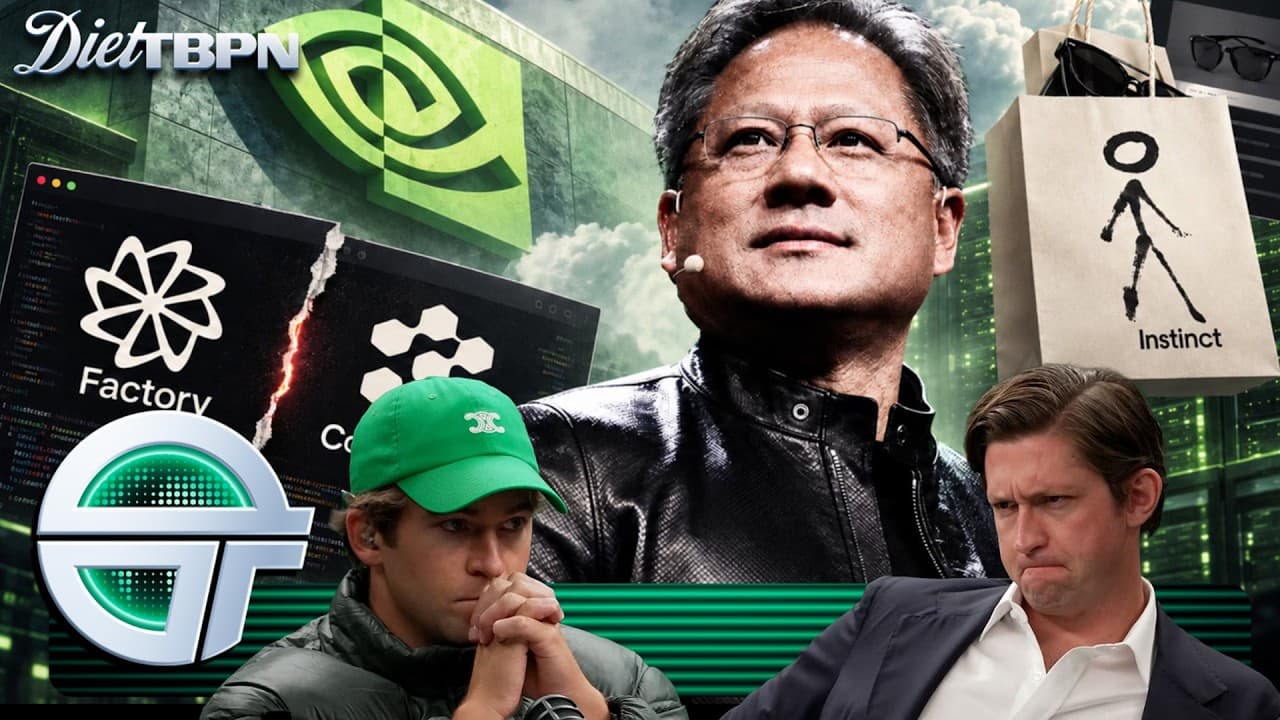
The hosts frame Notion as the clearest example: users already pay a Notion subscription, and this lets Notion draw on a user's "chat allowance" instead of its own credits when offering AI features. One host notes the feature currently brings along "OpenAI tokens," not "OpenAI dollars," and speculates it could eventually extend to a fuller billing relationship, citing his own confusing experience with Higsfield where he ended up holding separate "consumer credits and API credits."
They compare this to Apple's App Store subscription model, where cancellation is frictionless, and note Sam Altman tried a similar GPT Store concept three years ago that "languished." One host also mentions OpenAI's new partnership with B10 for enterprise access to open models, and flags AI headshot-generator apps as a compute-intensive use case that could benefit.
Anthropic's Vatican lobbying and the "is Claude conscious" debate
The hosts cite a New York Times report saying Anthropic co-founder Chris Olah threatened to walk out of Pope Leo's AI encyclical launch in May after the Pope rejected the idea that machines can be conscious, and that Anthropic's team privately lobbied the Pope's advisers "to take the possibility of model consciousness seriously." They quote Pope Leo:
"Algorithms lack the spark of humanity."They also note Paul Graham's reply suggesting the Pope consider AIs trained on visual art as well, and Walter Isaacson's comment that "Popes have been hiring good artists for a long time."
One host quotes investor Neil Kosla's concern:
"I'm increasingly concerned about the AI psychosis inside Anthropic."The hosts note Anthropic isn't claiming AI will end the world but is raising consciousness as a real possibility, calling this a strange middle ground. They also cite Byrne Hobart's joking comment about not realizing "we'd solved consciousness," and note Olah himself, per the reporting, took no firm position, saying only that the question is "unintuitive" given everyone operates from "an end of one view."
One host speculates the Vatican outreach coincided with Anthropic allegedly "adding a billion dollars of run rate a day," suggesting commercial momentum may have shaped the company's posture, though this is offered as speculation rather than something sourced to a named person.
Only 2% of US households reportedly pay for AI
The hosts cite a statistic, flagged by "Nick" as surprisingly low, that only 2% of US households pay for AI, compared with 25% paying for Sirius XM and 55% paying for cloud storage. They question how the figure is counted, wondering whether it excludes bundled subscriptions like X Premium's Grok access or Google accounts with Gemini included. One host notes Sirius XM did "around eight and a half billion" in revenue last year with a similar market cap, calling the business "robust" despite being "on the way out."
Tesla deliveries beat expectations as Autopilot wins converts
The hosts note Tesla stock jumped 5% on a delivery report showing a 2% year-over-year decline but an increase from the prior quarter, with the stock still down 21% for the year as of Thursday's close. One host says he recently took delivery of a Tesla after a roughly two-month wait and had to "spec it" a certain way to reduce lead time, suggesting demand has thinned for some configurations.
He describes using Autopilot for 50 minutes before having to intervene, calling the return to manual driving "the most jarring, brutal experience." Both hosts argue the feature is viral because people experience it and immediately tell others, and suggest other automakers face more trouble than is widely recognized, since executives in that space reportedly "chuckle and laugh" when asked about autonomy timelines, with one calling the Tesla "the best appliance car."
Paramount becomes Skydance; Ben Affleck talks AI filmmaking
The hosts discuss David Ellison's first post as the Paramount–Warner Bros. Discovery combination is rebranded Skydance, quoting his statement:
"We intend to pursue them with passion, imagination, and willingness to take smart risks."They debate whether HBO will be renamed and call the combined content bundle "extremely compelling," saying it is "disappointing for Netflix" given the breadth of IP and lower-tier catalog content from CBS.
They also play a clip of Ben Affleck describing how he built a video model trained on a "last layer" of cinematic understanding using unfrozen open-model weights, saying he was uncomfortable training directly on his peers' work. They close with a brief segment on the rush to buy ".SI" domains tied to "superintelligence" branding, with one host calling it "corny" and arguing ".com" remains superior for every use case.
Written by AI from the video's transcript. It can compress, misattribute or miss context — the original video is the source. Not investment advice.