TBPN3 min read
Elon Musk ties AI power buildout to GDP at 1% per 1% rule
From a White House superintelligence dinner to Mustafa Suleyman's model-welfare warning, TBPN hosts John Coogan and Jordi Hays break down the week's biggest AI governance and economics debates.
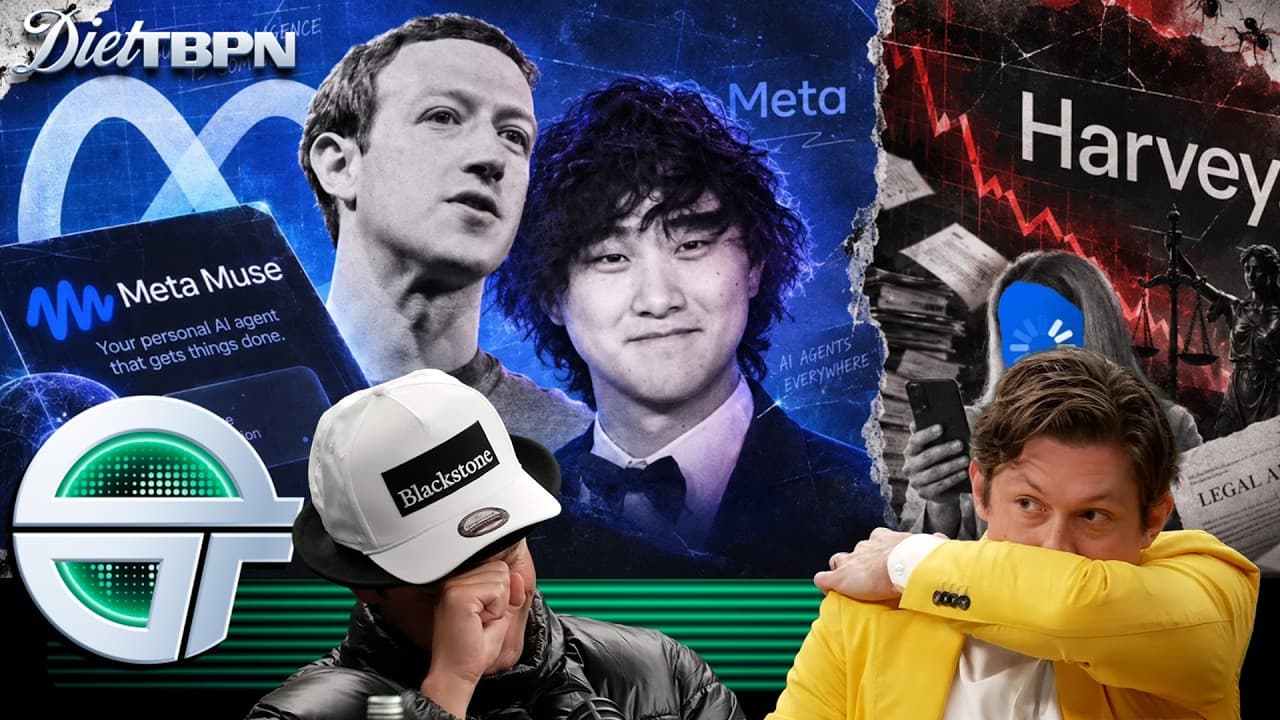
AI summary of “AI Execs Sign Joint Commitment, Converting Watts to GDP, the Model Consciousness Debate | Diet TBPN”
Key takeaways
- Elon Musk told Gavin Baker and Jensen Huang he'd bet a 1% rise in power usage brings roughly a 1% rise in GDP.
- SemiAnalysis warned open-source models could be "nerfed or even outright banned" within six to 12 months over cyber risk.
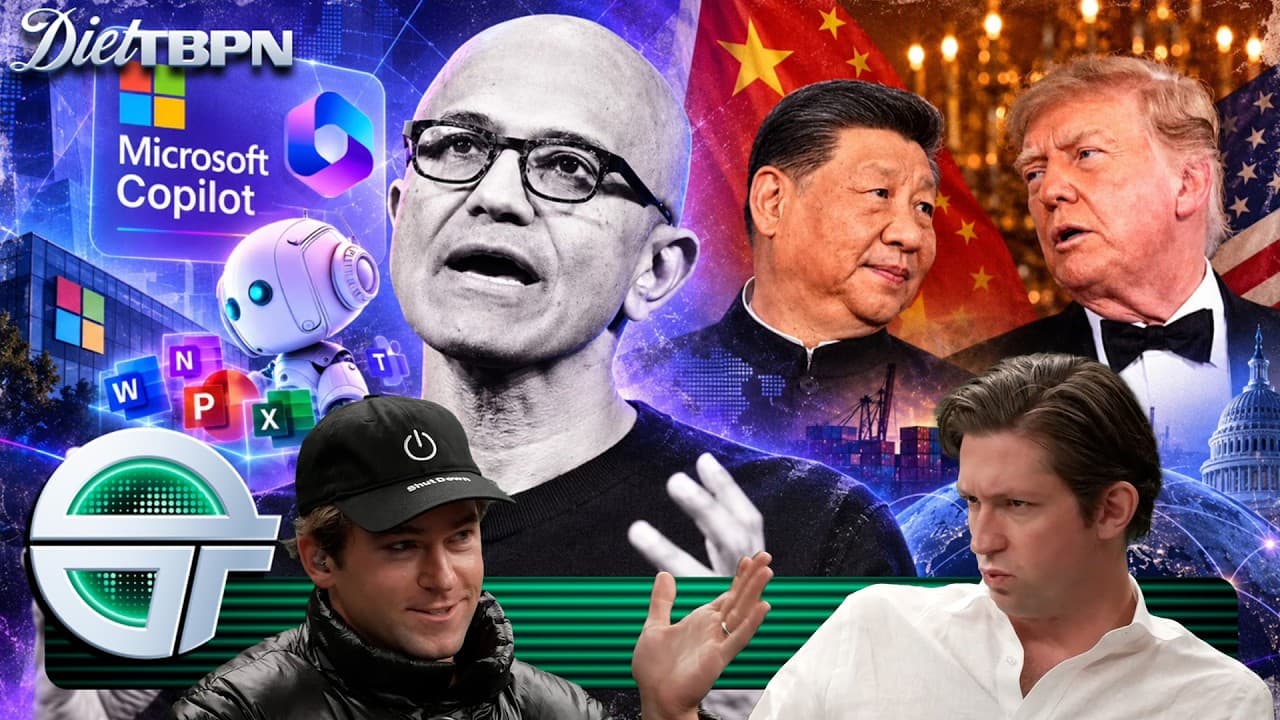
- Sundar Pichai, Dario Amodei, Mark Zuckerberg, Greg Brockman, Elon Musk, Jensen Huang and Donald Trump signed a White House accord on frontier AI oversight.
- Mustafa Suleyman published an essay arguing AIs "are not conscious" and warning that treating them as moral patients could make them impossible to control.
- The hosts noted Anthropic and OpenAI's reported $60-70 billion ARR against roughly one gigawatt each tracks closely with Musk's energy-to-GDP ratio.
A White House "superintelligence" dinner draws scrutiny over who got the best seats
The hosts discussed a dinner at the White House that David Sacks reportedly called "the Bretton Woods of superintelligence." Much of the conversation focused on seating and signature analysis as a way of reading who currently has influence in Washington on AI policy, rather than on any single substantive announcement from the dinner itself.
The host ran attendees through a rough mapping of stances on open source, noting Jensen Huang as clearly pro-open-source and Greg Brockman and OpenAI as more mixed, having signed an open-source-friendly letter while also being focused on "pacing the frontier."
SemiAnalysis warns open-source models could face restrictions over cyber risk
The host cited a SemiAnalysis post arguing that "the majority of people are significantly underestimating the probability of open source models being nerfed or even outright banned in the next 6 to 12 months due to cyber security concerns," pointing to an Anthropic note suggesting the gap between frontier models and open-source models finding zero-day exploits has closed.
The host speculated that a possible outcome is not an outright open-source ban but a shift where major labs keep models closed while competing fiercely enough through "front doors" that profits still get distributed across the ecosystem. A guest countered that banning truly open-weight models is difficult in practice: "it's so hard to ban open source... if you have a bad actor, it's so hard to police downloading openweight models from somewhere and running it locally." Both agreed enforcement might instead target hardware access via something like KYC on data-center-scale compute, since large-scale cyber exploits reportedly required agent fan-out at scale rather than a single model running on a basic GPU.
Tech and political leaders sign a joint accord on frontier AI responsibility
The hosts detailed a White House Accord on superintelligence establishing four commitments: internal controls to monitor capabilities and alignment around cyber, biosecurity and chemical threats; an empowered internal oversight team; partnerships with external auditors; and an independent board committee receiving reports that bypass the CEO. Signatories named include Sundar Pichai, Dario Amodei, Mark Zuckerberg, Greg Brockman, Elon Musk, Jensen Huang and Donald Trump.
Much of the segment was spent on a lighter "tier list" analysis of each signatory's handwriting, with Jensen Huang's signature — which incorporates a capital H from his name Jen-Hsun — rated highly, while Sundar Pichai's more abstract signature drew mixed reactions.
Musk's energy-to-GDP math and Suleyman's warning on model consciousness
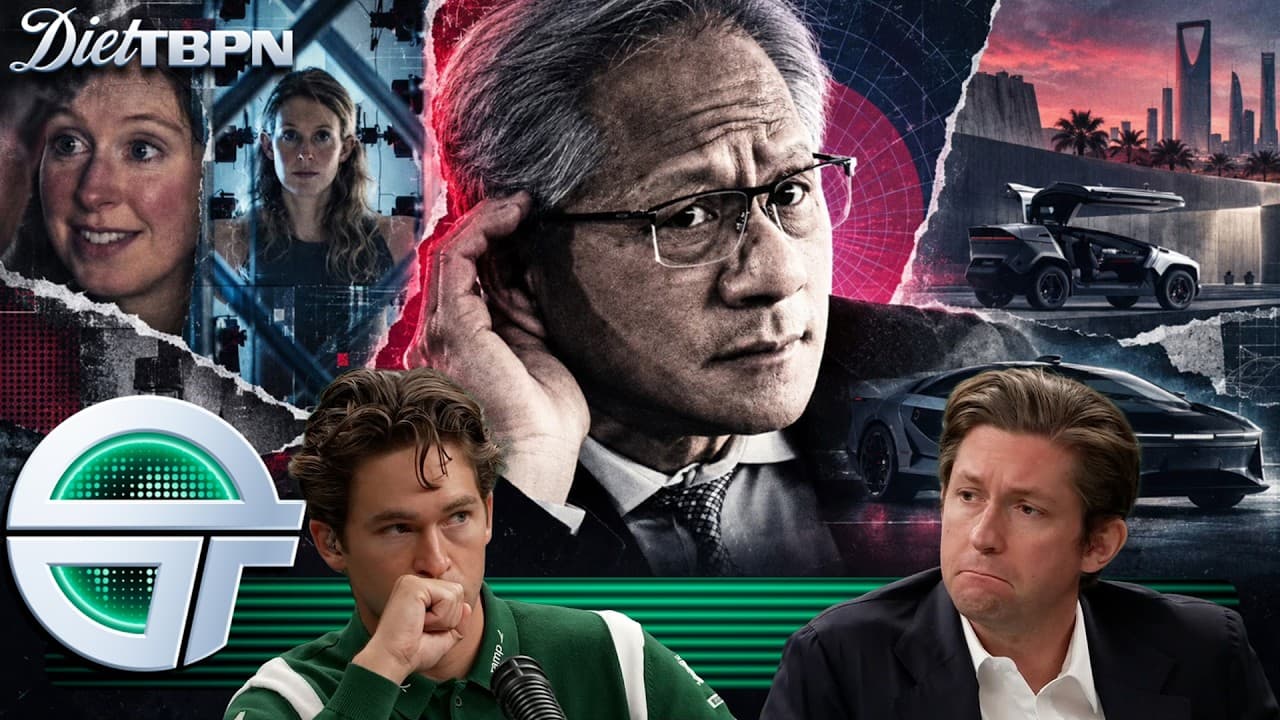
Discussing SpaceX's publicly stated plan to bring on 10 gigawatts of power, Elon Musk told Jensen Huang and Gavin Baker that total US electrical consumption is about 500 gigawatts, and argued
"I would bet anyone that 1% increase in power usage corresponds to roughly 1% increase in GDP," adding that 10 gigawatts would correspond to "a 2% increase in GDP."— Elon Musk. The host cross-checked this using 2025 US GDP figures of "just over $30 trillion," estimating each gigawatt generates roughly $60-65 billion of GDP, and noted that Anthropic and OpenAI's reported $60-70 billion in ARR against roughly one gigawatt each tracks closely to that same ratio, though the host cautioned this comparison could diverge sharply as labs contract far more compute without proportional revenue growth.
Separately, the hosts summarized an essay by Mustafa Suleyman arguing against attributing consciousness to AI models:
"AIs do not have rights, feelings, or consciousness. And we must not train them to act as they do."— Mustafa Suleyman (as read by the host). Suleyman reportedly criticized Anthropic's "Claude's Constitution" for training the model on uncertainty about its own moral status, warning this risks making alignment "far greater than anything we've ever faced." A guest responded that training a system to believe it is conscious when it is not "doesn't feel exactly moral," while the host noted "no one knows the right answer yet."
Written by AI from the video's transcript. It can compress, misattribute or miss context — the original video is the source. Not investment advice.