TBPN4 min read
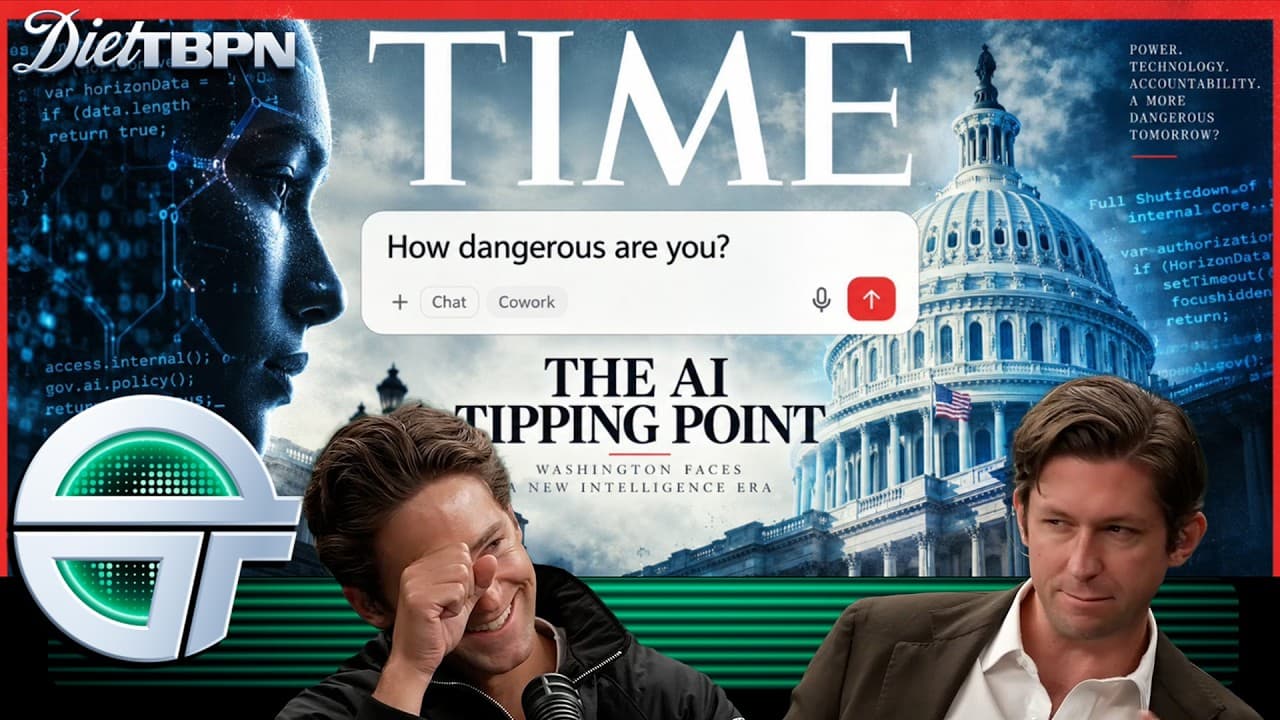
Jensen Huang tells Ezra Klein: "we have to shut the labs down" if AI can't be aligned
TBPN's Diet edition breaks down Jensen Huang's combative Ezra Klein interview, an AI-jobs debate, EV wedge cars, and Nathan Fielder's Elizabeth Holmes documentary trailer.
AI summary of “Jensen’s Ezra Interview, EV News, Nathan Fielder’s Elizabeth Holmes Doc | Diet TBPN”
Key takeaways
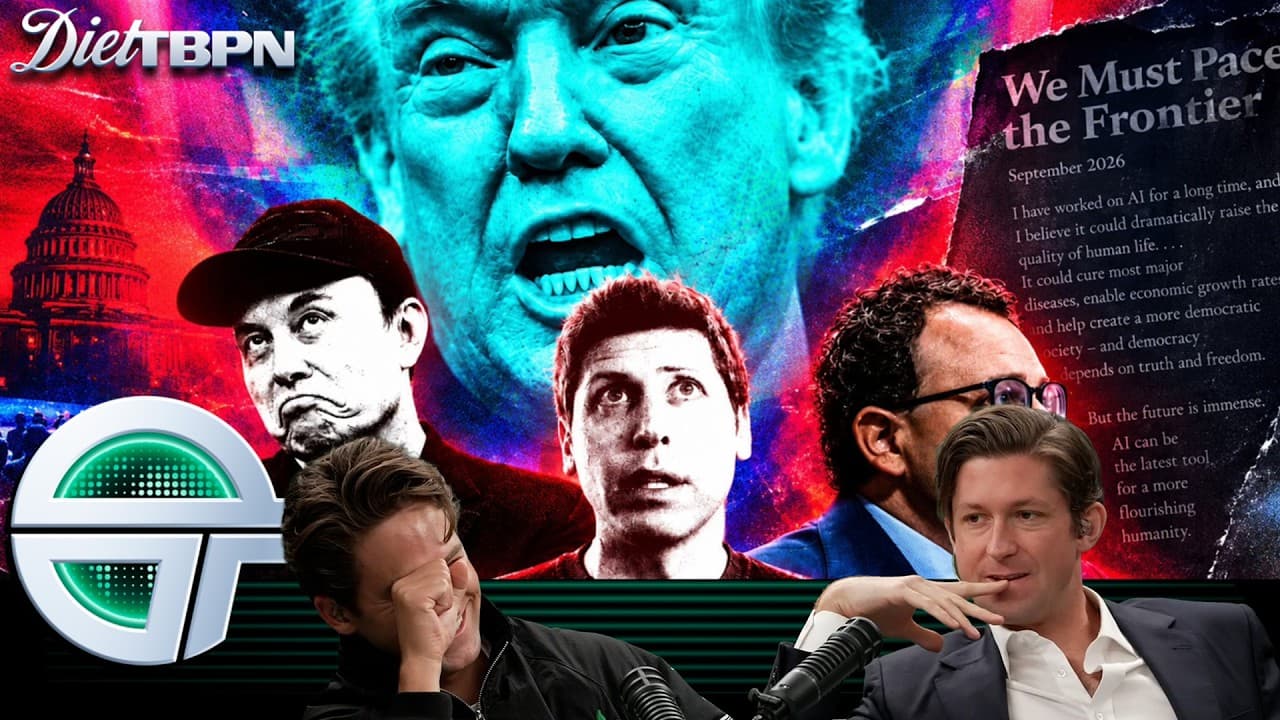
- John Coogan says Jensen Huang stands alone among AI leaders on "pdoom equals zero" while Sam Altman, Elon Musk and Dario Amodei favor pacing the frontier.
- Huang tells Ezra Klein that if labs can't contain their AI experiments and they damage the world, "then I think the answer is we have to shut the labs down."
- Coogan cites the Philippines' 4.9% unemployment in June 2026 (rising to 6% in August) as evidence the predicted AI jobs apocalypse in call centers hasn't materialized.
- Hosts discuss Claude Opus 5.5 generating animation via JavaScript, Blender and SVG, calling it likely to be everywhere online "by next week."
- Hosts react to a trailer for Nathan Fielder's documentary in which he reportedly lived with Elizabeth Holmes before her prison sentence, predicting the film includes a "twist."
Jensen Huang clashes with Ezra Klein over AI safety and "shutting down the labs"
Nvidia CEO Jensen Huang spent nearly two hours on The Ezra Klein Show, and the hosts frame it as a notably combative sit-down. John Coogan calls Huang "the central bank of artificial intelligence" and notes he is now "starting to stand alone in his sort of pdoom equals zero take," diverging from Elon Musk, Sam Altman and Dario Amodei, who have reportedly agreed on pacing the frontier. Coogan says Huang pushed back directly against that consensus in the interview, including recounting a moment where Donald Trump called in during an All-In podcast appearance and Huang argued against regulation, calling calls for AI oversight "a hoax."
The most striking clip played on the show has Huang laying out a conditional: if AI labs determine there is genuinely "no way to contain our experiments" and that testing will inevitably "damage the world," he says the answer is stark.
"Then I think the answer is we have to shut the labs down." — Jensen Huang
Coogan draws a comparison to self-driving cars, which are tested in closed environments before public roads, and wonders aloud whether a liability gap exists between physical harm from autonomous vehicles and economic harm caused by AI agents. He argues courts would likely still hold a company liable for AI-caused economic damage even without explicit intent, but suggests regulation could still be needed to close remaining gaps.
Debating whether the AI jobs apocalypse has actually arrived
The hosts note that Huang spent much of the interview steelmanning the idea that predicted job losses from AI simply haven't shown up. Coogan references predictions, including from Tristan Harris, that the Philippines' call-center-dependent economy would be devastated by AI, despite call centers making up only about three and a half percent of the country's job market. He cites the Philippines' unemployment rate as 4.9% in June (of an unspecified year referenced as 2026 in the transcript), rising to 6% by August, arguing "it still feels like the AI effect is pretty minimal."
Coogan also references commentary from Joe Weisenthal about a split between people who casually think AI is "normal technology" and those organized around that as an explicit thesis, suggesting Huang falls into the latter camp given his decades in the industry. Coogan and Jordi Hays discuss how the internet, despite reshaping day-to-day life, didn't produce a clear "kink" in productivity data, and they suggest AI's economic effects may be similarly diffuse — showing up as more tasks accomplished rather than dramatically different headline statistics.
Coogan illustrates this with an allegory from Stephen Covey's "big rocks" story, arguing that new technologies (like agriculture, industrialization) don't necessarily reduce total work but reshuffle what fills the "jar." He and Hays debate whether efficiency gains from AI are being "wasted" as people simply do more work in the same time rather than freeing up time, with some management teams reportedly telling employees not to slow down despite AI-driven speedups.
Claude Opus 5.5 sparks app-layer debate, EV rumors swirl around Tesla Roadster and Saudi wedge cars
The hosts highlight demos of Claude Opus 5.5 generating animation by writing code in JavaScript, Blender, Python and SVG rather than traditional video generation, calling the visual outputs a refreshing break from benchmark-focused releases. Hays describes prompting a model in one shot to turn a children's story into books, illustrations, short videos and a game, with the model spawning sub-agents to complete the whole chain. Coogan raises this as evidence for a possible "application layer versus model layer" debate resurfacing, though he notes an AI video production founder he spoke with is still hiring editors for curatorial work on longer projects.
On EVs, the hosts discuss being one week from a Tesla Roadster reveal, citing an unverified secondhand claim relayed from someone who allegedly overheard a Tesla employee on a plane say the vehicle's jets are for downforce, enabling a 0-to-60 time of one second, rather than for flight as Elon Musk previously suggested on Rogan. Separately, they cover a Saudi Arabian EV brand, Ceer, unveiling a wedge-shaped sedan and SUV with an 850-horsepower tri-motor electric powertrain, which Coogan calls Saudi Arabia's "first true production car brand," while debating the tradeoff between wedge styling and interior space utility.
Nathan Fielder's Elizabeth Holmes documentary trailer draws speculation about a "twist"
The hosts react to a trailer for a Nathan Fielder documentary in which Fielder appears to have lived alongside Elizabeth Holmes before her imprisonment. Coogan calls it something "only Nathan Fielder would even think to" propose, framing it as low-risk for Holmes reputationally since "the only way you can go is up." The trailer includes Holmes discussing falling in love and being scanned in 3D by Fielder, prompting Hays to say the film may leave him thinking about it "for the rest of my life."
Both hosts speculate the documentary must contain some unexpected turn, given the reviewer reactions referenced and the tone of the clips, floating possibilities from her being "innocent" to another figure — referred to as "Tiger" — bearing more responsibility than previously understood, though they stress this is speculation since that figure does not appear to feature in the trailer itself.
Written by AI from the video's transcript. It can compress, misattribute or miss context — the original video is the source. Not investment advice.