TBPN4 min read
Nvidia's cloud land-grab fizzles as DGX Cloud Lepton becomes a standards layer, not a gatekeeper
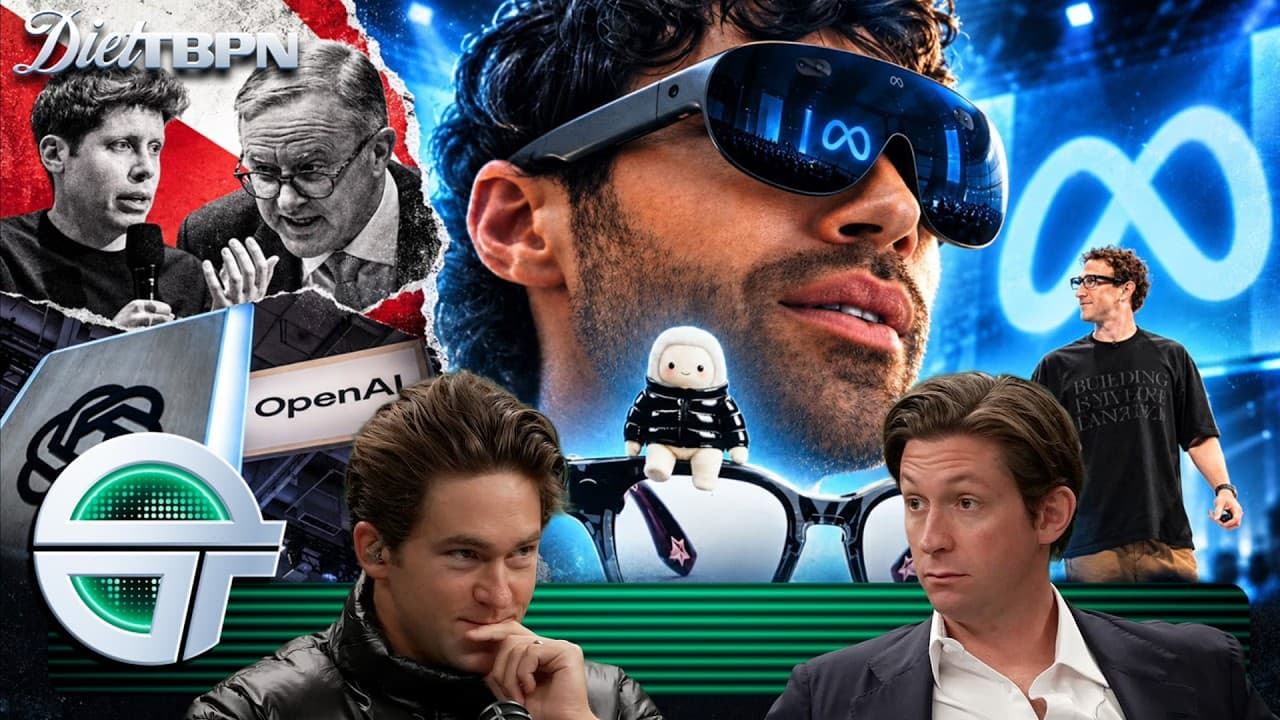
Hosts trace how Nvidia's "planetary AI factory" ambition softened into coexistence with CoreWeave, then dig into the Factory-Cognition Twitter blowup and Instinct's bumpy shopping-agent debut.
AI summary of “Nvidia’s Cloud Strategy Evolves, Factory-Cognition Drama, Instinct Pushes Into Shopping | Diet TBPN”
Key takeaways
- Nvidia's DGX Cloud Lepton, bought from Lepton AI for a rumored $300-900 million, evolved from a customer-aggregating "AI factory" into a software/standards layer, hosts say.
- Venture investor Venode publicly attacked Factory as "unethical and lying" over an adviser's exit to Cognition, despite his firm Coastal Ventures backing Factory, per the hosts.
- Sean Mcguire teased a "truth nuke" claiming Cognition is "Infosys masquerading as Anthropic," which the hosts partly dispute.
- Instinct's AI shopping suggestions ("shop slop") drew backlash, including an indoor car cover and trickle charger recommended to a Porsche 911 owner, the hosts note.
- Google launched Gemini 4 Argon the same day as the Factory-Cognition drama, with hosts joking the timeline cared more about "interpersonal board dynamics" than the model.
Nvidia's "planetary AI factory" dream meets reality
The hosts revisit Jensen Huang's 2023 pitch that Nvidia's DGX Cloud Lepton would become a one-stop front door to compute, aggregating NeoClouds the way AWS or Azure does. Huang had called it a "planetary scale AI factory," and the hosts recall reporting that NeoCloud providers worried refusing to participate could mean Nvidia steering workloads to rivals. Nvidia acquired Lepton for a rumored $300 to 900 million in April 2025, kicking off the speculation.
According to the hosts, the product didn't end up aggregating customer demand as feared. Instead it became what they describe as "between an actual Expedia for GPUs and just a set of standards" — proprietary software for scheduling GPU nodes, dev pods, batch jobs, inference, storage and observability, while customers keep their own hardware relationships. One host notes Semi Analysis found the system underperforming compared to going direct to CoreWeave or Nebius.
They also discuss CoreWeave's new "Forge" product (CPUs, storage, management tools), concluding it mainly threatens direct NeoCloud competitors rather than Nvidia, while customers and ancillary sellers benefit. One host calls the dollar-per-watt margin trend "a very very exciting business" if it keeps pace with what he calls the "Elon and Jensen $60 billion a gigawatt" framing.
Factory vs. Cognition erupts on the timeline
The hosts describe investor Venode publicly accusing Factory of lying about an advisor's firing, calling them "a struggling second tier competitor." They note it took the timeline about 20 seconds to flag that Venode's firm, Coastal Ventures, is an investor in Factory, raising conflict-of-interest questions even as the hosts argue VC firms can maintain ethical firewalls.
"Straight out lying about if Chris being fired... shows your desperation." — Venode (as quoted by the hosts)
The hosts debate whether this was a "truth nuke" or an ad hominem attack, leaning toward the former since Venode, as an investor, could plausibly know internal facts. They reconstruct the underlying dispute: a Cognition CRO allegedly told Factory's Matan he was being poached, and was then fired days later for "unethical conduct" — timing Keith (described as a Factory board member) called unethical per se.
Hosts compare the drama to past poaching fights
The hosts contrast this with the Rippling-Deel dispute, which they say involved an alleged "honeypot" operation and clearer smoking guns, versus this case's murkier facts. They draw comparisons to Eric Schmidt's Apple board seat during Google's Android launch and Mike Krieger's board resignation before launching a competitor to Figma.
They note researcher poaching in frontier AI labs — including three OpenAI researchers reportedly fired per the Wall Street Journal for sharing information — is more aggressive but generates less public drama because board members have less direct interaction with researchers than with advisers. Sean Mcguire teased further revelations, calling Cognition "Infosys masquerading as Anthropic," which one host disputes, saying Cognition's work is "automating code generation and business," not an Anthropic-style research play.
Instinct's AI shopping suggestions draw "shop slop" backlash
The hosts discuss backlash after Instinct's AI agent pushed product recommendations to users, with Dave Morin (described as running the OpenClaw foundation) coining the term "shop slop." Multiple users reportedly received nearly identical suggestions, such as power banks, and one case involved recommending a trickle charger and indoor cover to a Porsche 911 owner — items the hosts say car enthusiasts generally avoid since covers can scratch paint.
The hosts argue Instinct likely isn't yet monetizing these suggestions and may instead be using the test to demonstrate consumer-understanding capability ahead of a future funding round. They raise a structural concern: brands won't pay large referral fees for demand they already generated elsewhere, so Instinct's value may lie in surfacing products users weren't already considering. One host also warns that if agents get flagged by phones as "promotions" senders rather than trusted contacts, open rates could collapse much like the "newsletter apocalypse" in Gmail.
Gemini 4 Argon launches into a distracted timeline
Google released Gemini 4 Argon, which the hosts say hit strong benchmarks but drew controversy over how heavily Google's own employees use it internally. They joke that the launch landed on "the best day" to be overshadowed, since the Factory-Cognition saga dominated attention instead. The hosts compare AI lab naming conventions — OpenAI's solar-system names (Luna, Terra, Sol), Anthropic's poetry-themed tiers (Haiku, Sonnet, Opus) — and speculate Google may be working through the periodic table, noting "argon" derives from the Greek word for "lazy or inactive."
Written by AI from the video's transcript. It can compress, misattribute or miss context — the original video is the source. Not investment advice.