🎯 Apple Intelligence Finally Arrives — Theme: "All Systems Glow"
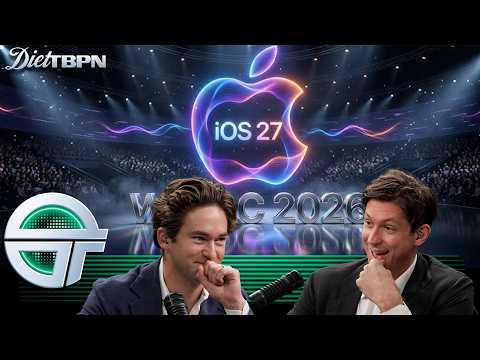
Apple's annual Worldwide Developers Conference kicked off this week with a clear message: the company is finally delivering on its AI promises. After nearly two years of buildup, expectations have settled into a pragmatic sweet spot — high enough to generate excitement, but grounded in reality. Unlike the overhyped rollout of Apple Vision Pro, the market isn't demanding breakthrough innovation. Instead, users simply want best practices from ChatGPT, Gemini, and Claude implemented seamlessly across iOS.
The strategy appears sound: integrate familiar AI tools into existing workflows rather than reinvent the wheel. Examples like Grok's integration into X, Google's AI search overviews, and Ramp's conversational expense tracking demonstrate that incremental AI integration works when executed well. Apple's challenge will be cultural — transitioning from a world of deterministic outputs to one where hallucinations and viral AI failures are inevitable.
"There will be funny viral hallucinations... that's gonna happen to Apple and that's not what Apple likes to deal with. But I don't think any of that will show up in the user metrics."
Privacy remains front and center. Throughout the keynote, Apple repeatedly emphasized that AI features run on "private cloud" infrastructure, though questions remain about what that actually means in practice. The company name-dropped Gemini, suggesting a white-label partnership that allows Apple to fine-tune and rebrand Google's foundation models. The critical question: who's handling inference for a billion iPhone users?
Key Open Questions:
- Will Apple embrace the open-source ecosystem (OpenClaw, Mac Mini AI community)?
- How will "vibe coding" apps be treated in the iOS App Store?
- What level of API access will native AI apps (ChatGPT, Claude, Gemini) receive?
- Where is Apple actually running inference — secret data centers or corners of GCP?
One notable detail: references to rate limits and subscription plans suggest that not all AI features will run on-device, despite Apple's privacy-first messaging.
📊 Jobs Report: The AI Apocalypse Remains Canceled
Friday's labor market data delivered a reality check to AI doomers: the US added 172,000 seasonally adjusted jobs in May, marking the third consecutive month of gains. The unemployment rate held steady at 4.3%. Hiring concentrated in healthcare, travel, and tourism sectors — partially driven by World Cup-related activity.
Despite relentless predictions from certain AI leaders about imminent mass unemployment, the American labor market continues to prove resilient. The jobs are real, they align with ADP numbers, and they're unlikely to be revised down significantly.
The Double-Edged Sword: While job growth is fundamentally positive, it complicates the Federal Reserve's calculus. Inflation continues running above the 2% target, exacerbated by rising gas prices following the closure of the Strait of Hormuz. Strong hiring reduces the likelihood of rate cuts and increases the probability of additional rate hikes.
For tech companies with earnings forecasts stretching into the next decade, this poses a valuation challenge. The NASDAQ experienced its worst day in over a year on Friday, dropping 4.2%, though markets recovered with a 1.5% gain the following session.
"It's officially 2003. The bubble popped, but we're building back."
The silver lining? The Fed has ammunition. Unlike the COVID era when rates were already near zero, current elevated rates provide room to cut if economic conditions deteriorate.
💼 VC Horror Stories: When Pitch Meetings Go Wrong
Greg Eisenberg ignited a firestorm on social media by sharing stories of venture capital dysfunction. High-profile founders piled on with their own experiences:
- Greg Eisenberg: Pitched a top-three VC firm for a $15 million Series A with 12 partners in the room. One GP fell asleep for over 30 minutes — nobody acknowledged it.
- Matthew Prince (Cloudflare CEO): Alleged that Vinod Khosla offered to invest in his Series C only if he fired several people who had momentarily left the pitch meeting.
- Travis Kalanick: In 2001, intercepted a VC trying to escape their scheduled meeting and ended up pitching from the passenger seat of the partner's Lexus.
The conversation quickly divided into two camps: pitch horror stories versus board horror stories. While the former generate entertaining anecdotes, they're relatively low stakes — founders typically conduct dozens of meetings and can simply move on from bad actors.
Board-level dysfunction, however, carries far more serious consequences. Brendan Foody (Merge CEO) escalated the discussion by calling out what he termed the "Sequoia scam" — a practice where firms invest in two tranches at different valuations, then allow founders to publicly represent only the higher number. He claimed to have seen this structure in half a dozen rounds over six months, with Sequoia's blended price often less than 50% of the marketed valuation.
"They'll invest at half a billion and a billion in two tranches and then the founder will go out and say we raised 100 million at a billion when really Sequoia got in at the blended price."
Foody later clarified that structured investments are common practice across top-tier firms, not unique to Sequoia. The issue lies in misrepresentation to employees and secondary investors, which can constitute securities fraud if material details are omitted.
The Bottom Line: Silicon Valley operates as an iterated game where maintaining relationships matters. Even failed founders might build the next generational company, incentivizing relatively good VC behavior. Reference checking investors, understanding deal structures, and maintaining transparency remain essential founder responsibilities.
🔬 The 37-Minute Problem: A Scientific Approach to Boring Pitches
In a tongue-in-cheek response to the sleeping VC controversy, one analysis referenced a study of men aged 66 to 83 placed in dimly lit rooms — similar to many VC offices — and read cloud computing documentation. The median time to fall asleep? 36.9 minutes.
The takeaway for founders with complex, technical businesses: keep early pitches under 30 minutes, especially when presenting to older partners in comfortable Herman Miller chairs. Or, as suggested, bring an air horn.
⚡ Quick Hits
- Apple Newsroom joke: Mock press release announced "the death of Mark Gurman" after 16 consecutive years of accurate pre-release leaks. Gurman remains very much alive and live-blogging WWDC.
- Liquid Glass Design: Apple appears to be pulling back from its more extreme UI design choices, compromising for usability in the latest OS updates.
- Performance gains: iOS updates include 30% faster lock screen opening and similar optimizations across core functions — the kind of incremental improvements that matter more to users than abstract AI features.
- SoftBank pitch intensity: One founder described pitching at SoftBank's Redwood City HQ, then flying 20 hours to Tokyo, only to have Masa Son start the meeting with: "You have 10 minutes."
🎯 What It Means
Apple is threading a narrow needle — delivering AI capabilities that meet user expectations without succumbing to the hype cycle that has plagued other tech giants. The focus on privacy, on-device processing, and white-label partnerships suggests a measured approach that prioritizes reliability over revolutionary features.
Meanwhile, the resilient jobs market keeps pressure on the Fed and tech valuations, even as speculation continues at surprisingly elevated levels given current rates. The NASDAQ's Friday selloff and Monday recovery illustrate the tension between strong economic fundamentals and stretched valuations.
The VC horror stories, while entertaining, reveal an industry still grappling with transparency around deal structures and founder-investor dynamics. As Foody noted after his initial thread went viral: structured investments are standard practice, but disclosure is not optional.
In an environment where AI promises, economic data, and fundraising narratives all face heightened scrutiny, the common thread is execution over storytelling. Apple's emphasis on performance improvements, the Fed's data-dependent approach, and the push for VC transparency all point toward a market demanding substance over sizzle.