📊 The Big Picture
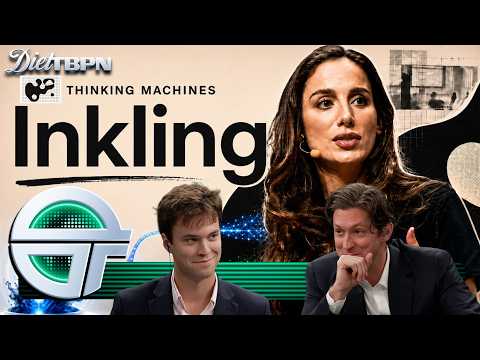
The AI landscape shifted this week as Thinking Machines Lab, led by former OpenAI CTO Mira Murati, launched its first open-weight model—marking a strategic departure from closed-source dominance. Meanwhile, TSMC announced record capex spending and a fresh $100 billion commitment to US fabs, even as markets reacted with skepticism. Geopolitical tensions around AI model distillation intensified, and the creator economy saw new ground broken with brand integrations.
🤖 Thinking Machines' Inkling: A New Open-Weight Contender
Thinking Machines Lab released Inkling, an open-weights AI model designed to challenge the frontier labs' closed-source grip. The model features 975 billion total parameters, though only approximately 41 billion are active at any moment, making it significantly larger than typical open-source models but employing sparse architecture rather than dense parameter design.
Key positioning: Unlike typical launches that claim frontier leadership, Murati framed Inkling differently: "We trained it to be a broad, balanced foundation model strong across many domains, flexible enough to adapt." The message acknowledges that Inkling is not the strongest overall model available today, open or closed—a refreshingly honest communication strategy.
"This is the only open weight model that's trained without distilling from OpenAI or Anthropic... The first pure open frontier coding model."
— Jack Morris, Engram Labs (subsequently community-noted)
The model's real pitch centers on fine-tuning capabilities through Thinking Machines' Tinker API. The business model mirrors Red Hat's approach: provide open weights that clients can modify and take anywhere, while capturing value through integration services and ongoing optimization support.
Market Reception: Early assessments suggest Inkling performs between Kimi K 2.5 and 2.6 on benchmarks and surpasses Nematron 3 Ultra. DD Das called it "the best open weight AI model outside of China," positioning it as a strategic alternative for enterprises hesitant to adopt Chinese models for policy, security, or alignment reasons.
🔬 The Distillation Debate Intensifies
Claims that Inkling represents a "pure" non-distilled model sparked immediate pushback. Thinking Machines' own blog post reveals they used synthetic data generated by open-weight models including Kimi K 2.5 for initial supervised fine-tuning—a form of what many consider "distillation light."
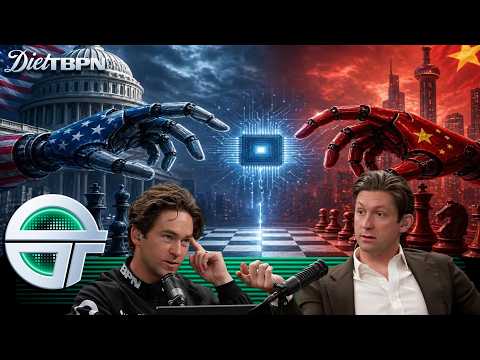
This disclosure matters because distillation has become a flashpoint in US-China AI competition:
- Anthropic's head of national security policy, Taryn Chabbra, publicly accused Zhipu.ai of distilling both Claude and OpenAI models for GLM-5.2 at the Aspen Security Forum
- The company now shuts down distillation accounts on the order of millions per week—a staggering scale suggesting highly distributed attacks
- DeepSeek was accused of continuing an "adversarial campaign of distillation"
- Pass-through entities that resell API tokens at scale have emerged, potentially serving as distillation fronts
The timing of Inkling's launch appears strategic: Beijing recently moved to curb overseas access to Chinese top AI models, creating an opening for Western open-source alternatives to fill the gap for international enterprises.
🎨 GPT's "AI Smell" Problem—and Solution
Researcher Grace Lee mapped 1,000 websites generated by GPT-5.6 Soul into a design manifold and discovered systematic holes where previous versions produced outputs with "bad AI smell." OpenAI appears to have actively trained against three specific anti-patterns:
- The Bento box layout in dashboards
- Large typefaces in hero images
- Generic cloudisms in overall design
The fix doesn't necessarily increase creative variance—it simply removes the most commonly flagged patterns that signal "AI-generated" to users. While this improves initial satisfaction, the fundamental challenge remains: "If we keep the same model for 6 months, we'll just notice new patterns."
The takeaway: Customization and reference injection remain critical. Generic prompts still produce generic-looking outputs; providing specific style references or brand guidelines yields meaningfully differentiated results.
🏗️ California's $3.2B Shipyard Miss
California Forever lost a major anchor tenant as defense startup Saronic chose Port of Brownsville, Texas over Solano County for its $3.2 billion automated shipyard project, known as Point Alpha.
The stakes:
- ~10,000 permanent jobs expected
- Thousands of union construction jobs during buildout
- First major validation for California Forever's vision of anchoring a new era of American shipbuilding
Joshua, executive director for the California Alliance for Jobs, summarized the outcome: "While Texas moved quickly and aggressively, California could not provide the clear expedited approval process needed."
California Forever had signed a 40-year construction labor agreement covering 70,000 acres, and labor groups backed legislation to fast-track environmental review and permitting. The legislation has yet to advance.
Meanwhile, Texas approved a $211 million tax abatement package in June to secure the investment, with the project landing roughly 20 miles from Starbase. Labor leaders warned that without expedited approvals the project would leave—and it did, sending a powerful signal about California's ability to compete for large industrial investments.
💰 TSMC: Record Spending Meets Market Skepticism
In a remarkable disconnect, TSMC both beat earnings and raised capex guidance, pledging to invest an additional $100 billion in US fabs—yet the Nasdaq dropped 1% on the news.
The company is spending a record amount, cementing its position atop the global semiconductor supply chain at precisely the moment when demand signals for AI infrastructure remain robust. The market's negative reaction suggests investor concern about:
- Overspending risk amid uncertain AI buildout sustainability
- Cyclical timing—is this peak capex just before a trough?
- Margin pressure from massive capital deployment
The irony: TSMC, historically cautious through multiple boom-bust cycles in smartphones and other markets, finally signals "Yes, now is the time" for aggressive expansion—and the market responds with skepticism. For a company that was not particularly AGI-pilled for a long time, this represents a significant strategic shift that investors appear to be questioning despite strong current results.
🎬 Creator Economy: Brand Integrations Evolve
Colin and Samir announced a first-of-its-kind deal with Lexus, producing four ads that roll across YouTube as sponsored videos on their channel. This goes beyond traditional mid-roll or host-read ads, representing a deeper brand integration model.
The deal signals "a broader shift taking place in media" where the aperture of brand-creator partnerships expands beyond spot placements toward co-created content and channel-level sponsorships. If replicated across YouTube's creator ecosystem, this model could unlock significant new revenue streams for creators of all sizes.
📈 Disney's Acquisition Paradox
A striking statistic emerged: Disney spent $129 billion acquiring Marvel, Star Wars, Pixar, ESPN, and Fox—equivalent to $182 billion in today's dollars. Yet the entire company's market cap today stands at just $169 billion.
The analysis sparked debate about value creation versus destruction, though it notably omits approximately $70 billion+ returned to shareholders through dividends and buybacks over the same period. The mechanism of acquisition funding (stock vs. cash) and the ongoing cash return program complicate simple assessments of whether these deals were accretive or dilutive.
🌃 Final Notes
In lighter news, a pitch circulated for moving to New York City that leaned into brutal honesty: "The weather, horrible. 100° easy. AC, F that. Taxes, so high. Rent, highest in the country. Air quality, some of the worst in America." The conclusion? "If you can make it here, you can make it anywhere." New York also apparently banned Waymo, adding to the list of technological inconveniences.
The week highlighted strategic divergence in AI development approaches, intensifying geopolitical competition over model architectures, and continued tension between California's regulatory environment and industrial competitiveness. As one market participant noted about TSMC's spending: sometimes the market's skepticism arrives precisely when conviction is strongest.