📊 From Zero to $250/Day: A Repeatable Framework for Scaling Trading Capital
🎯 The Core Philosophy: Process Over Profits
The difference between consistently profitable traders and those who perpetually struggle often comes down to a single fundamental error: chasing profits instead of building systems. After nine years of trial and error, one key insight emerges clearly — traders who focus exclusively on dollar amounts in the early stages almost always develop destructive behavioral patterns that prevent long-term success.
The market has a way of extracting capital from those who approach it with pure profit motivation. Professional traders know this, which is why they structure their development around something entirely different: proxy goals.
💡 What Are Proxy Goals and Why Do They Matter?
Proxy goals represent compartmentalized objectives that, when achieved consistently, produce the desired financial outcome by default. Rather than opening a trading account and immediately targeting specific dollar amounts, professionals build their foundation through three sequential stages:
- Trading Concepts: Understanding market structure and price behavior
- Fixed Rules: Creating concrete entry and exit criteria based on those concepts
- Expectancy Measurement: Determining the average profit or loss per trade over a statistically significant sample
This approach completely removes emotional decision-making from the equation. Instead of asking "How much can I make today?", the focus shifts to "Am I executing my rules correctly?"
📐 The R-Multiple System: Measuring Performance Without Emotion
At the heart of scalable trading lies the concept of risk units (R). This framework allows traders to evaluate strategy performance independent of account size or dollar amounts.
Here's how it works in practice:
If a trader enters a position risking $100 (defined as -1R) with a profit target of $300 (defined as +3R), they're operating at a 1:3 risk-reward ratio. Whether that $100 represents 1% of a $10,000 account or 10% of a $1,000 account becomes irrelevant for performance measurement.
Over a 30-trade sample period, a trader might generate +15R total return. This single number tells the complete story of strategy effectiveness, regardless of how much capital was deployed.
🧮 Calculating Your Required Risk Per Trade
Once expectancy is established through backtesting, traders can work backward from their target daily profit to determine exactly how much to risk per trade. The formula accounts for:
- Total monthly profit target (derived from daily goals)
- Expected number of trades per month
- Average R-multiple return per trade series
For example, with a $250 daily goal, generating 30 trades monthly that produce +15R combined, the required risk per trade can be calculated to align the system with realistic objectives — all before opening a live trading account.
This is the critical distinction: proof of concept precedes capital deployment.
🏦 Market Selection: Futures vs. Crypto for Capital-Efficient Trading
Not all markets offer equal access for traders with limited capital. When evaluating options, two factors dominate the decision:
- How much capital is required to execute the strategy?
- What profit potential exists relative to that capital requirement?
The Stock Market Challenge: A position requiring 2,200 shares at a specific price point might demand $167,000 in capital even with minimal leverage — a prohibitive barrier for most developing traders.
Futures Market Efficiency: Using contracts with defined dollar-per-point values, that same risk exposure might only require approximately $1,700 in margin, with most brokers requiring around $50 per contract. This dramatic reduction in capital requirements opens the door for systematic scaling.
Crypto's Leverage Advantage: Cryptocurrency exchanges offering leverage can reduce capital requirements even further. At 100x leverage, that same position might only require $1,600 in total capital, though traders must account for increased fee structures on larger notional positions.
💰 Accessing Capital: Prop Firms vs. Exchange Leverage
Two primary paths exist for traders seeking to scale beyond personal capital:
Proprietary Trading Firms: These firms offer evaluation challenges where traders prove consistency within defined rules (typically hitting a profit target before breaching a maximum drawdown). Entry costs range from $50 to $100 for challenges providing access to $50,000 in simulated capital. Successful traders then receive profit splits on earnings without risking personal capital beyond the initial evaluation fee.
Leveraged Exchange Trading: Particularly common in cryptocurrency markets, exchanges offer leverage multipliers that amplify position sizes relative to deposited capital. Using $50 to $100 with 100x leverage can provide access to $5,000 to $10,000 in trading power with no rule restrictions beyond exchange-imposed position limits.
The key distinction: leverage doesn't inherently increase risk when used to match predetermined risk parameters — it increases capital efficiency.
📈 The Core Trading Framework: Change of Character + Fair Value Gaps
The strategy framework centers on session-based trading (typically during New York open at 9:30 AM Eastern) and consists of four distinct steps:
Step 1 — Identify Change of Character: Wait for market structure to shift from established trend to potential reversal. This occurs when price creates a new high after making lower lows in a downtrend, or creates a new low after making higher highs in an uptrend.
Step 2 — Locate Fair Value Gaps: These appear as three-candle sequences where the high of the first candle doesn't overlap with the low of the third candle, creating a gap with no wick overlap. These gaps represent momentum pockets where price may return before continuation.
Step 3 — Apply Fibonacci Retracement: Measure from the change of character point to the momentum extreme. Entries are taken when fair value gaps align between the 50% and 61.8% retracement levels — specifically targeting the 50% midpoint of the fair value gap itself.
Step 4 — Execute with Defined Risk Management: Stop losses are placed outside the fair value gap's originating candle. Profit targets are set at 3R to 4R. Once price closes beyond the most recent swing point in the trade direction, stops are moved to breakeven, creating risk-free trades.
"The reason for breakeven stops is simple: if this is truly a new trend developing, price shouldn't violate the most recent structural point. If it does, the trade thesis is invalidated and exit is appropriate — but without taking a loss."
📊 Real Performance Metrics: A 47% Win Rate That Generates Consistent Profits
Perhaps most importantly, this framework doesn't require exceptional win rates. With a 47% win rate and consistent 1:3 to 1:4 risk-reward ratios, profitability becomes mathematically inevitable over sufficient sample sizes.
The profitability matrix reveals the power of asymmetric risk-reward:
- At 1:4 risk-reward with a 20% win rate: breakeven performance
- At 1:4 risk-reward with a 30% win rate: profitable performance
- At 1:4 risk-reward with a 40% win rate: highly profitable performance
Recent results demonstrate this principle in practice: over a particularly strong week, six trades generated +14R combined return. With a $250 per trade risk level, this translated to significant weekly returns. Even scaling down to $100 risk per trade, the same performance would have produced a $1,400 week.
🎯 The Critical Error Most Traders Make
The most common mistake in trading development is opening accounts too soon. Without proven expectancy, traders inevitably make expensive behavioral mistakes while simultaneously trying to learn market mechanics. This dual challenge — psychological and technical — proves overwhelming for most.
The solution is deceptively simple: prove the concept before deploying capital. Using replay features in charting platforms, traders can simulate months of trading in hours, generating statistically valid sample sizes that reveal whether their approach has positive expectancy.
Only after demonstrating consistent execution within defined rules should real capital enter the equation. At that point, the trading journey transforms from speculation to probability management.
⚡ Final Thoughts: Your Timeline, Your Process
One of the most destructive forces in trading development is comparison. Seeing others claim massive returns or rapid account growth creates internal pressure to accelerate progress artificially. This pressure leads to oversized risk-taking, rule violations, and ultimately account destruction.
Comparison truly is the thief of joy — particularly in trading, where everyone operates on different timelines with different capital bases and different risk tolerances.
The framework presented here isn't about getting rich quickly. It's about building a repeatable, scalable system that can grow from $100 per day to $250 per day to whatever daily target aligns with available capital and proven strategy performance.
Success in trading isn't about pulling off miracles or discovering secret techniques. It's about executing a proven process with discipline, measuring performance objectively through R-multiples, and allowing compounding probability to work over sufficient sample sizes.
The market will always be there tomorrow. The question is whether traders will still be there with capital intact and systems refined — or whether they'll have joined the majority who confused activity with progress and burned out chasing profits instead of building process.
More from Perico

From 10,000 Hours of Screen Time: Why Most Traders Fail Before They Start
The confusion is the point. The frustration is part of the process. And the hard truth? 90% of traders fail — not becaus...
Anatomy of a Day Trading Session: How Structure, Fair Value Gaps, and Discipline
⚡ The Day Trading Blueprint: Tools, Setup, and ExecutionThe morning started at 9:15 AM with a clear structure in place. ...
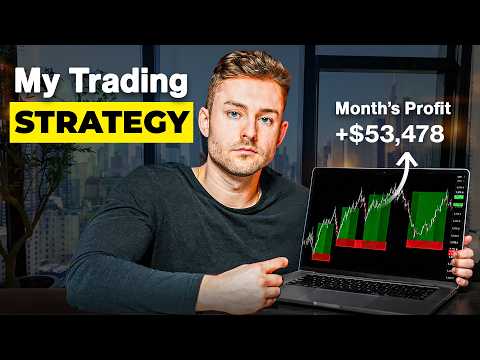
How to Trade with Market Structure and Momentum — A Complete Framework
Most trading strategies fail not because they're wrong, but because they're unnecessarily complex. The more moving parts...
A Professional Trader's Full Day: Managing Risk, Timing Fundamentals, and Hittin
Day trading is often portrayed as a high-octane sprint toward profits, but in reality, it's a disciplined marathon of ri...

Why Trading Success Requires Simplicity, Not Sophistication
🎯 The Core Problem: OvercomplicationAfter nine years in the markets, one truth stands out: trading success is not achie...
A Day in the Life: Trading Crypto Through Barcode Price Action and Risk Manageme
The session opened with a clear objective: $10,000 in profit, risking $2,000 per trade, with a focus on execution and ri...