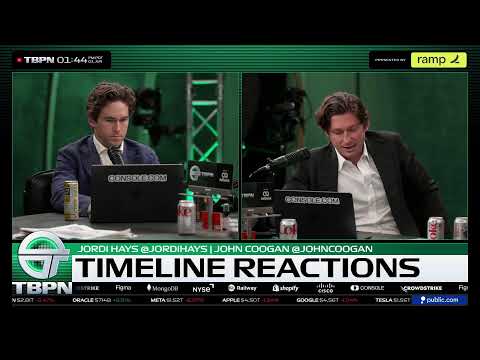
🎬 YouTubers Take Over Hollywood, Salesforce Hits $1B+ ARR, & The Great Work Culture Debate
🎥 The YouTuber Box Office Breakthrough
After years of false starts, 2026 has become the year YouTube creators finally conquered Hollywood—not by replacing the system, but by collaborating with it in perfect harmony. The numbers tell a story that would have seemed implausible just a few years ago: three YouTube-native films are dominating the box office and fundamentally changing how the industry thinks about talent discovery and franchise development.
Kane Parsons's Backrooms opened to roughly $81.5 million in North America and $115 million worldwide on just a $10 million budget. The film, based on Parsons's viral YouTube series created in Blender, represents the ultimate culmination of creator-to-cinema pipeline.
Curry Barker's Obsession has climbed to $104.7 million domestic in its third weekend, becoming Focus Features' highest-grossing domestic release—reportedly made for around $1 million. The return on investment has sparked daily viral posts celebrating this micro-budget miracle.
Markiplier's Iron Lung, self-financed with a $3 million production budget, opened to $18.2 million domestically before grossing $51.2 million worldwide. The YouTuber even built a server rack in his bathroom to handle VFX rendering faster than his studio could turn around shots.
"We are delivering [the agentic future]. The number one agentic CRM powering a shift to agentic enterprises at scale. The momentum is real. The future is unstoppable."
📊 Why This Time Is Different
The easy narrative would be: YouTuber with big audience converts subscribers into ticket sales. But that's not what's happening here. Ryan's World, a massive kids' channel, tried this approach with Ryan's World: Titan Universe Adventure and grossed only $624,000 on a $10 million budget.
What separates the success stories from the failures? Full-stack filmmaking capability.
These creators aren't just influencers with millions of fans—they've demonstrated artistic vision and technical proficiency across the entire production pipeline. Curry Barker learned to write, act, and edit through his YouTube sketch channel That's a Bad Idea, operating in a tight audience feedback loop. Kane Parsons produced his original Backrooms series in Blender and After Effects, mastering color grading, sound design, and visual storytelling before ever pitching Hollywood.
Markiplier didn't just leverage his 38.7 million subscribers—he went full-stack, even installing 220-volt outlets in his bathroom to power a custom server rack for faster VFX rendering. This hands-on technical mastery made him a safer bet for financiers.
Ben Thompson's 2017 prediction finally came true: "The reason these movies are successful is not just because their makers were spotted by powerful producers or because they brought their own fans. It's because the necessary precondition for those two things happening is actually becoming popular on pure merit."
🎬 The Hollywood Response: From Resistance to Partnership
For years, Hollywood faced an onslaught of challenges: piracy, streaming fragmentation, COVID shutdowns, labor strikes, and the rise of prestige TV. Traditional shoot days in Los Angeles fell off a cliff post-COVID and never fully recovered. Meanwhile, the creator economy exploded—more people were working in front of and behind cameras than ever before, just not in traditional Hollywood structures.
But something shifted. The industry began recognizing that YouTube isn't just a talent pool—it's a merit-based audition system. Gone are the days of showing up with a manuscript and expecting the studio to handle everything. Today's segmented production teams are too expensive to deploy on anything but established IP. For new projects, studios want creators who can leave their fingerprints across every aspect of production.
As one industry observer put it: "This hearkens back to the 1970s and George Lucas's first film." The parallel is striking—Lucas proved himself with American Graffiti, which made over $200 million on a $177,000 budget, giving him the credibility to make Star Wars.
💰 The Business Model Explained
Film financing remains complex, involving multiple stages:
- Option purchases: Producers buy the rights to develop a project
- Production investment: Funding to actually shoot the film
- Distribution deals: Major studios put up marketing dollars (often the largest expense)
When Markiplier says he spent $3 million on Iron Lung, that's production budget only. Marketing campaigns—like the extensive billboard presence for Obsession across Los Angeles—represent additional capital deployed after proving market fit.
The modern creator advantage? Optionality. They can take lower upfront cash compensation in exchange for backend points (profit participation). Robert Downey Jr. famously structured his Marvel deal this way, making hundreds of millions of dollars across the franchise.
🔮 What's Next: The Pipeline Builds
Several YouTube adaptations are already in development:
- Wesley Wang's Nothing Except Everything (non-horror) picked up by Tristar with Darren Aronofsky's Protozoa producing
- Alexey Gerasimov's Skibidi Toilet reportedly had Michael Bay attached at one point, though IP complications with Valve (the series was created in Source Filmmaker using Half-Life 2 assets) remain unresolved
Horror remains the dominant genre for these breakouts—it's notoriously cheap to produce, doesn't require A-list talent, and fear translates universally across cultures better than comedy or drama. You can create genuine terror in "a house in the woods" without shutting down Manhattan streets or building complex sci-fi sets.
But the next frontier may be AI-generated content at scale. Industry veterans predict we'll see a theatrical hit within years where 90% of the budget was AI compute costs. The technology that made a solo creator competitive with a studio—Blender, After Effects, affordable cameras—is about to take another exponential leap.
🏢 Meanwhile, in Enterprise Software...
While Hollywood grapples with its YouTube moment, the enterprise world is experiencing its own transformation. Salesforce shattered expectations with fiscal Q1 results:
- Record revenue: $11.13 billion, up 13% year-over-year
- Operating cash flow: $6.7 billion
- Agent Force crossed $1 billion ARR
- Combined with Data 360 and Informatica: $3.4 billion in AI data ARR
Marc Benioff's strategy is paying off. Rather than hiring more engineers (coding agents provide that capacity) or service agents (AI handles tier-one support), Salesforce increased its sales team by nearly 20% to meet unprecedented demand. The SaaS apocalypse narrative? Cancelled.
"We heard over and over: I'm not hiring more engineers because I'm using coding agents. I held service agents flat, then reduced slightly. But I hired almost 20% more salespeople because we have more demand than ever." —Marc Benioff
⚡ The Anthropic IPO & Market Momentum
Anthropic confidentially filed for IPO, joining the race alongside SpaceX and OpenAI to tap public markets. Index providers waived profitability requirements and cut seasoning windows from 90 days to just 5 days, forcing over $30 trillion in passive capital to absorb these stocks at IPO valuations.
The move has sparked debate about whether this "kills index funds," but for now, the momentum is undeniable. Micron extended gains to rise above $1,000 per share for the first time, with the company now worth over $1.2 trillion—up from just $60 billion 13 months ago.
🤖 The Prediction Markets Moment
Former New Yorker writer Adam Isko, now at Notion, broke down the rise of prediction markets in a detailed piece exploring how "sharps" are crushing casual traders. One grad student turned $200 into $500,000 in a single year by building models and exploiting inefficiencies.
But the system has issues. A military servicemember reportedly bet on a Venezuela strike before it happened—classic insider trading. Platforms like Kalshi and Polymarket are building AI systems to detect this behavior, but enforcement remains inconsistent.
The most fascinating insight? Hedge funds are getting crushed by individual sharps who can operate outside corporate compliance frameworks. As one trader explained: "I can scrape websites and do things SIG wouldn't allow through their corporate policies."
🏗️ The Physical World Strikes Back
Mike Schroepfer, former CTO of Meta, raised $250 million for Gigascale Capital to bet on "atoms over bits." His thesis: the marginal cost of software went to zero, so the thing that really matters now is how much physical stuff we can build.
Portfolio companies include:
- Pantalassa: Building ocean data centers for inference
- Herion Power: Deploying Model 3/Model Y power electronics on the grid
- Radiant Nuclear: Container-sized microreactors providing 1.5 megawatts for 5 years with no refueling
- Form Energy: 100-day duration batteries made from rust/iron chemistry
"It has never been a better time for startups. 6-10 person teams can have incredible impact. There's a well of talent coming out of SpaceX and Tesla showing up to old problems saying 'we know how to do this 10x better, faster, cheaper.'" —Mike Schroepfer
💭 The Great Work Culture Debate
The internet erupted over competing visions of startup life. Harry Stebbings's interview with Corgi Insurance's founder sparked controversy with the claim: "If you're not working seven days per week, you're going to lose."
Karri Saarinen of Linear pushed back, while Will Manitis published his viral "grind slop" essay. The debate highlights a fundamental tension: Corgi Insurance grew to a $2.4 billion valuation with reportedly two-thirds of employees getting company tattoos and working weekends. Linear also built a massive business with a more measured approach.
Both can be true. Different cultures attract different talent and solve different problems. The market will ultimately decide.
🎯 The Bottom Line
Whether in Hollywood or Silicon Valley, the pattern is clear: constraints have changed, creating new opportunities. Solar panels are now cheaper than the steel frames holding them. YouTube provides a merit-based audition system for filmmakers. AI enables 10-person teams to compete with 100-person enterprises.
The creators, founders, and operators who recognize these shifted constraints—and rebuild their approach from first principles—are the ones capturing asymmetric upside.
As one observer noted: "We are about to live through the craziest 5-year run in techno-capital history. God help us all."
The future isn't coming. It's already here, being built in bathrooms-turned-render-farms by YouTubers who refuse to wait for permission.
More from TBPN

New Glenn Explosion, Enterprise AI Spending Spiral, and the Return of Fossil Fev
🔥 Blue Origin's New Glenn Suffers Catastrophic Static Fire FailureBlue Origin experienced a major setback at Launch Com...
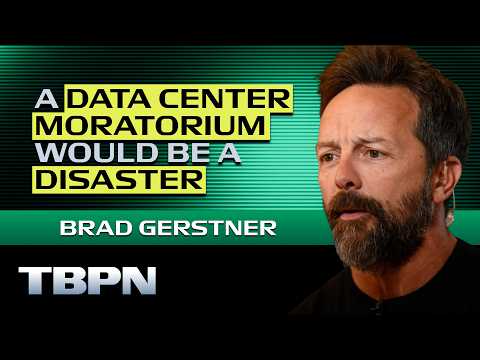
Inside Altimeter's Record Run: From Anthropic's Breakout to the Launch of Americ
Brad Gerstner returned to the pod fresh off two of the biggest months in Altimeter's 18-year history — and with a messag...
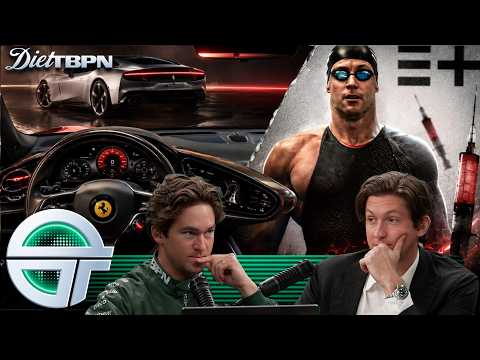
Ferrari's Electric Bet: A $640,000 Question Mark in a Shifting Market
🚗 The Luche Launch: Ferrari Goes ElectricFerrari unveiled its first-ever electric vehicle, the Luche (Italian for 'ligh...
The Mag 7 Needs a Bigger Boat: SpaceX, OpenAI, and the Great American IPO Mini-B
🔥 IPO Mania: America's Tech Boom ReturnsThe Wall Street Journal and Financial Times are calling it a "mini boom," but t...

SpaceX Charts Course for Record IPO as AI Ambitions Reshape the Company
🚀 SpaceX Sets Historic IPO in MotionSpaceX officially filed its IPO prospectus this week, setting the stage for what co...
The AI Infrastructure Boom Accelerates: Nvidia Earnings, SpaceX's Historic IPO,
📊 Nvidia Delivers Another Monster QuarterJensen Huang framed Nvidia's latest earnings in characteristically bold terms:...