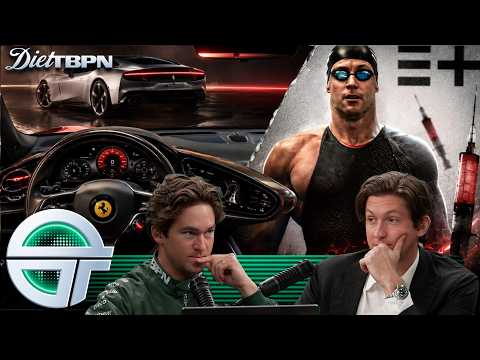
🚗 The Luche Launch: Ferrari Goes Electric
Ferrari unveiled its first-ever electric vehicle, the Luche (Italian for 'light'), in a stadium event in Rome that featured Formula 1 stars Lewis Hamilton and Charles Leclerc, Michelin-starred cuisine, and plenty of spectacle. But the market's response was swift and harsh: Ferrari's shares tumbled 6% on the announcement, with the stock closing down 5% on the day.
Named in partnership with celebrated Apple designer Jony Ive, the Luche represents a dramatic departure from Ferrari's traditional design language. The vehicle features a glass-heavy exterior, seats five passengers (a first for Ferrari), and carries a starting price of approximately $550,000, or roughly $640,000 when fully configured.
"We wanted to do what we hadn't been able to do before," said Ferrari Chairman John Elkann, framing the shift as an opportunity to experiment beyond the constraints of traditional powertrains.
📊 The Performance Paradox
On paper, the Luche delivers impressive acceleration: 0-60 mph in less than 2.5 seconds, powered by a 1,000-horsepower electric drivetrain. The top speed is capped at 190 mph.
However, these figures fall short of direct EV competitors. The Tesla Model S Plaid, for instance, achieves 0-60 in approximately 2.0 seconds (a half-second advantage) and reaches a top speed of 200 mph—while costing a fraction of the Luche's price.
More concerning is the range issue. Despite featuring an "unusually large battery," the Luche manages only 330 miles per charge. By comparison:
- BMW and Volvo: Latest releases exceed 500 miles
- Lucid Air Sapphire: Over 500 miles
- Tesla models: Commonly reach 400+ miles
This 10x price premium over mass-market EVs ($50,000-$60,000) without proportional performance advantages raises fundamental questions about value proposition.
🎯 Market Positioning Questions
The Luche occupies confusing territory in Ferrari's lineup. At $640,000, it costs:
- More than the SF90 (which has experienced notable depreciation)
- More than the 296 GTB mid-engine sports car ($300,000)
- More than the Purosangue SUV
- More than the 12Cilindri and new Testarossa
This pricing places it above Ferrari's traditional mid-tier offerings but in an unlimited production run—a combination that has historically led to rapid depreciation. The SF90, another unlimited production hybrid, has become "synonymous with depreciation crisis" in Ferrari circles.
Former Ferrari chairman Luca di Montezemolo offered scathing commentary: "If I say what I really think, I'd be doing Ferrari harm. You risk destroying a legend. I'm very sorry. I just hope they at least take the prancing horse off that car."
🏁 Design Debate: Heritage vs. Innovation
The Luche's design sparked immediate controversy online, with many criticizing it as too far removed from Ferrari's heritage. The vehicle's five-seat configuration—enabled specifically by electric architecture—represents a first for the marque.
Design partnerships with Jony Ive delivered an interior described as "fully Johnny" in character: tactile, minimalist, and focused on material quality. The exterior, however, draws comparisons to concept cars rather than traditional Ferrari language.
Industry observers noted a stark contrast: typing "design me a hypercar" into an AI would likely produce something resembling a Pininfarina Battista or McLaren—but would struggle to generate anything resembling the Luche. Whether this differentiation proves visionary or misguided remains to be seen.
⚡ The EV Timing Challenge
Ferrari's electric debut comes at an awkward moment. Electric vehicles have "fallen out of favor in the United States"—described as the world's top market for luxury cars—with the shift occurring over roughly 12-24 months.
Yet automotive development cycles span 5+ years, meaning Ferrari committed to this project when EV sentiment was markedly different. The company now faces the challenge of selling a premium electric vehicle in a market increasingly skeptical of the technology.
The functional gap with established EV manufacturers presents another hurdle. Tesla's ecosystem includes:
- Advanced driver assistance and self-driving capabilities
- Extensive Supercharger network
- Over-the-air updates and feature additions
- Entertainment systems and unique features ("Easter eggs")
Ferrari offers none of these advantages, focusing instead on brand heritage and design—traditionally strong selling points that may not translate to electric vehicles.
💭 Market Reception and Future Outlook
Early buyer sentiment appears mixed. One Ferrari collector with 30+ vehicles in his collection confirmed he will purchase a Luche, noting that cars "hated at launch" often become cult classics. The Porsche Carrera GT followed this trajectory, initially criticized for not looking sufficiently different from a 911, but now commanding $2-3 million at auction.
However, skeptics argue the Luche faces a different challenge: it's neither a limited-production halo car nor a practical daily driver at its price point. Depreciation concerns loom large, with predictions of 50% value loss within years.
Ferrari's market capitalization stands at $62 billion—impressive for an automaker with relatively low volume—but the stock has gained 30% over the past year, suggesting investors had priced in strong execution on new models.
🔮 Strategic Implications
The Luche launch reveals deeper strategic questions:
Can Ferrari compete in EVs? The company faces vertically-integrated competitors with massive scale advantages. Some analysts suggest Ferrari might need to "throw in the towel" on in-house EV development and partner with established manufacturers—potentially licensing battery and powertrain technology while focusing on design and brand.
Where is the brand headed? Two opposing visions emerge: One scenario sees Ferrari transitioning to an "Apple-style business" with broader accessibility at $150,000-$250,000 price points. The counter-scenario envisions Ferrari doubling down on ultra-luxury exclusivity—smaller volumes, higher prices, and returning to naturally aspirated engines and manual transmissions for purists.
Ferrari is already showing signs of the latter: a version of the 296 GTB without hybrid componentry is in development, suggesting the company may be hedging its electric bet.
📉 The Enhanced Games: A Cautionary Tale in Hype vs. Reality
In a separate development, Enhanced Games stock dropped 41% following the organization's first-ever event—a stark reminder of the gap between concept and execution.
The Enhanced Games, which went public before hosting any events, promised to revolutionize athletics by allowing performance-enhancing drugs. The concept: take Olympic sports and add the spectacle of unrestricted enhancement.
Reality proved less compelling. The broadcast lacked production value, storylines failed to resonate, and crucially—no records were broken until the final event. Viewers realized that Olympic appeal stems not from raw performance metrics but from national pride, decades of athlete dedication, and the four-year anticipation cycle.
"You can't just watch somebody run in a race and know whether or not they're breaking a record," noted observers. Without graphics overlays, historical comparisons, or emotional investment, the event felt hollow.
The experience reinforced a fundamental truth: the human spirit and dedication prove more compelling than any performance enhancement. The event now appears positioned less as a sports revolution and more as "a clever way to market generic supplements"—with enhanced.com offering testosterone and related products.
🎬 Closing Thoughts
Both the Ferrari Luche launch and Enhanced Games debut illustrate the challenges of disrupting established categories. Innovation requires more than novel concepts—it demands solving real problems, delivering clear value, and understanding what truly resonates with audiences.
Ferrari's electric gamble will ultimately be judged not by initial reactions but by long-term market acceptance. Whether the Luche becomes a misunderstood classic or a cautionary tale about timing and positioning remains to be seen.
What's clear: in both automotive and athletic performance, heritage, authenticity, and emotional connection matter as much as raw specifications. Sometimes, the human elements that can't be enhanced prove most valuable of all.