šŸš€ Compute Ambitions, 17.5% PE Deals, and the Mall King’s Legacy
TBPN•
March 23, 2026

šŸš€ Compute Ambitions, 17.5% PE Deals, and the Mall King’s Legacy

šŸš€ Elon’s ā€œTerafab,ā€ Space Data Centers, and a Lunar Mass Driver

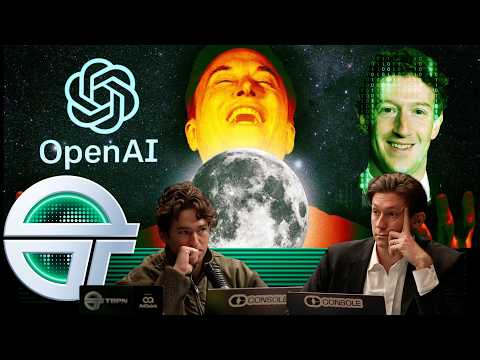
A sprawling keynote sketched an ultra-ambitious roadmap: vertically integrated compute capacity (ā€œTerafabā€), space data centers, and an electromagnetic mass driver on the Moon—complete with robots like Optimus. The delivery drew mixed reviews, but the vision reached for civilization-scale impact.

  • Scale and constraints: The pitch emphasized a need for ~1,000x more compute and acknowledged being ā€œchip constrained by a thousandx.ā€ The use case stack—internal autonomy, humanoids, XAI services, or third-party cloud—remained vague.
  • Integration moment: Tesla, SpaceX, X, and XAI logos appeared together, reviving talk of a full-stack ecosystem from launch capacity to models to consumer apps.
  • Audience read: Stagecraft lacked momentum, but the refrain persisted: ā€œIf we can do this, it’s going to be epic.ā€ The timetable for the most audacious element—the lunar mass driver—was left deliberately open: ā€œI hope to see it in my lifetime.ā€
ā€œNever bet against Elon… By now you should have learned not to doubt what his organizations can do.ā€

What a lunar mass driver entails

An electromagnetic launch system on the Moon converting solar energy into kinetic energy to accelerate payloads to lunar escape velocity. Cited benchmarks included 5,000 m an hour to escape the Moon versus 25,000 miles per hour to escape Earth’s gravity well. The concrete yardstick put forward to define a real system—beyond demos—was:

  • Permanent electromagnetic launcher installed on the lunar surface
  • At least 300 metric tons launched over 12 months
  • Targeting 95% mission success with ≄200 launches per year
  • Payloads must be useful (e.g., water, metal, components) and captured at destination

Timelines and dependencies

  • Over/under: One camp set the bar at 15–20 years for a working system; others took the over. Another timeline swung from 50 years down to 30, citing rapid AI progress.
  • Six-step reality check: 1) heavy lunar launch and refueling; 2) routine cargo flights; 3) power buildout (solar + storage); 4) robotic construction; 5) mass-driver assembly; 6) downstream logistics to catch payloads. Even optimists called the first step ā€œthree to five years away, like minimum.ā€
ā€œTurning science fiction into science fact.ā€

🧩 Chips, CHIPS, and Industrial Strategy

The vision intersects directly with domestic semiconductor ambitions. The CHIPS Act debate resurfaced: if the U.S. aims to counter China at the cutting edge, Intel was seen as a logical anchor, with the U.S. able to exert leverage via IP chains (ASML, TSMC) and export packaging rules involving Nvidia.

  • Recalled figures included ā€œlike 60 billion or something up for grabsā€ around the CHIPS Act, while Elon ā€œwas marshalling around 60 billionā€ for the Twitter buyoutā€”ā€œsomething like that, 40 something billion.ā€
  • Intel was cited around a $220 billion market cap now, with the view that it was lower back in 2022.
  • Strategic take: ā€œIt makes total sense for Elon to make chips.ā€ Extending XAI into cloud services was framed as logical over time—provided the narrative evolves beyond ā€œjust epic.ā€

šŸ’ø OpenAI’s 17.5% Preferred Hurdle: PE Distribution-as-a-Service

OpenAI’s private equity joint venture narrative drew heat—then a detailed counterpoint reframed it as a classic distribution land-grab backed by preferred economics, board access, and engineering resources.

  • The terms: A 17.5% minimum return for PE participants via preferred equity—described as a hurdle, not a coupon on debt—plus board seats and early access to unreleased models.
  • Scale: A 10 billion joint venture figure circulated; one breakdown cited PE firms putting up 4 billion for preferred equity. Portfolios are vast: one sponsor alone owns 75 software companies generating 30 billion in annual revenue. Collectively, PE did 1.8 trillion in buyouts last year.
  • Why it matters: The move ā€œwholesales tokensā€ into hundreds of portfolio companies, bypassing traditional enterprise sales. Exclusivity and capital commitment reduce parallel RFPs with rivals.
ā€œThe 17.5% return looks like a red flag until you look at it closely. It’s preferred equity hurdle, not a coupon on debt.ā€
  • Risks and run-rate: Commentary flagged 14 billion in projected losses this year and profitability not expected until 2029. At the same time, enterprise is already cited as 10 billion of 25 billion in revenue—40%—and ā€œgrowing to 50% by year end.ā€
  • Competitive landscape: Anthropic was described as running a parallel approach with other sponsors, but without a guaranteed return and more ā€œPalantir-styleā€ consulting.

šŸ“ˆ Enterprise AI: Agents, Ads, and Org Speed

  • Workforce and GTM: Reporting signaled OpenAI plans to double its workforce as a business push intensifies. OpenAI also tapped a former top Meta executive, Dave Dugan, as VP of Global Ad Solutions—underscoring an urgent revenue push for compute needs.
  • Early ad performance: Advertisers cited limited performance data in initial ChatGPT campaigns. As Eric Seufert noted, early channels often lack full measurement, and agencies are expected to fill gaps with polling, pixels, and triangulation: ā€œIf an ad agency says it can’t provide performance data because the channel doesn’t provide it, it is merely a media buying intermediary.ā€
  • Meta’s CEO agent: Inside a 78,000-person organization, a ā€œCEO agentā€ was described as helping retrieve answers across internal KPIs and org structures, with employees graded on AI use. Quote: ā€œWe are investing in AI native tooling so individuals at Meta can get more done. We’re elevating individual contributors and flattening teams.ā€

šŸ›ļø The Mall King’s Playbook: Scale, Experience, and Succession

David Simon, long-time chief executive of Simon Property Group, passed away at 64. His tenure—spanning more than three decades—reshaped U.S. retail real estate.

  • Built an empire of 250 properties and 206 million square feet.
  • Reached the ā€œwealthiest echelons,ā€ with a cited family net worth of 11.6 6 billion, ranking number 38 on Forbes’ list.
  • Strategy: invest through downturns, upgrade to luxury, add high-end fitness, mini golf, and upscale residences; acquire ailing retailers (Aeropastel, Nautica, Eddie Bauer, J.C. Penney, Forever 21, Lucky Brand, Brooks Brothers) to prevent vacancies and create returns.
  • Succession: Effective Monday, the board appointed Eli Simon, one of his five children, as CEO and President.
ā€œDavid’s word was his bond… If you came to a resolution and you shook hands, it was golden.ā€

Key Takeaways and Watchlist āœ…

  • Compute industrialization: The 1,000x compute ambition highlights upstream bottlenecks (chips, energy, fabs) and the logic of vertical integration—but requires clearer product-market mapping beyond rhetoric.
  • Moonshot sequencing: Even bullish roadmaps concede multi-year prerequisites—heavy lunar lift, power buildout, robotics—before mass-driver credibility. Benchmarks like 300 metric tons/12 months, 95% success, and ≄200 launches per year are useful goalposts.
  • Distribution via PE: A 17.5% preferred hurdle plus board access is a bid to captive-enterprise scale. Portfolio breadth (75 companies; 30 billion revenue; 1.8 trillion buyouts) suggests a powerful channel—balanced by capital burn (14 billion) and profitability timing (2029).
  • Enterprise AI adoption: From Meta’s agent and org flattening across 78,000 employees to OpenAI’s ad stack build-out, the center of gravity is moving from pilots to operating models—measurement discipline will separate signal from noise.
  • Retail real estate: Simon’s legacy reinforces the value of experience-centric assets and control of tenant health at scale. Leadership transition bears watching.

More from TBPN