🚀 The eBay-GameStop Thesis, AI Infrastructure Wars, and Why the Bubble Isn't Coming
🎯 The eBay-GameStop Deal: A $2 Billion Efficiency Play Disguised as a Merger
The market's reaction to Ryan Cohen's proposed eBay acquisition has ranged from confusion to outright skepticism. Most commentary has focused on the wrong question: Can GameStop afford eBay? The real question is whether the underlying business model actually works — and according to a detailed analysis of eBay's financials, it does.
The thesis isn't about product innovation or marketplace superiority. It's about operational efficiency and a staggering misallocation of capital that Wall Street has been pricing as fixed cost.
"eBay spent $2.4 billion on marketing in fiscal 2025. How many new users did they acquire? 1 million. That's $2,400 of marketing spend per new user on a platform that every American already knows exists."
The user base grew from 134 million to 135 million users after that massive marketing expenditure — essentially just reacquiring churned users or replacing lost accounts. This inefficiency represents the core opportunity: $2 billion of marketing fat that can be cut, with the savings alone capable of covering the interest on acquisition debt.
But the opportunity extends beyond cost-cutting. There's a structural advantage that Cohen may be positioning to exploit.
🏪 The Physical Verification Moat in an AI-First Commerce World
Amazon's used and collectibles business has been flat for six years. Despite attempts with Amazon Renewed, collectibles programs, and trade-in services, Amazon has failed to crack this category. The reason is structural: high-value collectibles — from rare trading cards to vintage pens and authenticated memorabilia — cannot be processed through the same fulfillment infrastructure as commodity goods.
As one observer noted:
"You cannot put a 1962 Mickey Mantle card through the same warehouse as a phone charger. That category is structurally defensible against Amazon."
GameStop brings 1,600 physical retail locations that could serve as verification and authentication hubs. In an increasingly AI-driven commerce landscape where agents will execute purchases on behalf of consumers, physical verification becomes more valuable, not less.
Consider the authentication problem: AI agents can browse listings and identify potential purchases, but they cannot verify authenticity without a trusted physical verification layer. A network of retail locations that can physically authenticate high-value goods creates a competitive moat that becomes more defensible as commerce becomes more automated.
💡 The Discord Precedent: Why Physical Verification Matters
This isn't theoretical speculation. During the NFT boom, Discord processed more than $10 billion in GMV through buy-sell channels. The platform provided liquidity and community, but leadership quickly identified that scaling beyond NFTs required physical verification capabilities.
The team explored expansion into rare sneakers, collectible keyboards, and other high-value physical goods that appeal to enthusiast communities. But without infrastructure for physical verification, the opportunity was out of scope. NFTs worked because blockchain provided native verification — ownership and authenticity were cryptographically guaranteed.
The eBay-GameStop combination could solve this structural problem: marketplace liquidity plus physical verification infrastructure.
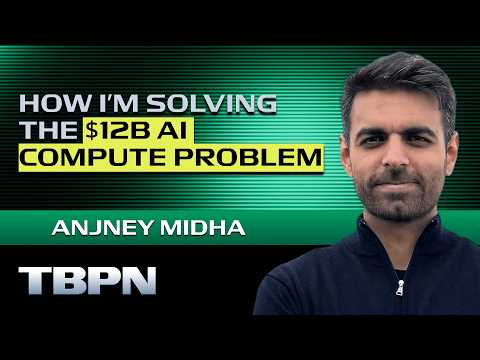
⚡ AMP: Building the Compute Utility Layer for AI Research
While the eBay-GameStop deal captures headlines, a parallel infrastructure play is unfolding that addresses a fundamental inefficiency in AI development: compute utilization.
The analogy is 1885 industrial England, when factories were being built across the landscape, each running its own generator at half capacity because electricity grids didn't yet exist. Today's AI ecosystem faces the same problem with GPU clusters.
As one infrastructure operator noted:
"Elon's got 500,000 GB200s in Memphis running at 11% MFU and less than 60% node allocation. That's $12 billion of compute being wasted."
AMP was founded as a public benefit corporation to function as an independent system operator of the compute grid — aggregating capacity, coordinating utilization, and providing access at cost to independent research teams outside the hyperscaler ecosystem.
📊 The AMP Model: Venture Capital Meets Infrastructure
After just 8 weeks of operation, AMP has secured more than $1.3 billion in commitments for its first fund. The firm expects to deploy several billion dollars of compute capacity by the end of this year.
The strategy is straightforward but novel:
- Acquire compute capacity through long-term leases and direct purchases
- Pool clusters on a coordinated grid to drive utilization above 95%
- Provide compute at cost to portfolio companies
- Reinvest carry and fees to acquire more capacity
The firm's first major investment: $300 million into Anthropic. But the model isn't about backing application-layer companies alone — it's about removing infrastructure bottlenecks for focused talent teams working on frontier problems.
As the founder explained:
"The optimal unit of research today is a focused talent team outside of the hyperscalers. Compute is the strategic asset and the primary bottleneck. If you're not at the hyperscalers, you just can't get access."
🔬 The Portfolio Strategy: Neo-Labs and Physical AI
Rather than spray-and-pray seed investing, AMP is building what it calls the AMP Foundry — a model focused on co-designing and incubating neo-labs one at a time.
The first example: Periodic Labs, working on high-temperature superconductor discovery. The facility occupies 30,000 square feet in Menlo Park and operates with a daily standup and execution cadence reminiscent of an operating company, not a traditional research lab.
The workflow creates a closed-loop verification system:
- AI predicts new materials with desired properties
- Robots synthesize the predicted materials
- X-ray diffraction machines test whether the materials exhibit the predicted properties
- Verification results feed back into training to improve future predictions
The result: more material verifications in the last 90 days than the previous decade in the field.
This approach reflects a specific investment thesis: target domains where the verification loop is clear and execution is the bottleneck, then remove capital, compute, and operational constraints.
🏛️ Why Structure as a Public Benefit Corporation?
The PBC structure serves both philosophical and practical purposes.
From a substantive perspective, both venture capital and infrastructure exhibit positive externalities when implemented correctly. Venture capital funds innovation; compute infrastructure enables small teams to achieve disproportionate impact. Markets typically underprovide goods with positive externalities, leading to market failure. The PBC structure allows AMP to operate as a self-regulated utility rather than waiting for regulatory frameworks to emerge.
From a practical perspective, the structure provides legal protection for decisions that might appear to destroy shareholder value in the short term:
"I don't want to get sued by shareholders for whom it's not legible why I'm giving away billions of dollars of compute at cost to portfolio companies. That's shareholder value we're destroying in the short term — but creating orders of magnitude more value in the long term."
The model draws inspiration from enduring businesses like Ben & Jerry's and REI, which have demonstrated that trust, community, culture, and execution are more durable moats than technology alone.
🌍 Why This Isn't a Bubble — and Why That's the Problem
One of the most contrarian observations from the infrastructure perspective: the world may not be prepared for AI adoption to be slower and more uneven than expected.
Despite years of development and billions in investment, most of the world still has no idea what AI is. In many regions and industries where diffusion was expected by now, adoption remains minimal — even basic tools like ChatGPT are barely used.
"If we stopped capabilities today and half of us in the AI ecosystem vanished off the planet, nothing would change. It's still so early."
This observation has profound implications for infrastructure investment. If adoption curves are longer and more gradual than venture models assume, the firms that win will be those that can sustain long-term capacity commitments and avoid boom-bust cycles.
Inertia is powerful. The AI infrastructure buildout is happening at a pace that outstrips actual deployment and monetization. The challenge isn't technological capability — it's diffusion, education, and integration into existing workflows and business processes.
🎓 Building in Public: CS 153 at Stanford
In parallel with building AMP, the founder is teaching CS 150/153 at Stanford — now the largest class on campus, dubbed "AI Coachella" for its scale and lineup of industry speakers.
The course focuses on Frontier Systems and operates with a philosophy that everything promised in the past decade is now achievable: flying cars, room-temperature superconductors, cancer cures. The goal is to demonstrate that these advances can happen in a stable, predictable way that avoids the boom-and-bust cycles that have characterized previous technology waves.
Lectures are available publicly at cs153.stanford.edu, with speakers including industry leaders like Scott Nolan and Jensen Huang.
✅ Key Takeaways
- The eBay-GameStop deal is fundamentally about operational efficiency, not marketplace innovation — $2.4 billion in marketing spend yielding 1 million net new users represents massive cost-cutting opportunity
- Physical verification infrastructure becomes more valuable in an AI-first commerce world, not less — GameStop's 1,600 locations could create a defensible moat for high-value collectibles
- Compute utilization is the infrastructure bottleneck — major clusters running at 11% MFU and 60% node allocation represent billions in wasted capital
- AMP raised $1.3 billion in 8 weeks to build compute infrastructure as a utility, providing capacity at cost to independent research teams
- The neo-lab model focuses on domains with clear verification loops — Periodic Labs achieved more material verifications in 90 days than the previous decade in superconductor research
- AI adoption is far slower and more uneven than expected — most of the world still isn't using basic tools, suggesting longer diffusion curves ahead
The common thread across these themes: infrastructure, verification, and patient capital are becoming the key differentiators in an AI landscape that remains far earlier-stage than market narratives suggest.
More from TBPN

Tech's Big Four Report: Cloud Dominance, Capex Surges, and the Fracturing AI Nar
💰 The Quad Kill Returns: Four Tech Giants, One Day, Massive ImplicationsTech earnings season delivered a rare phenomeno...

Fed Holds Steady as Big Tech's $200B+ Capex Bets Face Their Biggest Test
📊 A Watershed Day for Markets and Technology Financial markets faced a convergence of major events that will shape the...

Beijing Flexes Power Over AI, Science Says Mindset Beats Reality, and Meta Beams
🚨 The Musk vs. Altman Showdown BeginsElon Musk's $134 billion lawsuit against Sam Altman officially kicked off in Oakla...

AI’s Big Build: Amazon’s capex math, data center politics, cyber-AI containment—
⚡ The State of Play Thursday, April 9, 2026 delivered a dense cross-current of AI scale-up, data center politics, cyber-...

Muse Spark, Mythos, and the Compute Scramble: Inside a New Phase of the AI Cycle
🔥 Meta’s Closed-Source Turn Lands With Muse Spark — And Markets Cheer Meta Platforms unveiled Muse Spark, its first maj...
Risk-On Rally Meets AI Arms Race: Meta’s Muse Spark, Anthropic’s ‘Mythos,’ Predi
Market Snapshot 🚀U.S. equities ripped higher: Dow +2.68%, S&P 500 +2.46%, NASDAQ +2.9%.Gains came on ceasefire head...