Topline: A $100B push to rebuild U.S. manufacturing
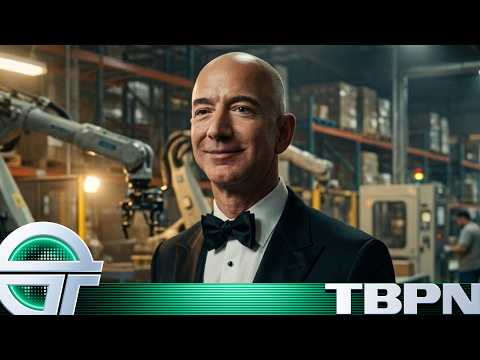
Jeff Bezos is reportedly in talks to raise $100 billion for an AI manufacturing fund, canvassing sovereign wealth funds and global capital to scale a buy-and-build strategy across the U.S. industrial base. The ambition is sweeping: acquire operationally complex manufacturers, layer in AI-driven efficiencies, and onshore deeper segments of critical supply chains.
“It’s a vision fund for America.”
The headline number sparked instant comparisons to SoftBank’s Vision Fund — and some backlash about why a billionaire with $200 billion would raise external capital. The answer hinted in discussion: this is not just about a single balance sheet; it’s about mobilizing global capital for a strategic industrial project and letting other people in on the action.
Why it matters 🏭
- Industrial policy tailwinds: A mega-fund aimed at revitalizing American manufacturing intersects with themes of economic independence, national security, and job creation. As noted, U.S. manufacturing jobs have been shedding over the last year. The thesis here counters the knee-jerk “automation = job loss” narrative.
- AI as an operating system for factories: From plant scheduling and supplier forecasting to visual inspection and downtime optimization, AI can compress costs and lift throughput in thin-margin businesses.
- Supply chain sovereignty: Competing with direct-from-factory platforms and lowering reliance on transoceanic shipping argues for deeper onshore production of components — not just assembly.
The SoftBank parallel — and the operator edge ⚖️
The SoftBank comparison cuts both ways. Masayoshi Son is a high-variance legend who has been reported to have made and lost fortunes at staggering scale:
- Losses: “He’s held the crown for the man who lost the most money in human history after losing 76 billion in two years.”
- Wins: “He’s made almost hundred billion dollars twice… One on Alibaba and then the second one on ARM.”
The distinction for this proposed American variant is the operator at the helm. Bezos built Amazon through decades of low-margin execution, long before a high-margin ads business emerged, and even AWS “doesn’t have 80% gross margins.” The culture was forged in the real world — logistics, inventory, warehouses — not just zero-marginal-cost software.
“In 2012, Amazon bought KA systems which turned into Amazon Robotics… [and] delivered over a million robots that are deployed across the operations network.”
Track record under stress also matters. Bezos has weathered boom-bust cycles:
- “At one point, Jeff Bezos lost 85% of his net worth in like two years… was worth like eight or nine billion and got down to his last 1 billion.”
- Blue Origin was founded in 2000 and was kept alive through the dot-com bust. More recently, “they landed New Glenn.” The approach has been described as “turtle mode” — slow, persistent, and results-driven.
The playbook: A PE-style rollup — and the check sizes 💼
Discussion framed the fund as a private-equity-style buy-and-operate platform focused on operational excellence and AI enablement.
- Check sizes: “Can Bezos buy a company for 1 billion, 5 billion, 10 billion, 50 billion… and operate it and scale it?”
- GP commit: Expectations ranged from “20 or 30” (units not specified).
- Positioning: Deeper in the supply chain seems more likely than buying consumer brands outright; less headline risk, more operational leverage.
Potential targets and control points 🔧
Examples surfaced across autos, aerospace, materials, and factory automation — where high revenues and modest market caps create room for efficiency gains.
- Lear (auto seats and electronics): “23 billion in 2025 revenue… market cap is around 5 billion… trades at like 13 price-to-earnings.” Rich AI surface area in plant scheduling, supplier forecasting, and QC.
- BorgWarner (propulsion/power): “14 billion in 2025 revenue… market cap is 9.5 billion.” From turbochargers to EV components and already selling “turbine generator systems for data centers” — directly tied to the AI power buildout.
- Hexcel (carbon fiber and resins for aerospace): “Guiding to two billion in revenue… market cap is 5 billion.”
- Goodyear (tires): “Market cap… 1.8 billion and revenue was 18 billion.” A classic AI-for-manufacturing case where QC and downtime optimization matter in ultra-competitive, thin-margin markets.
- Rockwell Automation (factory controls/software): “It’s expensive at 40 billion but potentially in the budget.” A strategic control point to push AI across thousands of factories rather than a turnaround story.
There was even a thought experiment about going up the stack: “Do you think there’s a world where he just buys a Ford Motor Company?… What is Ford now? I thought it’s 45.” The counterpoint: greater leverage may come from less brand-exposed, deeper-tier suppliers.
Jobs, automation, and the ‘less-blue collars’ thesis 👷♂️
“If he’s successful… we will actually start adding a bunch of new manufacturing jobs.”
The argument: AI doesn’t eliminate work; it changes it. Visual inspection, predictive maintenance, and autonomous material handling shift worker time toward higher-value tasks — hence the line that “the collars get less blue.” In markets where customers often choose the cheapest option (tires were cited), every basis of uptime and quality compounds into competitiveness and, ultimately, capacity-led hiring.
Compute, space, and an integrated AI stack 🚀
There’s a software-and-space adjacency angle via Project Prometheus and Blue Origin. The industrial fund could complement a multi-decade infrastructure build in compute and communications:
- “It was like 50,000 satellites, I think.” A direct Starlink competitor has been floated, with timelines like “three years behind, four years.”
- Speculation: an Elon-style megacorp structure where Blue Origin, an AI vehicle, and compute infrastructure harmonize — potentially even heading off-planet for data center capacity.
Actionable takeaways 📊
- Watch the target set: Low-multiple, high-revenue industrials with clear operational complexity (autos, aerospace materials, power systems, factory controls) are squarely in scope.
- Favor control points: Platforms that sit at integration layers (automation software, controls, industrial power for data centers) can amplify AI across many facilities.
- Expect sovereign capital: A global LP base (including sovereign wealth funds) would underscore the project’s geopolitical and industrial-policy gravity.
Key quotes
- “He wants to let other people in on the action.”
- “It’s a vision fund for America.”
- “At one point, Jeff Bezos lost 85% of his net worth… got down to his last 1 billion… [and] kept Blue Origin alive.”
- “Amazon Robotics… delivered over a million robots across the operations network.”
- “They’re already selling turbine generator systems for data centers.”
What to watch next
- Initial platforms: First acquisitions will telegraph whether the focus is deeper-tier components, factory automation control points, or data-center power systems.
- Capital structure: The mix of equity, debt, and any disclosed GP commit (rumored as “20 or 30”) will set the risk posture.
- Policy and labor: Signals on job creation, training, and upskilling will shape public support for AI-led industrial expansion.
- Space-compute alignment: Any formal ties between the fund, Project Prometheus, and Blue Origin — including satellite filings around “50,000 satellites” — would confirm an integrated AI-communications stack.
Big picture: a seasoned operator aims to marshal $100 billion toward AI-native manufacturing and supply chains. If executed, the result could look like a homegrown, industrially grounded counterpart to the Vision Fund — with American production capacity as the headline KPI.