Perico3 min read
Trader Craig Percoco details the daily routine behind his seven-figure results
Percoco walks through his pre-market setup, top-down analysis and journaling process, arguing routine matters more than strategy for consistent profits.
AI summary of “My Daily Trading Routine That Made Me A Millionaire Trader”
Key takeaways
- Craig Percoco says habits and routine matter more than finding a "perfect" strategy for consistency.
- He sets up his desk around 8:45-9:00am, using TradingView, a trade journal (Tradezella/Notion) and Blofin for execution.
- His chart tools include fair value gaps, break of structure/change of character markers, and previous day high/low levels.
- He builds a watch list of Bitcoin, Ethereum and Solana, judging relative strength to pick which pair to trade.
- Percoco describes a trade example yielding "6 almost 7R," which he says equaled a $14,000 trade for him.
Tokens mentioned
The speakers' views, not ours
Judged stronger than Ethereum within Bitcoin's range, favored for long entries that session
“Salana is maintaining a lot higher of a position in this overall move than say that of Ethereum”
Seen as weaker than Solana after testing previous day low that session
“that's telling me Ethereum is automatically weaker on the session”
Used as the benchmark range to judge relative strength of other pairs, no directional call given
“I'm going to start with Bitcoin and I'm going to look at what's going on with Bitcoin”
Routine over strategy
Percoco opens by arguing that consistent profitability comes less from finding a perfect strategy than from the habits and processes a trader builds around it. He says professional traders often have access to the same information as everyone else, but outperform because of their "routines, habits, and processes" that allow them to act with discipline each day.
He dismisses the idea of an elaborate morning ritual, saying most traders simply wake up, get to their desk, and work.
"you don't need to do all of these sort of like perfect things, but you do need to sort of get to the brass tax of what the framework is"— the host. He says he sometimes arrives just 30 minutes before the New York open and still has time to prepare properly.
Desk setup and chart tools
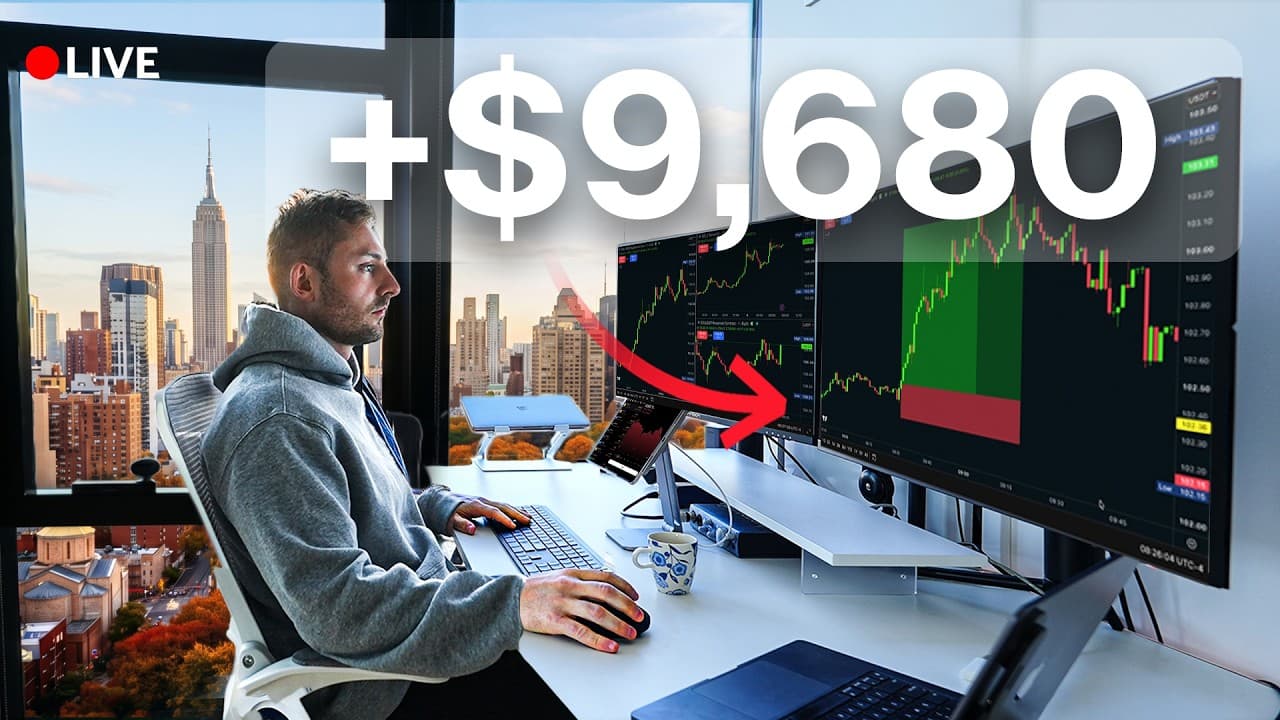
Percoco describes his physical setup: a TradingView window with 1-minute and 15-minute charts on one monitor, and his trade journal (he names Tradezella and a Notion-based team journal) plus his exchange — he uses Blofin as the example — on another. He keeps a wide, distraction-free view of market structure to start his analysis.
On his chart he marks New York session open lines, fair value gaps (three-candle imbalances where price tends to react), and break-of-structure/change-of-character markers that show market structure, along with the previous day's high and low, which he calls his "points of interest." He also opens his trading discord, where his team does daily analysis and live trading each morning.
Pre-market and top-down analysis
Before trading, Percoco checks TradingView's economic calendar for high-impact events; in the episode's example he flags a Federal Reserve interest rate decision at 2:00pm Eastern on "the 28th" as a likely source of volatility and says he will wait for the dust to settle around such events rather than trade directly into them.
He then performs top-down analysis, building a watch list of his three traded pairs — Bitcoin, Ethereum and Solana — and comparing their relative position within recent price ranges. In the session he reviews, he notes Solana holding higher in its range than Ethereum, which had already tested its previous day low, leading him to call Ethereum "automatically weaker" and to favor targeting Solana to the upside. He marks unmitigated fair value gaps and previous day highs/lows as entry or profit-target zones, and says he will not take a trade until price responds at one of these pre-marked levels, to "react to our plan rather than reacting to emotion."
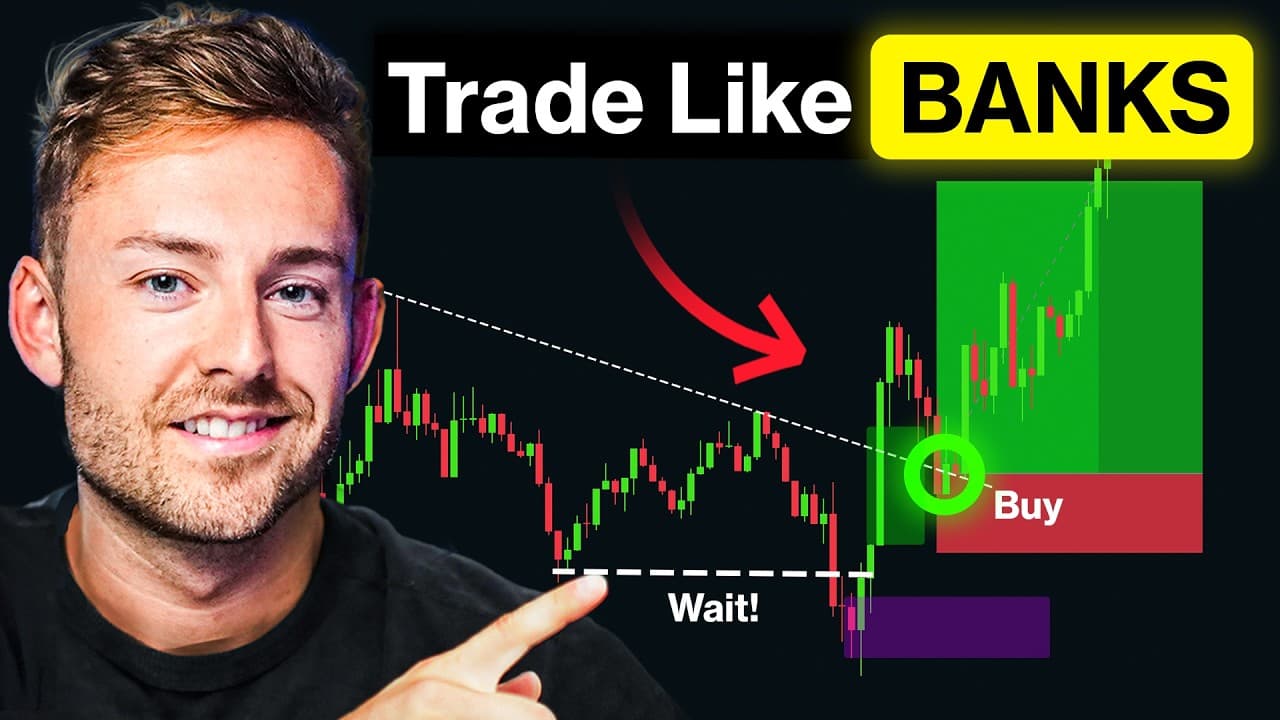
Walking through a live example, he describes a liquidity sweep, an order block, a change of character, and a Fibonacci-based entry at the midpoint of a displaced fair value gap, with stops below the order block and targets at nearby gaps or the previous day high. He says one such trade worked for roughly three times his risk, adding that taking a lower gap target instead could have returned six times risk, and that missing it but catching a later setup would have produced "almost 7R," which he says equaled a $14,000 trade for him.
In-market execution and post-session review
During the session, Percoco logs trades into his journal in real time — date, pair, timeframe, direction, risk, and a checklist of criteria such as higher-timeframe point of interest, displacement, fair value gap and change of character — so he can hold himself accountable to his rules rather than judge trades only after the fact. Once a position is set, he says he steps away from the desk and relies on chart alerts rather than watching every tick, to avoid emotional decisions.
After the session, he reviews whether he followed his rules rather than focusing purely on profit, noting what went well and what to improve. He sometimes uses TradingView's bar replay feature to revisit a prior session the same evening and apply new lessons immediately rather than waiting until the next day. He closes by framing the gap between profitable and unprofitable traders as small, saying it comes down to "process refinement and practice over time," and likens it to professional athletes relying on repeatable execution under pressure.
Written by AI from the video's transcript. It can compress, misattribute or miss context — the original video is the source. Not investment advice.