TBPN3 min read
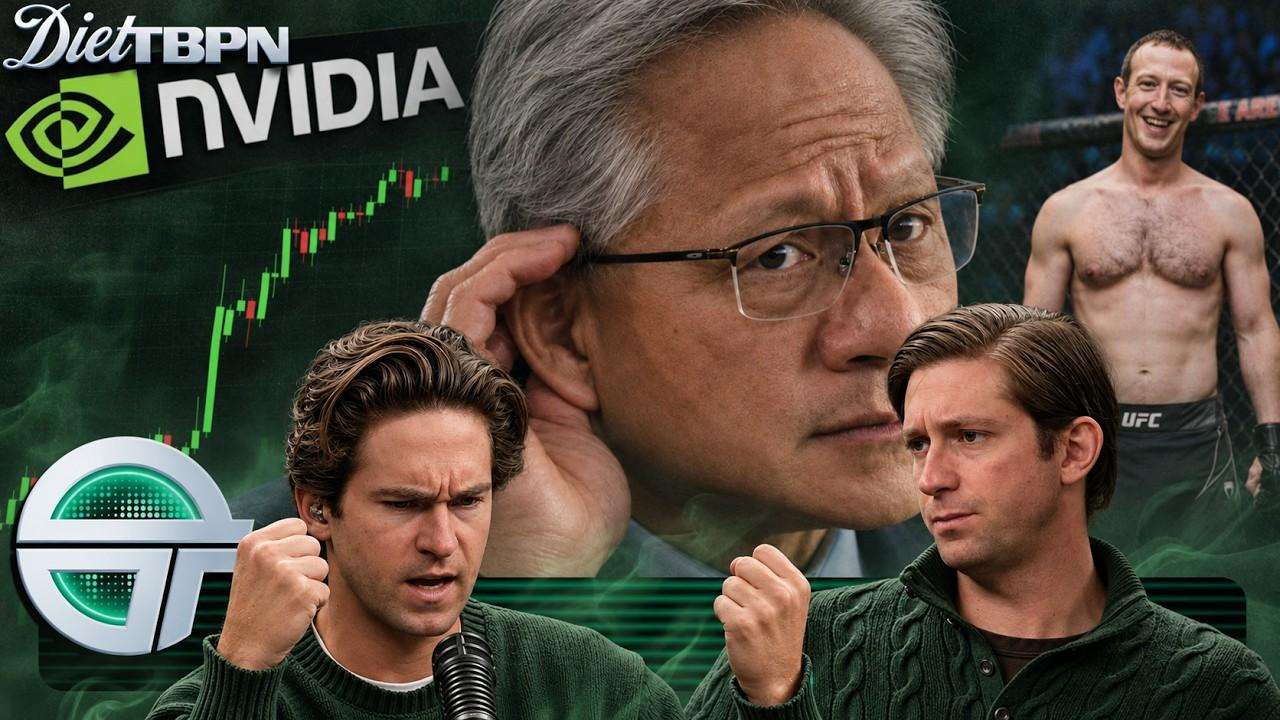
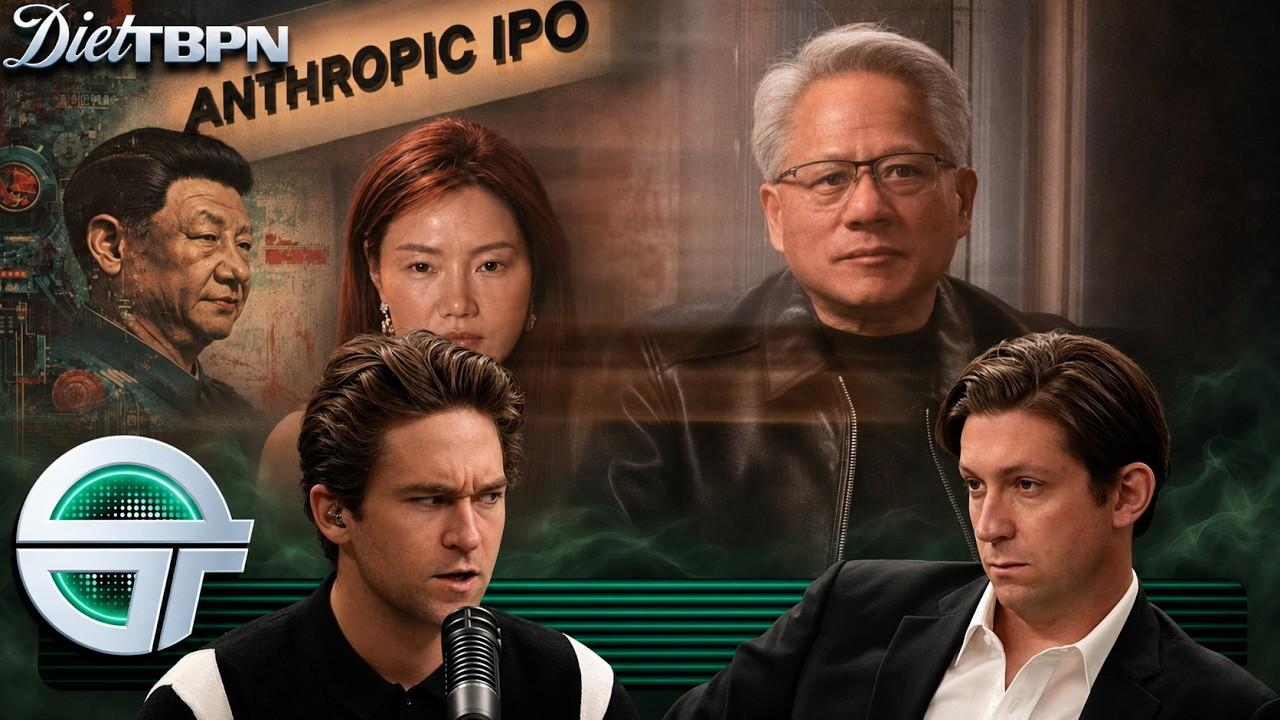
Dylan Patel: Jensen Huang scandal could hand control of AI's "central bank" to a committee
Semianalysis's Dylan Patel argues Jensen Huang's exit would slow Nvidia's dealmaking, hurt open-source AI, and strip venture capital of its biggest backer.
AI summary of “"Jensen Huang's Exit Could Change the AI Industry Forever" - Dylan Patel”
Key takeaways
- Dylan Patel says Nvidia deals that relied on Jensen Huang's personal authority will now "go to committee," slowing decisions.
- Patel names Ian Buck and Jonah Alvin as internal succession candidates, but prefers external picks Charlie Kawwas of Broadcom and Johnny Srouji of Apple.
- Patel argues open-source AI is the biggest loser, since Nvidia-backed labs like Reflection and Thinking Machines rely on open models tied to China.
- He says Anthropic benefits versus OpenAI since OpenAI is "90 plus% Nvidia" while Anthropic is "one-third or less Nvidia."
- Patel predicts venture capital is now "out of the lab trade" as OpenAI and Anthropic move toward public liquidity, leaving VCs reliant on Jensen's backing of inference and application startups.
Nvidia's deal pipeline loses its decision-maker
Dylan Patel argues that Jensen Huang's exit removes the single figure who could unilaterally commit Nvidia's capital and supply to AI companies. He says deals that used to rely on Huang personally promising large investments will now face slower, more bureaucratic approval. "Now it's like a committee of people doing stuff and that's just going to make decisions slow," he says, adding that Nvidia could technically fall behind as a result.
Patel breaks the risk into three parts: no clear technical successor, a supply chain that responded to Huang's personal charisma and dealmaking rather than cold business logic, and an ecosystem of open-source labs and application companies that Nvidia has financially propped up. He doubts a new CEO could convince suppliers to hand over "60% of my capacity or 70% of my capacity... at a price that's below market rate" the way Huang could.
Possible successors: internal picks weighed against outside options
Internally, Patel names Ian Buck and Jonah Alvin as the two most plausible successors, noting Alvin is "technically like the closest to the leader" of Nvidia's technical organizations, while Buck is more charismatic and better suited to dealmaking. He is skeptical either can match Huang across both technical and supply-chain dimensions simultaneously.
His preferred external candidates are Charlie Kawwas, described as Broadcom's long-serving number two, and Johnny Srouji, Apple's head of hardware. He dismisses other names floated, including AWS's Andy Jassy and Google's chip leadership, arguing none combine the technical depth and supply-chain instincts Nvidia's position requires.
Open-source AI and Chinese labs face a reckoning
Patel says Chinese AI labs have worked closely with Nvidia even without direct chip sales, and that labs reliant on Nvidia, such as those using Huawei or diversified chips, are now adjusting their assumptions. He singles out Zhipu and DeepSeek as already diversifying across non-Nvidia accelerators.
"I think the biggest loser is the open source ecosystem for sure." — Dylan Patel
He argues that with Huang's credibility "out the window" amid investigations, defenders of looser China chip policy have lost influence, likely leading to tighter restrictions. He contrasts OpenAI, which he says is "90 plus% Nvidia," with Anthropic, "one-third or less Nvidia," arguing the fallout benefits Anthropic over OpenAI since Anthropic pushes open-source weaker, closed-source winning.
Venture capital loses its biggest ally
Patel says venture capital is now largely "out of the lab trade" as OpenAI and Anthropic pursue public-market liquidity, calling OpenAI's last funding round "not that great." He warns the bigger risk is downstream: inference clouds and application companies that depended on Nvidia-backed financing and compute access.
"Jensen is the venture ecosystem's strongest ally and he's propped up a lot of companies." — Dylan Patel
He questions whether firms can scale from "a billion dollars of revenue to 10 billion" without secure compute financing, and whether application companies like Harvey and Sierra will be forced onto closed-source models, becoming "wrappers" rather than owning their customer relationships.
AI 2027 predictions and the China "wake-up" question
Discussing the AI 2027 forecast, Patel calls it "a big stretch" but notes roughly 70% of its verifiable predictions this year "have turned out to be accurate." He remains skeptical about diffusion-related predictions but says reinforcement learning self-improvement "is looking more and more true."
On whether China is "waking up" to AI competition, as the forecast anticipated, Patel is uncertain, noting China could simply tighten its own supply chain leverage given every Nvidia and Google server contains Chinese content. He also pushes back on the idea that the Chinese businesswoman linked to Huang was a deliberate honeypot, calling her instead "a well-connected individual" likely passing information under pressure rather than acting as a classic spy.
Written by AI from the video's transcript. It can compress, misattribute or miss context — the original video is the source. Not investment advice.