TheRollupCo3 min read
Bloomberg's Seyffart: tokenization is in its "second inning," Zcash top of institutional chat
Bloomberg Intelligence's James Seyffart says tokenized assets, agentic commerce and Zcash are reshaping how institutions think about crypto, with Bitcoin eyed at $10 trillion by 2028.
AI summary of “James Seyffart: Tokenization Is Taking Over Wall Street (Insider Take)”
Key takeaways
- James Seyffart says tokenization is "so early, like second inning," comparing its growth curve to stablecoins.
- He says Zcash has become one of the top three topics in Bloomberg's crypto client chat over the last month to three months.
- Seyffart expects Bitcoin to reach a $10 trillion market cap "by the end of 2028."
- He says ETF listings don't guarantee price gains, noting Bitwise closed its dogecoin ETF despite listing.
- Seyffart argues crypto remains correlated to risk assets until Bitcoin "diversifies itself" from that label.
Tokens mentioned
The speakers' views, not ours
Says institutional clients are highly intrigued by its quantum-readiness and privacy features
“Zcash is probably one of the top three things that's been spoken about over the last like month to three months”
Targets $10 trillion market cap by end of 2028, though tied to risk-asset correlation
“I would say by the end of 2028... 10 trillion that's the target”
Says ETF demand for meme coins is weak; Bitwise closed its dogecoin ETF
“people who are looking for ETF exposure aren't really looking for a meme coin ETF”
- $HYPEHyperliquidBullishJames Seyffart
Notes Hyperliquid surged before its ETF existed and continues doing well
“Hyperliquid was going bonkers long before we got a Hyperliquid ETF”
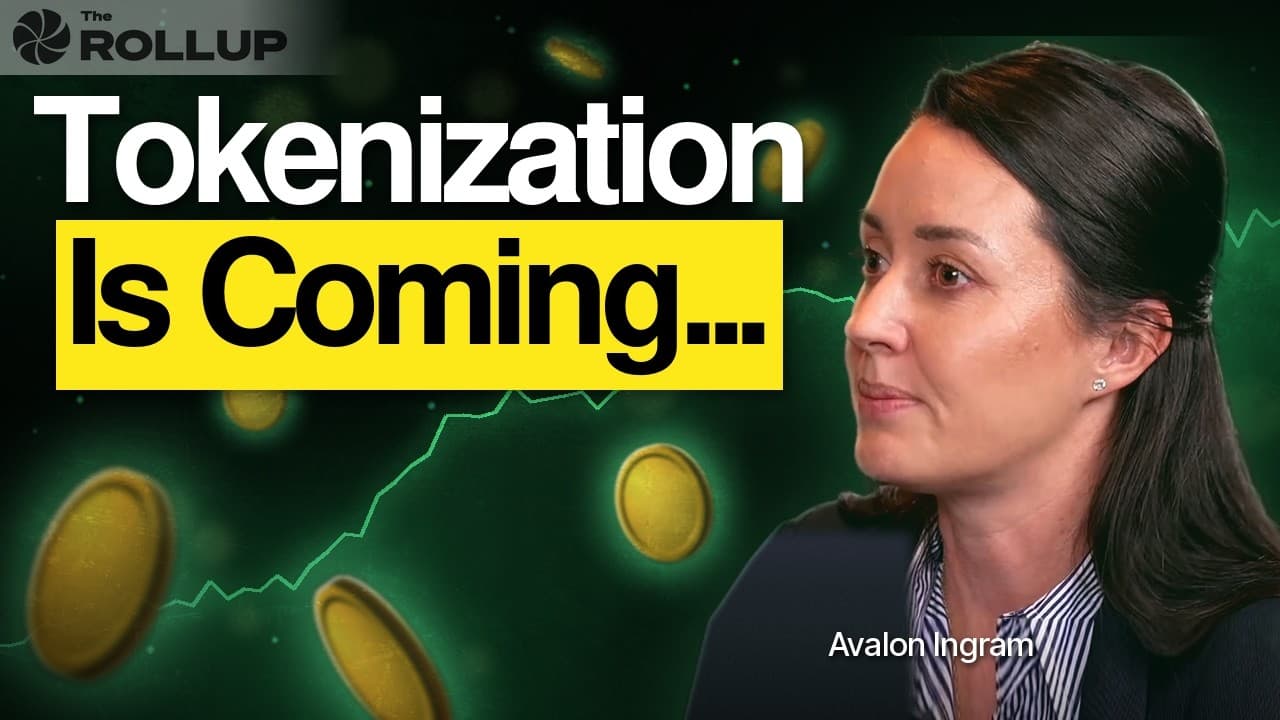
Tokenization is still at an early stage, says Seyffart
James Seyffart, speaking live from Link:NYC, reacted to news that ICE and NYSE are investing in TradeXYZ alongside Stanley Druckenmiller to bring Hyperliquid's perpetual markets to the US, alongside the DTCC announcing its tokenization service had gone live. He said the moves confirm a trend he has expected for years: "eventually this stuff is going to happen." He described the current period as "so early, like second inning," pointing to a Token Terminal chart showing an aggressive ramp in tokenized stock assets, which he compared to the growth path stablecoins followed a few years ago, calling the total addressable market "absolutely massive."
He said the DTCC's tokenization pilot and the use of networks like Canton by major Wall Street banks and broker-dealers represent only initial trials relative to the capital these firms move daily. Seyffart framed ETFs and tokenized stocks as two opposite "bridges" between TradFi and DeFi — one wrapping DeFi assets in traditional structures, the other wrapping traditional assets in DeFi form — and said these parallel tracks will likely coexist for five to ten years before merging. He suggested much of this could happen invisibly: "is your mother who's buying Apple stock going to realize that she's buying tokenized stock or is she just buying stock on Schwab?"
On costs, he noted DeFi rails are not yet cheaper than TradFi systems, since spreads on platforms like Robinhood and Schwab are very tight compared to current DEX fees, though he expects those costs to fall over time.
Bloomberg skeptics now quote Hyperliquid and Polymarket
Seyffart described a cultural shift inside Bloomberg itself: colleagues and editors who once dismissed blockchain entirely are now building dashboards for Hyperliquid markets and quoting Polymarket odds. He recalled people who insisted "there's no value here" later citing Hyperliquid oil trading prices when traditional markets were closed around the Iran situation. He also raised a technical distinction discussed on a Bloomberg client chat about decentralization as a spectrum, with trade-offs between speed, scalability and security depending on the use case.
On agentic commerce, Seyffart said many layer-one projects, including Near, are actively building for it, alongside efforts from Ethereum and traditional players like Franklin Templeton with tokenized money market funds. He said it's too early to know which network wins: "we're so early... there's no way we're going to know who's going to win."
Zcash draws institutional interest; Bitcoin targeted at $10 trillion
Seyffart said Zcash has become a leading topic in Bloomberg's anonymous crypto and fintech client chat room, driven by interest in its quantum-readiness and privacy features: "Zcash is probably one of the top three things that's been spoken about over the last like month to three months." He noted Bitcoin maximalists dislike the asset but that institutional traders are genuinely intrigued.
On ETFs generally, he said listing doesn't guarantee price gains, pointing out Bitwise closed its dogecoin ETF due to lack of demand, while Zcash, Bitcoin, Ethereum, Solana and XRP ETFs see demand. On rotation from AI equities into crypto, he called it largely "hopium" given how levered the US stock market currently is to AI narratives, though he said agentic commerce use cases for blockchain rails make logical sense.
"I think there's going to be more demand... but I think we're going way higher." — James Seyffart
Asked about Bitcoin's trajectory, Seyffart said he expects it to reach a $10 trillion valuation "by the end of 2028," noting he previously underestimated Bitcoin's capacity for large percentage moves once it passed a one-trillion-dollar market cap, citing gold's percentage gains last year as a comparison point. He cautioned that crypto remains correlated with broader risk assets until Bitcoin establishes a separate identity.
Written by AI from the video's transcript. It can compress, misattribute or miss context — the original video is the source. Not investment advice.