🏀 The Lakers Deal: $12.5 Billion and a New Era
The Los Angeles Lakers are officially being sold to Josh Kushner (founder and CEO of Thrive Capital) and Bob Iger (former Disney CEO) for a record-breaking $12.5 billion, according to multiple sources at ESPN. The deal represents a significant markup from the $10 billion valuation paid by Mark Walter just last year when he acquired a controlling interest from the Buss family.
Walter, CEO and chairman of holding company TWWG Global, officially became the Lakers' majority owner last October after unanimous approval from the NBA's board of governors. The new sale will require similar approval at the board's next meeting in New York.
"Being a Laker means everything to me and I'm excited to get back to the court and bring a championship to LA... I look forward to meeting Josh and Bob so we can get to work building something special in LA together." — Luka Dončić
Magic Johnson also chimed in with support: "Lakers fans couldn't have two better owners. I've known Bob personally for over 40 years. He has always loved the Lakers and basketball and he will bring championships back to LA."
Context on the Sale: Walter is currently under federal investigation for allegedly undisclosed related-party transactions involving private credit deals placed into an affiliated insurance company. While Walter has denied all wrongdoing, the scrutiny provides additional context for the swift turnaround on such a high-profile asset.
📊 Sports as Portfolio Diversification
The deal highlights an emerging investment thesis: sports franchises as durable, inflation-resistant assets. In an era of rapid technological disruption and AGI speculation, owning marquee sports properties offers longevity that even the biggest tech companies may not guarantee.
One market observer noted: "While there are plenty of issues you can point out with sports investing, this actually makes a simple yet incredibly compelling case: longevity. Sports is a portfolio diversifier. Investment firms and wealthy individuals now view investing in sports properties as a hedge against higher risk investments."
If you're long AGI and frontier technology, pairing that exposure with assets that will endure regardless of automation makes intuitive sense. Sports aren't going anywhere — no matter how many robots exist.
🤖 Grok 4.6: SpaceX Joins the Model Wars
SpaceX's AI division released Grok 4.6 this week, delivering roughly the same performance as Claude 3.5 Opus at an 85% discount — specifically 80% cheaper for input tokens and 88% cheaper for output tokens, according to venture investor Gavin Baker.
The model integrates data from Cursor and SpaceX directly into pre-training, and early benchmarks suggest it's competitive with frontier models at a fraction of the cost. Grok 4.7, expected soon, will reportedly be a "significantly larger model" with even more SpaceX and Cursor data baked in.
"With each release, Grok is becoming a more capable digital colleague. The age of work is upon us." — SpaceX AI team
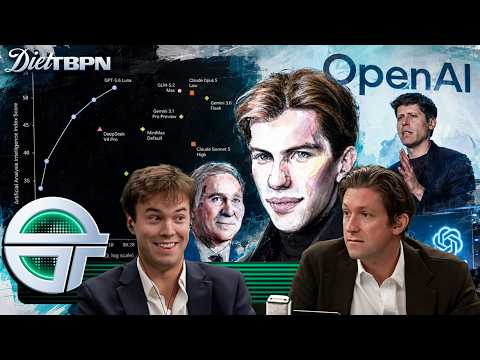
The model showed strong results on Cursor Bench and the Artificial Intelligence Index, scoring 61 and demonstrating solid agentic performance. The launch included Grok Bot, an AI teammate that signs into your tools, uses them autonomously, and returns with finished work.
Market Impact: SpaceX stock surged nearly 40% in just the last five days, driven in part by renewed confidence in its AI capabilities following a Semi Analysis report and the Grok 4.6 launch. Short sellers, according to CNBC, are "running out of bullets" as the stock rebounds more than 30% off recent lows.
🛠️ Nvidia Launches Nemo Switchyard
Nvidia isn't sitting on the sidelines. The company released Nemo Switchyard, a model router designed to deliver "faster, smarter, more efficient agentic AI." Nvidia also launched Nemotron 3.5 Lightning, an open-source model aimed at enterprises running their own data centers.
For mid-scale organizations with dedicated GPU infrastructure, using Nvidia's full stack — including model routing — could offer seamless integration and cost optimization. The strategy positions Nvidia not just as a chip supplier, but as a platform provider in the model wars.
💧 Anthropic's Watermarking: A Step Too Far?
Anthropic announced this week that all text and files generated by its Claude family of models will be watermarked to allow detection of AI-generated content. The watermarking isn't visible like a traditional image watermark — instead, it leaves subtle "breadcrumbs" detectable via Anthropic's verification tool.
The move was driven by European Union regulation, but rather than limit watermarking to EU users, Anthropic baked it deep into the model itself — meaning all Claude outputs, globally, will carry the watermark.
📝 Backlash from Creators
Stratechery's Ben Thompson criticized the decision, arguing that it penalizes humans who use AI for light editing or proofreading. His concern: even if you write an essay by hand and use Claude to fix a few spelling errors, the text could still be flagged as AI-generated.
"The EU is stealing the last thing humans have — creation — and demanding it be bundled with substantiation, effectively giving the AI the credit." — Ben Thompson
Thompson's frustration centers on the binary perception problem. Even if only one sentence is AI-edited, online audiences may dismiss the entire piece as inauthentic. The watermark operates at the token level, meaning only altered sections should technically be flagged — but public perception may not be so nuanced.
Counterpoint: Enterprise users likely won't care. If you're using AI to generate code, documentation, or internal reports, having a verifiable audit trail could be a feature, not a bug. The tension lies primarily with individual creators, essayists, and public-facing content.
📧 The Great Investor Update Debate
Alfred Wall Force, founder of Listen Labs, sparked controversy this week with a hot take: "Founders, only send investor updates when you're winning." He noted that Listen Labs has sent just three updates in its history — all fundraising announcements.
"Nobody reads a bad update and helps. They just mark you as dying."
The pushback was swift. Critics argued that regular updates — even during difficult periods — build trust, demonstrate resilience, and keep investors engaged. Going dark, then reappearing only when you need money, can actually reduce the likelihood of securing a bridge round or follow-on capital.
🤔 Context Matters
Listen Labs is a three-year-old company that raised its Series A in April 2025. If the company has sent three updates and is now rumored to be raising a Series C in August 2026, that's roughly one update every six months — a reasonable cadence for a fast-growing startup in continuous fundraising mode.
However, for companies operating in less frothy markets or raising capital every 18-24 months, consistent updates become critical. Investors need visibility into burn rate, product milestones, and team dynamics — especially when times are tough.
The general sentiment: this advice only works if you're always winning. For everyone else, silence signals distress.
⚡ Quick Hits
- 🌘 Solar Eclipse: A full solar eclipse occurred over Europe this week. Those who witnessed the last full eclipse in the U.S. years ago described it as one of the most surreal experiences of their lives.
- 🏙️ LA Optimism? The Lakers sale sparked renewed interest in Los Angeles as a hub for long-term capital deployment, despite ongoing infrastructure challenges (potholes included).
- 📊 SpaceX Momentum: Beyond the stock surge, SpaceX's AI efforts are gaining credibility. The integration of real-world data from Cursor and internal operations gives Grok a unique training advantage.
✅ Final Thoughts
This week underscored three major themes:
- Durability is the new diversification. Sports franchises, once seen as trophy assets, are now being positioned as inflation hedges and AGI-proof investments.
- The model wars are intensifying. Grok 4.6's pricing and performance signal that the frontier is broadening — and cost efficiency is now table stakes.
- Transparency builds trust. Whether it's AI watermarks or investor updates, the tension between disclosure and perception is shaping how founders and platforms operate.
As the landscape shifts, the companies and founders who adapt to these dynamics — without losing sight of fundamentals — will be the ones who endure.