📌 From Rainy Day Hack to 18,000 Contributors — The Real Story
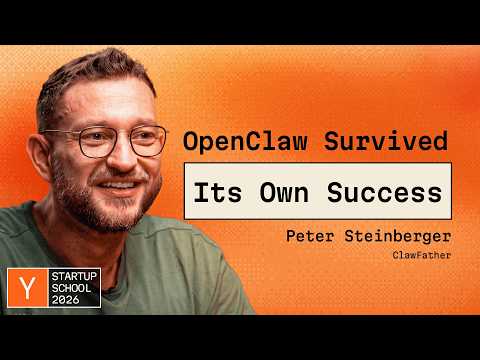
In what might be one of the most candid revelations in the open-source AI space, the creator of OpenClaw shared the unvarnished reality of building what Jensen Huang once called "the most successful open-source project in the history of humanity." This isn't a polished success story — it's a raw account of what happens when a side project explodes into a movement overnight, complete with burnout, strategic missteps, and an eventual path back to building with joy.
"My source of inspiration is usually being annoyed. So on a rainy day in November, I was juggling some agents, but I was also hungry. I wanted to make sure that my tokens are put to good use while I raid the kitchen."
🔥 The 7 a.m. Mistake That Changed Everything
The viral moment came from an accidental oversight. After an all-night build session in early January, the creator attempted to shut down the agent at 7 a.m. by pressing Ctrl+C — not realizing the software was configured as a launch daemon. The agent kept running while he slept for 10 hours, processing roughly 800 messages from users attempting to hack, test, and interact with it. Nothing broke. But everything changed.
Within weeks:
- Over 18,000 different people opened issues or pull requests
- Nearly 3,000 people committed code to the repository
- Total contributions exceeded 111,000
- Mac Minis sold out (and reportedly remain sold out)
- The creator's phone number and private details were leaked
- Multiple reporters called using Apple's emergency override feature to bypass Do Not Disturb
The project's name underwent multiple transformations — from "Claudius" to "ClaudeBot" to its final form, OpenClaw — after Anthropic requested a name change with roughly 24 hours' notice.
⚠️ When Security Researchers Became the Biggest Threat
While headlines screamed that "20% of OpenClaw skills are malicious," the actual figure — documented in a formal paper — was closer to 0.3% after scanning all 67,000 instances. But as the creator noted, "a correction never travels as far as a scare."
The months following the viral launch were consumed by security hardening:
- Implementing sandboxing and allow lists
- Building a web protocol with permissions
- Shelling out to Python for file operations to prevent agents from following symlinks
- Ensuring configuration files were written atomically
The irony? Most users didn't care about these improvements. They cared that updates broke their workflows, slowed performance, and added friction. Meanwhile, the creator's attention fractured across open-source maintenance, press inquiries, legal work establishing a 501(c)(3) nonprofit, and a full-time role at OpenAI.
"I brought on help and we got such an amazing community of maintainers... everyone added their own little feature. After all, these people work for free, right? So who am I to tell them what to do?"
📉 The Perfect Storm: How OpenClaw Lost Its Edge
At its peak of configuration complexity, OpenClaw supported approximately 9,500 permutations of settings — making it virtually impossible to test comprehensively or ship without breaking someone's setup. The project bottomed out at 835,000 weekly downloads in May before rebounding to an all-time high of 4.7 million in June after being declared "dead."
Three factors converged to create the vulnerability window:
1. Over-optimization on Anthropic's models
OpenClaw was built with GPT and Codex but optimized heavily for Claude (Opus). When Anthropic disabled third-party API subscriptions with approximately 24 hours' notice, there wasn't enough runway to adapt. Open-weight models weren't competitive yet, and early OpenAI alternatives "lacked character."
2. Aggressive competitors with simpler stories
Well-funded companies — described colorfully as "the anime girl company" — executed coordinated marketing campaigns and offered one-line migration scripts while OpenClaw was bogged down in security work and feature sprawl.
3. Loss of focus and joy
The creator stopped using the product daily. "Somewhere in that time I stopped making a product I love and I worked on making something for everyone." The shift from builder to maintainer, support agent, and firefighter drained the creative energy that made the project magical in the first place.
"Your dependencies' business model is your business model. Maybe write this one down."
🔄 The Turnaround: Rediscovering the Builder's High
Around May — coinciding with the creator's birthday — something shifted. The joy of building returned. Strategic clarity emerged. Key lessons crystallized:
Fun is velocity. The weeks spent enjoying the work produced visibly better products. The weeks focused on obligations produced more configuration options.
Personal brand is non-forkable. While any code can be cloned, reputation and relationships cannot. Strategic partnerships with NVIDIA (which sent engineers to handle security work) and other major donors stabilized the foundation.
Focus beats features. The temptation to accept every pull request and chase every podcast invitation diluted impact. "Another podcast is not what will make you win."
🚀 What's Next: Perpetual Agents and Multimodal Interfaces
OpenClaw now employs 10 people on payroll and is actively hiring — including for a CEO role. The technical roadmap includes:
- Always-on agents with true persistence — moving beyond the "weird blip in the future where people work in terminals and run around with their laptops open because the agent needs to keep working"
- Team-based orchestration — shared sessions where agents can see what others are working on and coordinate workstreams
- Voice and multimodal interfaces — including a recent hack enabling FaceTime calls with agents
- Local-first architecture — ensuring data never leaves devices when using open-weight models
The creator emphasized a shift in how they use the tool: "I try to make the agent do more proactive work for me. When I shift my attention to something, I don't want to read issues — I want to see fully reviewed and tested PRs."
💡 The Three Rules for Surviving AI Hype Cycles
The talk closed with three principles distilled from eight months of chaos:
1. Don't stop having fun. Fun is the ultimate driver for breakthrough ideas. When building becomes obligation, velocity collapses.
2. Listen to your gut. Fix what annoys you. The most viral products often start as personal frustrations solved elegantly.
3. Stay focused. Live in the future, build what's missing. When competitors write your obituary every other week (the creator counted 20 "OpenClaw killers" at one point, including a project literally called "OpenClaw Killer" that was just an uninstaller), "keep shipping. It confuses them."
🎯 Key Takeaways for Builders
On product-market fit: The strongest signal came when non-technical friends demanded access and got angry when told the product wasn't ready for them yet.
On code review in the age of AI: "I see code review more as risk management. If I do a small tweak that should change how dragging works and it takes three hours, I know something's wrong. But otherwise... trusting your gut."
On security theater: Most security researchers sending reports were chasing clout, not genuinely helping — often submitting agent-generated findings without testing them.
On infrastructure bottlenecks: Managing compute remains the biggest challenge. "If 10 sessions spin up 16 threads each, two will probably time out. There's no really good system for managing all of that."
On perpetual agents: The technology exists today. The blocker is token economics — designing systems that remain proactive without burning budgets on empty heartbeat checks.
🏁 The Bottom Line
OpenClaw's story is a masterclass in what happens when technical excellence meets cultural moment — and what it takes to survive the aftermath. The project went from rainy-day hack to industry-defining force in under a year, stumbled under the weight of its own success, and found footing again by returning to first principles: build what you use, optimize for joy, and trust your instincts over the noise.
With 33,000 repositories now using "claw" in their names and Microsoft's Satya Nadella casually dropping "enterprise-grade claws" in keynotes, the term has become a noun in the AI lexicon. Not bad for a project that started because someone was hungry and annoyed.
"If we are in a simulation, we're certainly in one of the weirder ones that won't get shut down. I dig this part of the future."