📊 The Legacy of 2017: How ICO Regulation Shaped Today's Token Economics
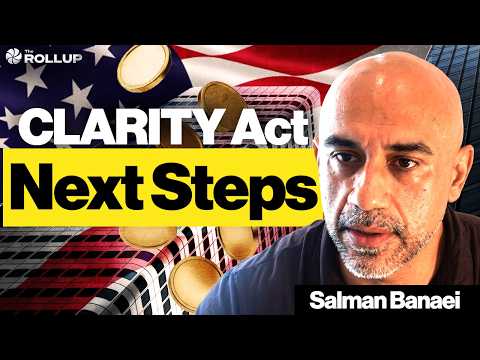
The current landscape of crypto capital formation carries deep scars from the 2017 ICO era. The regulatory response to what was characterized as an "obviously fraudulent" wave of token offerings fundamentally reshaped how projects could raise capital. This led to the now-ubiquitous SAFE (Simple Agreement for Future Equity) plus token warrant structure that became the default mechanism for venture capital investment in the space.
This framework, while providing a path forward during uncertain regulatory times, created what some view as a structural limitation on the crypto ecosystem. The token-equity split forced by regulatory constraints has left many questioning whether the industry is investing in the most appropriate asset class. As one regulatory expert noted, this dynamic is "something that's plaguing the space a bit."
The path forward involves moving away from this bifurcated structure toward a more equity-like token structure that provides clearer value accrual mechanisms for investors while maintaining the unique properties that make crypto assets distinct from traditional securities.
🔓 The GENIUS Act: A New Framework for Token Economics
The proposed legislation offers a potential escape route from what many describe as the "Gensler era" regulatory framework. By providing clearer guidelines on when tokens qualify as digital commodities rather than securities, the bill creates a more favorable environment for innovative token structures.
Critically, the legislation does not address accredited investor rules directly—that remains a separate regulatory domain. However, it does provide projects with the opportunity to market their tokens early to the public, potentially reducing the complete reliance on venture capital for initial funding rounds.
💰 Revenue Sharing and Protocol Operations: The Critical Distinction
Perhaps the most significant clarity provided by both the bill and recent SEC-CFTC guidance relates to revenue-embedded tokens. The framework establishes that tokens can maintain their non-security (digital commodity) status under specific conditions:
- Tokenomics must be derived from protocol operations
- Fee mechanisms must be subject to hard-coded algorithms
- Changes can only occur through DAO governance votes
- Revenue generation must be protocol-driven, not controlled by a central management team
This represents a major shift from earlier interpretations where "any type of revenue sharing type functionality in a token might make the token a security." That concern is now "pretty clearly out" provided the revenue mechanisms meet the protocol-operation criteria.
"Programming those revenue mechanisms into the protocol itself provides investors a higher degree of assurance that they will persist and sustain rather than the management team can just change their mind."
⚖️ DAO Governance: What Counts as Sufficient Decentralization?
The legislation and accompanying guidance establish restrictions on concentration of voting rights, though the precise threshold remains somewhat ambiguous. The key concept introduced is that of a "functional blockchain network"—a term used in SEC-CFTC guidance to describe projects that have achieved sufficient decentralization.
The framework makes clear that reliance on a central management team pushes a project toward securities classification, while an algorithmic approach with DAO fallback governance supports commodity status—provided the DAO itself is sufficiently decentralized.
Best practices for projects include:
- Delegating voting shares held by VCs, founders, and early team members to third parties
- Locking up voting power of insiders to prevent concentration
- Ensuring governance mechanisms prevent single-entity control
Recent incidents—including a reported one-of-one DAO vote that drained significant funds—underscore why these concentration limits matter for both regulatory compliance and investor protection.
⏰ The Critical Timeline: August or 2028?
The legislative window for the GENIUS Act (also known as the Clarity bill) is remarkably narrow. Industry observers have placed the probability of passage at approximately 40-50%, with two potential windows:
Primary Window: Now through Early-to-Mid August
The Senate recess begins in the August 10-17 timeframe, creating a hard deadline for floor consideration. This represents the most realistic path for passage in the current legislative session.
Secondary Window: Lame Duck Session
Between the November election and the swearing-in of the new Congress, a "very small window" exists. However, if Democrats control the House following midterms, they are expected to pursue "another set of priorities" beyond crypto legislation.
After that? The next realistic opportunity may not arrive until after the 2028 election—potentially extending the current regulatory uncertainty for years.
Between the August recess and November, there simply "won't be enough floor time" to shepherd this complex legislation through the Senate.
🏦 Title IV: Banking Integration as the Hidden Catalyst
While much attention focuses on token classification, Section 401 of the legislation may represent the most significant near-term unlock for the industry. This provision permits banks to use digital asset technology for any financial activity they engage in.
While banking regulators could theoretically provide similar guidance without legislation, having statutory authority behind this permission makes the framework "future-proof"—addressing a critical concern for financial institutions.
"Banks don't like to build on multi-year time horizons if they have any significant concern that a future bank regulator may ask them to wind down their digital assets operations."
Banks operate on multi-year planning cycles. The risk that future regulators might reverse current permissions significantly increases the perceived risk of digital asset projects. Statutory protection removes this uncertainty, potentially unlocking substantial institutional infrastructure development.
If the bill passes in August, this provision alone could serve as a significant bull market catalyst, enabling traditional financial institutions to commit resources to blockchain integration without fear of regulatory reversal.
🎯 The Stakes: Capital Formation for the Next Cycle
The current moment represents more than just regulatory housekeeping. The structures established now will determine how the next generation of crypto projects raises capital, how value accrues to token holders, and whether traditional financial institutions can fully integrate blockchain technology.
The shift away from the post-2017 ICO regulatory framework toward clearer commodity classification for protocol-revenue tokens could fundamentally alter the risk-reward calculation for both venture investors and public token holders. Similarly, clarity on DAO governance requirements provides a roadmap for projects seeking to achieve sufficient decentralization while maintaining effective decision-making.
For banking integration, the implications extend beyond crypto-native applications to the potential transformation of traditional finance infrastructure—but only if institutions have regulatory certainty to justify the investment.
All of this hinges on a remarkably compressed timeline. The industry has roughly one month to see this framework codified into law, with the alternative being potential delays measured in years, not months.
August 2025 may be remembered as either the moment crypto regulation finally caught up with innovation—or as another missed opportunity that extended uncertainty deep into the next market cycle.