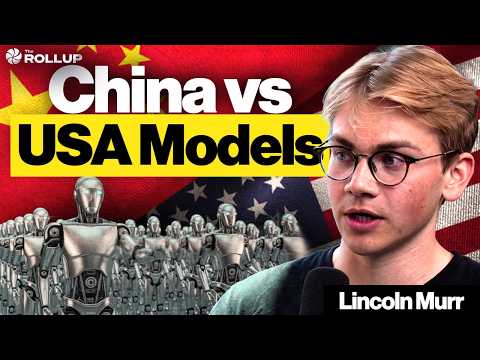
The release and subsequent restriction of frontier AI models has sparked a fascinating debate about national security, competitive dynamics, and whether artificial intelligence should become a strategic asset owned—or at least partially controlled—by governments. As advanced models from Anthropic and OpenAI face regulatory scrutiny while Chinese alternatives flood the market at 5% of the cost, the implications stretch far beyond Silicon Valley.
📉 The Stop-and-Go Release Cycle
Recent weeks have seen an unprecedented pattern: Fable 5 launched, was pulled back, then reinstated. Claude Opus and speculation around ChatGPT 5.6 followed similar trajectories before Trump's administration signaled they would ultimately allow public access. This whiplash raises a critical question: Are these models genuinely threatening enough to constitute national security risks?
The concern centers on cybersecurity capabilities. Advanced models like Mythos—which excels at identifying code vulnerabilities—could theoretically be weaponized by bad actors. The crypto ecosystem presents a particularly attractive target, given that smart contracts are immutable and exploitable if flaws exist.
"If I was a hacker or I had a quantum computer, the thing that clearly is the biggest pot of gold in the world right now is Bitcoin or any one of these smart contracts that you can just exploit and hack into."
🛡️ Short-Term Chaos, Long-Term Defense
The immediate aftermath of widespread access to frontier security models could be turbulent. Expect a short-term period of complete chaos where Web3 and Web2 projects alike face increased hack attempts as capabilities become democratized.
However, this phase should be transitional. Once the initial vulnerability window closes, these same models will likely become defensive security tools—a standard step before any code publication. Run it through Mythos or similar systems, get clearance, and deploy with confidence that surpasses today's security standards.
Interestingly, Coinbase reportedly received early access from Anthropic before public release, allowing them to stress-test their security infrastructure. This suggests major AI labs recognize a corporate responsibility to help critical infrastructure prepare before opening the floodgates.
🇺🇸 The Nationalization Question
Trump's administration has floated the idea of taking equity stakes in leading AI companies—potentially 5% of OpenAI and similar positions in other frontier labs. This represents a significant shift toward aligning governmental and commercial interests.
The case for nationalization:
- Strategic alignment: 5% of a trillion-dollar company provides meaningful government interest without outright control
- Historical precedent: Similar arrangements exist with Intel and other strategic technology companies
- National security: Ensures American dominance in a critical technological domain
The case against:
- Market distortion: If the government holds equity in Anthropic and OpenAI, would they fairly support Lab #3—perhaps Grok or another Elon-backed venture—or favor their existing investments?
- Innovation risk: Government alignment could create king-making dynamics that stifle competition
"It feels like we're entering an era of nationalization of these companies providing better alignment when the government can be so helpful to them."
🇨🇳 The Chinese Alternative: 95% Performance, 5% Cost
While American labs dominate the frontier, China has pursued an aggressive open-source and cost-leadership strategy. Chinese models now offer performance claimed to be 95% as capable for just 5% of the price of premium American alternatives.
This creates interesting dynamics:
The Capitalist Irony: Chinese state-backed models are providing capitalist incentives for American companies to innovate faster and reduce costs. Users can access near-frontier intelligence through models like "Kitty" for a cent per interaction versus 10-20 cents for Claude Opus—a 10-20x cost difference.
American Advantages: Despite pricing pressure, the US maintains structural advantages:
- Frontier leadership: American labs consistently release the most capable models
- Data sovereignty: American companies will never outsource compute to Beijing data centers, regardless of cost
- Infrastructure control: The entire stack—from chip manufacturing to data centers to utilities—remains domestically controlled
Even if inference costs collapse due to Chinese competition, the physical infrastructure required to run these models must remain on American soil for any sensitive application. This creates lasting value for domestic data center operators, chip manufacturers, and utilities.
💼 Practical Implications: Trading and Investment
Frontier models are already being deployed for portfolio management and trading strategies. Early experiments with Fable show capability at rebalancing portfolios and making allocation decisions.
The economics prove compelling: For managing a thousand-plus dollar portfolio, AI costs "a couple bucks a day" versus traditional two-and-twenty fee structures charged by financial advisors. As models become increasingly tuned for financial applications, expect specialized trading models to emerge with performance characteristics optimized for market analysis.
🎯 The Capital Expenditure Question
The biggest risk to current AI infrastructure investments lies in whether open-source models can keep pace with closed, commercial offerings. If Chinese models continue delivering near-frontier performance at dramatically lower costs, it could puncture the bubble around massive data center spending commitments.
However, the multi-layered nature of AI infrastructure—spanning chips, data centers, cooling systems, electrical utilities, and water resources—suggests that even with cheaper inference, significant domestic infrastructure value remains. National security concerns virtually guarantee that sensitive AI workloads will run on American-owned, domestically-located compute regardless of whether cheaper alternatives exist elsewhere.
🔮 Looking Ahead
The interplay between national security concerns, commercial incentives, and international competition will define AI development over the coming years. Key themes to watch:
- Regulatory frameworks: How governments balance open access with security concerns
- Defensive security tools: The transition from offensive threat to standard security infrastructure
- Cost compression: Whether Chinese competition forces American pricing to converge downward
- Equity arrangements: If government stakes in AI labs become standard and how that affects competitive dynamics
- Specialized models: The emergence of domain-specific intelligence tuned for trading, security, research, and other applications
We're likely looking back at Fable and Mythos the same way we now view GPT-3.5—an exponential leap in capability, but far from the end state. The short-term volatility around access and restrictions represents growing pains as society and governments grapple with unprecedented technological capability.
The AI arms race has officially begun, and the battlefield isn't just Silicon Valley versus Beijing—it's between open access and controlled release, between market forces and national security, between disruption and defense.