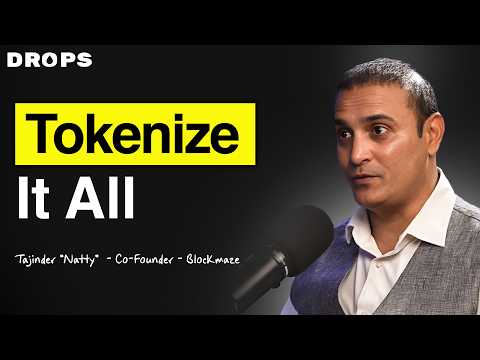
Market corrections often reveal who's buying the dip—and what they're buying. In a recent discussion, a macro-focused crypto investor outlined recent allocation decisions during the latest drawdown, offering insight into how institutional-minded players think about privacy coins, quantum resistance, and the evolving derivatives landscape.
📉 Adding During the Correction: Zcash & SUI
During the recent market sell-off, the investor added to positions in Zcash and SUI, deploying new cash rather than rotating within an existing portfolio. The Zcash purchase represented a disciplined execution of a previously stated strategy: waiting for a pullback after the token surged in December, then accumulating into weakness.
The strategy wasn't flawless. As the investor candidly noted: "I didn't buy enough obviously—you never do when it goes up a lot." The challenge of timing re-entries became evident when Zcash rallied 50% during a travel window, making further accumulation psychologically difficult despite conviction in the thesis.
🔐 The Zcash Thesis: Bitcoin with Privacy
The rationale for Zcash centers on a "left curve, right curve" framework—a mental model that strips away mid-curve concerns about regulatory crackdowns and focuses on fundamental value propositions.
Left Curve: "It's Bitcoin with privacy."
Right Curve: Quantum-proof architecture that hedges against dystopian scenarios involving AI-driven government surveillance and financial control.
In the store of value category, Bitcoin has long dominated. But Zcash carves out a subsection of that market focused on privacy—a feature that may not be fully appreciated today but could become increasingly valuable as digital surveillance expands.
The investor referenced a conversation with Barry Silbert, suggesting that if Zcash captures even 5% to 10% of Bitcoin's economic value, it would represent substantial upside from current levels. The core bet is simple: privacy has value, and people will increasingly understand that.
🚫 Avoiding the Mid-Curve Trap
The so-called "mid curve" argument against Zcash revolves around regulatory risk—the fear that governments will ban privacy coins. The investor dismissed this concern based on decades of experience in crypto:
"I've lived this all through all of my crypto career right—it's always been 'they're going to ban it, they won't allow you, they won't do it.'"
Rather than getting paralyzed by regulatory theater, the approach focuses on fundamental asymmetry: a privacy-preserving, quantum-resistant store of value with a small market cap relative to its potential utility.
📊 Portfolio Construction: New Cash vs. Rotation
The Zcash position was funded with new capital rather than reallocating from existing holdings. This approach reflects a reluctance to disturb core positions for emerging opportunities, particularly when conviction in the broader portfolio remains intact.
The investor acknowledged missing optimal entry points but emphasized a long-term view: "I won't switch around my existing portfolio for it, I don't think."
🔥 Hyperliquid & 24/7 Markets: A Niche, Not a Portfolio Play
The conversation shifted to Hyperliquid, the decentralized perpetuals platform that gained mainstream attention by facilitating oil market pricing during weekends amid geopolitical volatility. This "crossing the chasm" moment—where crypto infrastructure began serving real-time macro hedging needs—caught the attention of traditional macro investors.
However, the investor passed on allocating to HYPE, citing a simple rule: "If I don't use it, I wouldn't buy it."
"I'm just not a trader. I don't use perps, I don't use leverage, I don't use any of this stuff."
While acknowledging Hyperliquid as a "great niche product," the investor pointed to competitive threats from Robinhood and eventually Coinbase, both of which are expected to aggressively pursue 24/7 derivatives markets. The question of whether Hyperliquid can out-execute these incumbents remains open—but not compelling enough to warrant a position.
🎯 Key Takeaways
- Zcash: Positioned as a privacy-focused store of value with quantum resistance, targeting 5-10% of Bitcoin's economic footprint over time.
- Regulatory Risk: Dismissed as a recurring "mid-curve" distraction—privacy and sovereignty will likely increase in value, not decrease.
- Portfolio Discipline: New positions funded with fresh capital; existing allocations remain intact.
- Hyperliquid: Recognized as innovative but not a personal-use case; competitive dynamics with TradFi challengers make it a pass.
- Execution Challenges: Even with a clear thesis, timing re-entries after sharp moves remains difficult—a reminder that conviction and execution don't always align perfectly.
This discussion underscores a broader theme in crypto portfolio management: thematic conviction matters, but so does personal alignment. Whether it's privacy coins or perpetual platforms, the best allocations are those that match both the investor's worldview and their actual behavior.