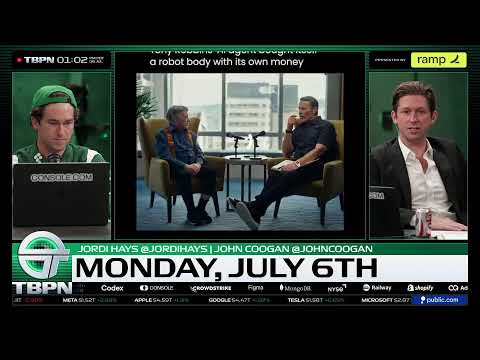
🏗️ The Data Center Arms Race, Xbox's Turnaround, and Ferrari's Manual Gambit
🎮 Xbox Cuts Deep—Without Blaming AI
Microsoft announced a significant restructuring at Xbox this week, with 3,200 job cuts planned by the end of fiscal year 2027—including 1,600 layoffs effective immediately. What makes this round notable isn't just the scale, but the candor: Xbox CEO Asha Sharma openly admitted the business is "not healthy" and laid out a surprisingly detailed list of operational failures.
"Xbox is operating at margins three to 10 times lower than its competitors. In some parts of the company, work has to pass through as many as 14 layers of management. In a typical year, Xbox lost 64 cents for every dollar it invested."
This marks a rare moment in the current layoff cycle—a major company openly admitting inefficiency without hiding behind AI productivity gains. The gaming community's skepticism of AI likely forced Xbox's hand toward transparency.
The cuts come alongside strategic divestments. Xbox will spin out several game studios it acquired over the years, including Compulsion Games, Double Fine Productions, Ninja Theory, Undead Labs, and Arcane. The move reflects a broader question about whether Xbox still fits Microsoft's core mission—or if it will eventually be spun out entirely as the company doubles down on Azure, Teams, and AI-driven enterprise tools.
🏢 The $600M Data Center Playbook
Daniel English, managing partner at Legacy Investments, joined the show to discuss the infrastructure buildout underpinning AI's explosive growth. His firm specializes in large-scale data center and e-commerce warehouse deals—averaging $600 million per transaction.
Fifteen years ago, data centers were an afterthought. Today, they're front-page news. The shift accelerated dramatically with the rise of cloud computing around 2010, but AI has completely transformed the economics:
- In 2010: A 5-megawatt data center was considered substantial. 30 megawatts was peak capacity.
- Today: 30 megawatts is a small data center. Hyperscalers are targeting gigawatt-scale facilities.
- Density revolution: Legacy Investments recently converted the Chicago Board of Options Exchange building into an AI data center, packing 50 megawatts into just 40,000 square feet—compared to just 4 megawatts in the same footprint back in 2010.
The firm has also converted a glass office tower in downtown Minneapolis into a large AI data center—demonstrating that these facilities don't have to look like prisons. English emphasized the importance of community partnerships and aesthetic integration, drawing inspiration from projects like Louis Vuitton's Fifth Avenue construction wrap.
"Data centers are really giant machines. It's the first time in human history we had buildings that weren't designed for humans."
When scouting locations, the firm prioritizes three factors: power infrastructure, fiber connectivity, and latency. Water usage has become less of an issue as most modern facilities use closed-loop cooling systems.
The political climate around data centers is tense. Communities are increasingly demanding direct benefits—ranging from new fire stations to housing and school improvements—on top of the tax revenue generated by these projects. English noted that a recently sold Minneapolis building became one of the highest-priced properties in Minnesota, a massive jump from its sub-$30 million valuation as a vacant office tower.
🚗 Ferrari's Manual Gambit: Innovation or Illusion?
Ferrari unveiled the 12Cilindri Manual, the first car with a gated manual shifter to come out of Maranello since 2012. But there's a twist: it's not a traditional manual transmission. Instead, Ferrari adapted its 8-speed dual-clutch transmission (DCT) to include a clutch pedal and a six-speed shifter.
The system allows drivers to:
- Stall the car if they mishandle the clutch
- Rev to the 9,500 RPM redline and execute clutch drops
- Heel-toe downshift like a traditional manual
- Skip gears freely
However, the car includes safeguards to prevent catastrophic mistakes like over-revving or money-shifting into the wrong gear. And while the manual mode is slower, drivers can switch to automatic mode to hit the car's 211 mph top speed (versus 196 mph in sixth gear manual mode).
"Ferrari customers told the company they were willing to trade performance for the old-school physical joy of driving a gated manual."
The 12Cilindri Manual is limited to 1,499 units, with pricing starting around $500,000. Deliveries begin in early 2027. Whether this "manual-by-wire" approach satisfies purists remains to be seen, but it signals Ferrari's willingness to experiment with electromechanical solutions to meet customer demand.
🚀 Cowboy Space: Vertical Integration at Orbital Scale
Baiju Bhatt, co-founder of Robinhood and now CEO of Cowboy Space Corporation, discussed the company's ambitious plans to vertically integrate launch vehicles with data centers in space. The thesis: controlling the entire stack is the only path to cost-competitive space-based compute.
Cowboy Space is taking a contrarian approach to rocket design:
- Optimize for simplicity and speed to market, not cutting-edge performance
- Build the "Honda Civic of rocket engines," not the Bugatti Veyron
- Focus on first-party payloads (their own data centers) rather than third-party launch services
- Accept the economics of non-reusable rockets initially, then scale into reusability
"When you're launching first-party payloads, the economics of a failed launch are very different. You control the entire stack. That changes how you build a rocket company in 2026."
The firm recently announced fundraising and plans to unveil detailed rocket architecture soon. Bhatt emphasized that the company isn't chasing human spaceflight or traditional satellite launches—it's laser-focused on enabling space-based AI compute infrastructure.
🤖 Replit's Vision: Agents for Everyone
Michaela, President and Head of AI at Replit, joined from Paris to discuss the company's evolution from vibe coding to vibe building. Replit pioneered AI-assisted coding with the launch of Replit Agent in September 2024—months before "vibe coding" became industry vernacular.
The company has released four major agent updates since then, but Michaela's focus is shifting:
"I want everyone to be capable of creating their own agents. We're going to be seeing far fewer apps and more agents. You talk to your colleagues, discuss, decide what to do, express intent in natural language—agents do exactly that."
She outlined three current use cases for coding agents:
- Ad hoc research and automation: Pull data, scrape the web, generate reports ("deep research on steroids")
- Recurring summaries: Daily digests, automated reporting, continuous monitoring
- Deterministic software: Build a one-time app that runs independently (e.g., inventory management systems)
But Michaela believes the future belongs to goal-oriented agents that don't require prescriptive prompting. Instead of telling an agent how to optimize conversion rates, users will simply set a target—say, 5%—and the agent will autonomously test copy, images, and pricing until the goal is met.
"The main insight is stop giving it prescriptions, stop giving it rules, just tell the model what you want to accomplish and then trust the process."
She predicts multiple nine-figure companies built on Replit by the end of the year, and boldly forecasts the first clean $1 billion one-person company within months.
📊 Market Movers & Outliers
- Microsoft layoffs: 4,800 employees across the company (2.1% of workforce), with Xbox bearing the brunt
- Tesla Model Y Long Range: Now available in the U.S. and Puerto Rico with three-row, six-seat configuration. 325-mile range, 0-60 in 4.4 seconds, upgraded wireless charging pads
- Circle K lottery drama: A clerk printed 85 lottery tickets but the customer only had $60. The manager bought the remaining 25 tickets—one of which won $13 million. Now Circle K the corporation, the manager, and the original buyer are all claiming ownership
- Maggie's Refuel: A new high-end gas station brand opening in Los Angeles, blending premium convenience (matcha, local croissants, soft serve) with fuel and EV charging—think "Autogrill meets 7-Eleven Japan"
✅ Key Takeaways
- Transparency is rare: Xbox's honest assessment of operational dysfunction stands out in an era of AI-blamed layoffs
- Infrastructure is everything: Data centers have evolved from 5-megawatt afterthoughts to gigawatt-scale strategic assets—and community buy-in is critical
- Manual-by-wire is here: Ferrari's 12Cilindri proves electromechanical solutions can satisfy analog purists—at least partially
- Space compute is serious: Cowboy Space's vertical integration strategy reflects a belief that controlling launch + payload is the only path to competitive economics
- Post-prompting era: AI is shifting from prescriptive instructions to goal-oriented autonomy—users set targets, agents figure out the path
The infrastructure wars are heating up. Whether it's gigawatt data centers, vertical rocket integration, or agent-driven solopreneurship, the next phase of AI demands control over the full stack—from power grids to orbit.
More from TBPN

Fable 5 Drops, OpenAI Proposes 5% Stake to Trump Admin, and the Retirement Proce
🚀 Fable 5 Released — But With Strings AttachedMeta's Fable 5 has officially been released to the public, marking anothe...
From Jersey Mike's IPO to AI Nationalization: A Week in Tech, Policy, and Infras
📰 AI Frontier Wars: The Fable 5 Release and the New Regulatory RealityThe battle over how to tame AI has officially beg...
Meta Abandons Super Intelligence Dreams, Pivots to Cloud Computing Business
Meta Platforms is making a dramatic strategic shift that's sending ripples through the cloud computing and semiconductor...

Meta Joins the Cloud Wars, While the Rebel Alliance Takes on AI's Death Star
📰 Meta Enters the Cloud Business — Implications for AI StrategyMeta Platforms is developing plans for a cloud infrastru...
Rocket Lab's $8B Power Play & The Rise of the Micro-Startup Economy
🛰️ Rocket Lab vs. SpaceX: The Battle for Space Supremacy Heats UpIn a bold move that signals intensifying competition i...
AI Adoption Drives Employment Growth, Space Consolidation Accelerates, and Hard
📊 AI Adoption Is Hiring, Not FiringA narrative violation emerged this week that challenges the prevailing doom around A...