🛰️ Rocket Lab vs. SpaceX: The Battle for Space Supremacy Heats Up
In a bold move that signals intensifying competition in the commercial space sector, Rocket Lab announced the acquisition of satellite operator Iridium in a cash and stock deal valued at $8 billion — a 20% premium over Friday's closing price. The deal marks a defining moment in Rocket Lab's evolution from niche launch provider to integrated space powerhouse.
The Strategic Rationale
Iridium, a pioneer in low Earth orbit (LEO) satellite technology, operates a fleet of 66 satellites providing connectivity to ships, mining operations, US government agencies, and enterprise customers. While modest compared to SpaceX's 10,000+ satellite Starlink constellation, Iridium brings something arguably more valuable: proven spectrum rights, an established customer base, and profitable operations.
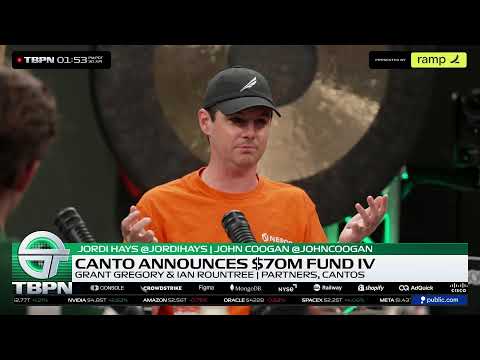
As Rocket Lab CEO Peter Beck explained in the announcement video, successful space applications require four critical elements:
- Unfettered access to space (launch capabilities)
- Spacecraft manufacturing at scale
- Spectrum allocation (finite and difficult to acquire)
- Established cash flow and customer relationships
"This is a deal where 1 + 1 equals three, not just two... We're creating a fully integrated self-launching space superpower."
📈 Rocket Lab's Remarkable Journey
The timing and scale of this acquisition underscore Rocket Lab's transformation. When the company went public via SPAC on August 25, 2021, it carried a valuation of $4.1 billion. For three years, shares languished at or below that IPO price. Then, in September 2024, as both revenue growth accelerated and the market re-rated space stocks, the trajectory shifted dramatically.
Shares that traded around $4.80 on July 1, 2024, now sit at approximately $11. With a current market cap of roughly $60 billion, Rocket Lab is now acquiring an $8 billion connectivity provider — double its original IPO valuation.
The company has built a comprehensive vertical integration strategy over the years:
- Operates the Electron rocket, the second-most launched US rocket annually
- Designs satellites and aerospace components
- Serves defense prime contractors
- Is currently developing Neutron, a reusable medium-lift launch vehicle
The Broader Space Economy Surge
Rocket Lab's ascent reflects a broader boom across the space sector. Even competitors are making progress: Blue Origin, after a recent launch pad explosion that initially suggested a two-year recovery timeline, announced plans to return to flight this year by pivoting to a hybrid horizontal-vertical launch configuration using existing infrastructure.
CEO Dave Limp's update suggests Blue Origin will skip rebuilding the damaged pad entirely, instead accelerating development of infrastructure designed for the larger 9x4 New Glenn vehicle configuration.
💼 The Golden Age of Solo Entrepreneurship
While aerospace giants consolidate, a parallel revolution is unfolding in the broader economy. According to Derek Thompson's latest analysis, "There's never been a better time to get rich working alone."
The Evidence
Thompson identifies four key trends:
- Surge in solo entrepreneurs and tiny startups — The number of independent operators is accelerating
- Higher AI adoption among small firms — Micro-businesses are disproportionately likely to use and sell AI-related products, including software, consulting, and design services
- Faster path to scale — Today's micro-startups are reaching multi-million dollar revenue faster than any previous generation measured by Stripe
- Structural shift in tax revenue — More pass-through entities mean less traditional W-2 income tax collection for governments
The AI Enabler
Thompson argues that the AI-and-jobs debate has been captured by two extremes:
- Doomers predict mass unemployment (despite low unemployment and high prime-age labor force participation)
- Deniers dismiss AI entirely, missing how it's reshaping work structures
The reality, Thompson suggests, lies in between: AI is creating unprecedented leverage for individual operators. Agentic AI, improved tooling, and accessible infrastructure allow solo founders to deliver enterprise-grade services without traditional overhead.
"This is the golden age for tiny startups with big revenue."
Implications
The rise of micro-entrepreneurship carries significant economic and social implications:
- More aloneeness — As work becomes increasingly independent, traditional workplace social structures erode
- Fiscal pressure — Pass-through entities and capital gains treatment reduce government tax revenue at a time of mounting fiscal challenges
- Talent reallocation — High-earning professionals (doctors, lawyers, consultants) increasingly opt for independent paths
📉 Comcast Unwinds a Decade of Content Dreams
Not every conglomerate strategy survives. Comcast is splitting its business into two entities, effectively ending its decade-long experiment as a combined content and distribution giant.
The Timeline
- 2011: Comcast acquires 51% stake in NBC Universal from General Electric
- 2013: Purchases remaining 49% stake
- Since then: Acquired European media company Sky, DreamWorks Animation, and launched Peacock streaming service
- Now: Spinning off NBC Universal to focus Comcast purely on connectivity
The move follows a pattern: telecom giants rolling up entertainment assets, then exiting.
- Verizon: Bought AOL and Yahoo, combined them into Verizon Media, then sold to Apollo in 2021
- AT&T: Acquired DirecTV and Time Warner, then fully exited DirecTV and spun off Warner Media in 2022
The lesson: connectivity and content require fundamentally different operational DNA. Scale in pipes doesn't translate to creative success.
🍔 What Innovations Do People Actually Want?
The Wall Street Journal asked readers what innovations they want to see in the next 20 years. The responses ranged from practical to whimsical:
Selected Ideas:
🚗 Solar-Powered Cars
Mary Gillespie from Irving, Texas wants solar panels integrated into vehicle roofs for continuous charging. While solar panels exist on some vehicles, current energy density remains insufficient — you'd need months of sun exposure to charge a full EV battery. A 20-year timeline makes this plausible if solar efficiency improves dramatically.
🎵 Musical Vision
Mary Goford from Alpine, Utah requests technology to help sight-impaired musicians read sheet music. Her father, despite severe vision limitations, gave his last recital from memory at age 94. While larger print and magnification exist, truly assistive tech could use AI to read scores aloud or display notes sequentially.
🍳 Smart Spatula
Paul Blanco wants a spatula that measures internal steak temperature without penetration. This requires detecting heat distribution through the meat's surface — essentially infrared sensing sophisticated enough to infer internal temperature gradients. Challenging, but potentially achievable.
🤖 Robot Chef
Ray Lure from Lacey, Washington envisions a robot that orders ingredients, unpacks deliveries, loads the fridge, and prepares meals using home appliances. This combines logistics coordination, manipulation dexterity, and cooking knowledge — a 20-year moonshot that feels increasingly plausible given advances in humanoid robotics.
🔇 Noise Control
Multiple readers requested soundproofing innovations. Cheryl Franklin wants drywall with built-in sound dampening. Jennifer Smith dreams of "open-air noise cancelling" to block traffic while preserving bird sounds outdoors. Both reflect growing awareness of noise pollution's health impacts and desire for acoustic control.
And then there's Nolan Williams...
"I would like to see significant developments in cancer and longevity drugs. Longer lives mean longer runway for brilliant people to bring forth their own innovations and pass on their knowledge."
The range — from smart spatulas to curing cancer — captures the full spectrum of human ambition.
🔬 Final Thoughts
The convergence of trends is striking:
- Space infrastructure is consolidating and maturing, with companies like Rocket Lab building end-to-end capabilities
- Individual leverage is exploding, enabling solo operators to build million-dollar businesses
- Conglomerates are simplifying, recognizing the limits of vertical integration across incompatible business models
Whether in orbit or in the economy, the pattern is clear: focus wins. Rocket Lab is betting big on space applications. Solo entrepreneurs are betting on themselves. And Comcast is finally admitting that selling internet and producing television require different muscles.
The next 20 years will reveal whether these bets pay off — and whether we get that smart spatula along the way. 🍳