Key Takeaways
- Capital rotation from real estate to Bitcoin: Over 200 rental properties were sold, with the last exit in 2021, due to insufficient return for the operational risk and effort.
- Return differentials: “Bitcoin since 2021 has been compounding about 60% per year. Real estate is going to do 5 to 10.”
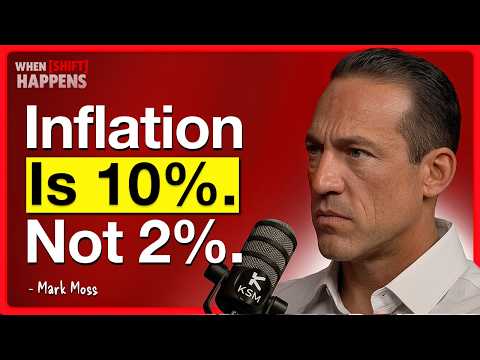
- Hurdle rate framing: A self-defined hurdle as “inflation plus money printing, which is about 12 15%” — a bar that “pretty much no asset class beats.”
- Portfolio goals shift by wealth stage: Early-stage accumulation favors aggressive compounding; later stages prioritize goods, services, and experiences over additional financial return.
- Consumption vs. investment clarity: A primary residence can be a lifestyle asset, not an investment: “The home was a terrible financial decision, but it wasn't a financial decision.”
Why Real Estate Lost Share to Bitcoin
The pivot away from real estate was driven by a straightforward allocation calculus: operationally intensive assets underperformed the available benchmark. A portfolio of 200+ rentals was fully exited by 2021 because the work, effort, and risk didn’t justify results relative to alternatives. The equity was redeployed into Bitcoin, framed by the observation that “Bitcoin since 2021 has been compounding about 60% per year. Real estate is going to do 5 to 10.”
Setting a Hurdle Rate in a Financial Repression Regime
Capital allocation was anchored to a stated hurdle: “inflation plus money printing, which is about 12 15%.” Under that lens, the message was blunt: “pretty much no asset class beats” that bar. The implication: passive beta in broad equities or conventional real estate may appear profitable nominally yet fail to create real wealth once policy and dilution are accounted for.
“Oh, I own S&P 500. I make money. No, you’re not.”
Bitcoin as the Benchmark Asset
The discussion leaned on a well-known crypto heuristic: treat Bitcoin as the reference asset for decision-making. A colorful anecdote underscored the point — an early adopter reportedly “put whatever $2 or $3 million in Bitcoin when it was like $3” and thereafter measured every investment against Bitcoin, often deciding not to invest if it couldn’t compete. This thinking culminates in the provocation: “Why would you own anything else than Bitcoin?”
“There Are Levels to This Game” 📈
Allocation, however, is conditional on stage of wealth. Early on, the playbook is maximal accumulation — even the memes nod to this ethos: “sell your chairs” to buy Bitcoin. As wealth compounds, priorities evolve from pure return to lived utility and time preference.
“Humans don’t want money. What we want are the things that money buys us.”
Even prominent maximalists exhibit this shift. One example cited: “Michael Sailor… has three boats, not one. Three boats,” along with multiple homes. The point isn’t contradiction; it’s progression. At higher tiers of wealth, consumption of real assets — homes, boats, travel — becomes rational as ends rather than financial means.
When a House Isn’t an Investment — It’s a Choice
The Mexico beach house illustrates the distinction between an investment and a lifestyle asset. Financing constraints matter: “In Mexico, it’s not like America… we don’t get like 30-year debt. We have to pay cash.” Despite the opportunity cost — and pushback from Bitcoin purists (“Don’t you know that in 5 years that Bitcoin’s going to be worth 10x”) — the decision prioritized family and time: memories now over hypothetical future compounding.
“The home was a terrible financial decision, but it wasn’t a financial decision.”
Rebuild Playbook: Rent, Reinvest, Re-accumulate
Allocations also respond to cycle damage and base-building. After 2008, following the sale of two businesses and a reset, the choice was to rent for roughly six or seven years rather than tie up capital in a down payment. The rationale: funnel every dollar back into investments until the capital stack could support both compounding and lifestyle. Only then did a home purchase make sense — explicitly as consumption.
Frameworks for Allocators
- Define and defend a hurdle rate: If an asset doesn’t clear “about 12 15%,” reconsider the allocation or improve the structure.
- Benchmark opportunity cost explicitly: Acknowledge foregone compounding when choosing operationally heavy assets versus higher-octane alternatives.
- Separate investment from consumption: A home can be a lifestyle choice. Treat it as such in the model.
- Align with wealth stage: Early stages favor aggressive compounding; later stages prioritize time, relationships, and experiences.
- Mind jurisdictional frictions: Cross-border property often lacks “30-year debt,” increasing the cash burden and the opportunity cost.
Quote Sheet 🔖
“Bitcoin since 2021 has been compounding about 60% per year. Real estate is going to do 5 to 10.”
“There’s this thing that we call hurdle rate… inflation plus money printing, which is about 12 15%… pretty much no asset class beats.”
“Why would you own anything else than Bitcoin?”
“There are levels to this game.”
“He has three boats, not one. Three boats.”
“The home was a terrible financial decision, but it wasn’t a financial decision.”
Bottom Line
This is a capital allocation story shaped by a Bitcoin benchmark, a high self-imposed hurdle, and a clear separation between investments and life purchases. In early accumulation, the argument favors assets that outrun dilution. As wealth matures, the portfolio makes room for the very purpose of capital: goods, services, and experiences — even when the spreadsheet objects.