Bitcoin, Time Preference, and the Real Hurdle Rate in an 8–10% Debasement World
When Shift Happens
April 3, 2026

Bitcoin, Time Preference, and the Real Hurdle Rate in an 8–10% Debasement World

⏳ The Mindset Shift: From Consumption to Low Time Preference

The discussion frames Bitcoin as more than an asset — it’s a lens that reorients behavior toward a low time preference, prioritizing long-term value over near-term consumption. In a fiat regime that encourages spending and fast money velocity, Bitcoin is presented as the counterweight that rewards patience and disciplined capital allocation.

  • Fiat pushes consumption: Inflation incentivizes spending sooner, not later, because money buys less over time.
  • Bitcoin flips the calculus: If purchasing power rises over time, waiting becomes rational. This changes how households and investors weigh discretionary spending versus saving.
  • Capital discipline: With Bitcoin as the benchmark, the perceived cost of capital rises: “Do I really need that vacation? Do I really need that new house? Should I get that new car? Because I could just hold it in Bitcoin.
“Once you buy some Bitcoin, your life changes.”
“Whatever it's 115,000 today, I think it'll be a million dollars in 5 years from now. That's a 10x... It'll be 15 million dollars in 15 years.”

That framing — whether one agrees or not — underscores the behavioral shift: consumption is benchmarked against perceived long-term opportunity cost.

📉 Inflation, Money Supply, and the Debate Over What Matters

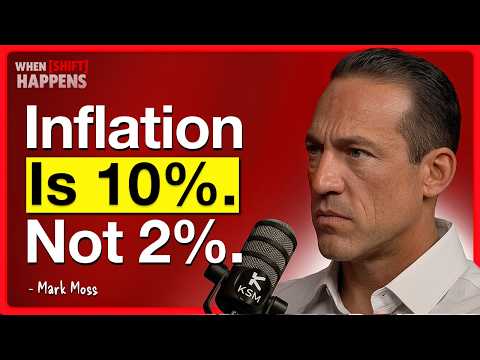
There’s a sharp critique of relying on CPI to understand inflation. The view argues that the true measure of debasement is money supply growth, with CPI seen as the lagging result of prior monetary expansion.

  • On CPI targets: “In the US it's 2 to 3% — the target's 2%.” The claim goes further: “Jerome Powell... said... they're going to sort of abandon that 2% target, meaning like let it run hot.
  • On money supply: “Over the last 5 years globally, the M2 money supply has gone up about 8% a year.” In the US, it’s described as “a little bit faster,” summarized as “8 to 10% per year.”
  • The ‘real’ erosion: Adding a “2% risk premium” puts perceived annual debasement in the “10–12%” range.
“The target's to steal only 2% of your wealth per year through inflation.”
“Inflation is increasing the volume of money in circulation… prices changing is the result of that.”

🚀 The Hurdle Rate: When 10–12% Is the Starting Line

Once portfolio decisions are reframed around beating a perceived 10–12% debasement rate, the investable universe narrows.

  • Benchmarking choices: “If I'm going to lose 10% per year, then everything I do has to go make me more than 10% a year.
  • Bitcoin as a yardstick: “If Bitcoin is going up at 50 or 60% per year, then why would I buy anything else…” The asset becomes the implicit hurdle for consumption and investment.
  • Portfolio construction: Referencing a diversified approach: “If you're Ray Dalio… 17 things in your portfolio — well of those 17 things, 15 are not going to beat that number.” The focus narrows to tech/Nasdaq and Bitcoin in this framework.

🧮 Compounding Math: Small Edges, Big Outcomes

The compounding effect is emphasized as the quiet force behind wealth outcomes — for both inflation and investment returns.

  • CPI compounds too: Even “only 2%” accumulates meaningfully over time. The point: small annual changes are not linear.
  • Inflation compounding: “10 to 15% compounded over a couple of years is 40–50%.
  • Personal finance edge: “If we could just keep 10% more of our money and invest that over 20 years, that could be life-changing money.” Even what feels like “six 7,000” can matter when compounded.

Capital Allocation and Misallocation: What Changes in a Bitcoin-Led Lens

The conversation argues that a fiat system fosters misallocation by cheapening capital and incentivizing spending, including “malinvestment” and “money chasing problems that don't need to be solved.” With a higher perceived hurdle rate, projects and purchases face stricter scrutiny.

“We have so much misallocation of capital… When you start thinking about it in terms of Bitcoin, it makes you much more selective.”

Policy Context: Stimulus, Velocity, and Behavioral Incentives

During the pandemic, households initially saved — seen here as a negative for policy goals tied to spending and velocity. The response: “They injected trillions of dollars of stimmy… to get people to start spending again.” The takeaway is that fiat frameworks nudge activity toward immediate consumption to sustain economic throughput.

Key Quotes to Remember

“Once I realize that I need to beat 10% inflation, it starts making all my business decisions and my investment decisions much more clear.”
“Do I really need that vacation?”
“Over the last 5 years globally, the M2 money supply has gone up about 8% a year.”
“If Bitcoin is going up at 50 or 60% per year…”

Bottom Line

  • Mindset: Bitcoin is framed as a mechanism for adopting a low time preference — delaying consumption and elevating discipline.
  • Measurement: CPI is viewed as a result; money supply growth (cited as ~8% globally and 8–10% in the US) is presented as the truer lens for debasement.
  • Hurdle rate: With a perceived 10–12% erosion, only a subset of assets or projects clear the bar; tech and Bitcoin are highlighted.
  • Compounding: Small improvements and small erosions both compound; the difference accrues meaningfully over years.

In short, the thesis ties behavior, policy, and markets to one unifying idea: when the cost of waiting falls and the cost of capital rises, consumption declines, selectivity increases, and capital allocation tightens — with Bitcoin positioned as the anchor for that shift.

More from When Shift Happens

🔮 Joseph Lubin on the Fork in the Road: Decentralization vs. Surveillance
Summary

The Battle for Humanity's Future: Why Ethereum's Co-Founder Believes We're at a

When Shift Happens
May 7

🌍 A Civilization at a CrossroadsJoseph Lubin, co-founder of Ethereum and founder of ConsenSys, doesn't mince words abou...

WatchRead more
🚀 The Most Bullish Moment in Crypto History – Why Every Institution is Racing to 500 MPH
Summary

From Zero to 500 Miles Per Hour: Inside the Most Bullish Chapter in Crypto's Evo

When Shift Happens
Apr 30

📊 The $400 Trillion Paradigm ShiftThe traditional financial system—encompassing global money and assets—sits at approxi...

WatchRead more
Altcoins Are Dead? Inside Bitget’s UEX Pivot, Stablecoin Rails, and a 2,200‑Person Crypto Machine
Summary

Bitget’s Universal Exchange Bet: Stablecoin Rails, Tokenized Markets, and Operat

When Shift Happens
Apr 9

“Altcoins are dead.” A crypto exchange CEO is re-architecting the business around stablecoins and tokenized everything. ...

WatchRead more
🔥 From Get-Rich-Quick to Durable Wealth: Bitcoin, Business, and Risk Discipline
Summary

Building Wealth Without Luck: Bitcoin’s Role, the Fiat Incentive Problem, and a

When Shift Happens
Apr 8

OverviewThe get-rich-quick impulse is colliding with a debt-based, inflationary backdrop that pushes investors out the r...
WatchRead more
From FTX Fallout to Unified Margin: Solana’s Resilience and Backpack’s Global Bet
Summary

Building After FTX: Solana’s Resilience, Unified Margin, and Japan’s Crypto Rebo

When Shift Happens
Apr 2

🔥 The Moment of Reckoning“Are you the type of person that gives up, or are you the type of person that keeps going irre...
WatchRead more
🔐 Quantum Risk, AI Acceleration, and Crypto’s Post‑Quantum Race
Summary

Quantum Computing vs. Crypto: Timelines, Threat Vectors, and the Post‑Quantum Pi

When Shift Happens
Mar 30

TL;DR Quantum threat not imminent: Expectations of a 2030–2035 "doom day" have eased; no near-term break is seen in 2...

WatchRead more