💡 Operating Principle: Action as an Information Engine
One durable lesson for builders, investors, and operators: action produces information. When uncertainty stalls progress, small moves create feedback loops that clarify direction. As framed succinctly:
“If you're unsure what to do, just do anything... even if it's the wrong thing, it will produce information about what you should be doing.”
Examples ranged from low-stakes experiments — “host a dinner with some friends, call someone to talk about it, choose a name for this project, write a paragraph and put it on X” — to larger iterative bets. The core idea: step into the unknown, convert ambiguity into signal, and let each step illuminate the next.
🧬 The Contrarian Bet: Embryo Editing for Disease Prevention
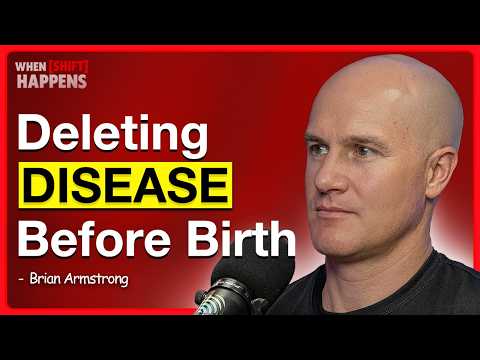
A high-conviction — and controversial — thesis centered on embryo editing. Today, many families use IVF and pre-implantation genetic testing (PGT) to select among embryos. The proposition pushes further: in “10 years or more”, it may be possible to make a small number of precise edits, “maybe starting with a single base pair.”
The motivation is population-scale health impact. As noted, there are “three or 400 million people today living with genetic disease.” Early candidates for intervention include well-characterized, single-base variants associated with risk:
- APOE4: described as “a single base pair edit that is... preventive for Alzheimer's.”
- PCSK9: cited as “a single base pair edit that would be protective against heart disease.”
The long-run view argues that as safety and efficacy mature, embryo editing could move from taboo to default:
“It'll flip from being like crazy and irresponsible to do it... to being kind of crazy and irresponsible not to do it.”
The stated end goal is pragmatic: “Everybody wants to have healthy children.”
⚖️ Risk, Ethics, and the Path to Trust
Any roadmap must reconcile with past missteps. Reference was made to a widely criticized case in China where babies were edited “maybe like not the most scientifically responsible way”, which caused a significant setback. The proposed path forward focuses on staged de-risking:
- Demonstrate safety in research settings: “shown... in a laboratory research environment to be done safely whether that's with mouse embryos or in... a research environment to mitigate the risks.”
- Iterate within clear rules: progress tied to “a safe and trusted way” and guardrails shaped by regulation.
On timeline, the outlook balances ambition with realism: “10 years or more” to early capabilities, with a potential social norm shift over “10 or 20 years.”
🔬 Designer Traits vs. Disease Prevention
Concern over “designer babies” was addressed directly. Current capability is limited: “We don't have the ability to do that now.” The ethical frame drew parallels to the choices parents already make — partner selection, schooling, and nutrition — which shape outcomes long before any gene edit. The tension between freedom and oversight was stated plainly:
“We live in a free society... people I think should be free to make some bad choices but ultimately... we as a society will have to understand what the rules and limitations are around that from a regulation point of view.”
In short: focus near-term on disease prevention, build empirical safety, and let policy evolve alongside capability.
📈 Market and Policy Implications
- Investable frontier: Tools enabling single base pair precision, IVF/PGT infrastructure, and safety-validation platforms could define the next cohort of biotech breakthroughs.
- Regulatory catalysts: Clarity around permissible edits, trial frameworks, and oversight will be decisive. Expect milestones to track de-risking in controlled research environments.
- Public adoption curve: Trust will hinge on early, unambiguous safety wins and narrow disease-prevention use cases.
- Ethical governance: Societal consensus on limits — not only capability — will shape diffusion and international competition.
🚀 A Note on Industry Building
Closing reflections connected the operating ethos to crypto’s maturation arc, with gratitude for work spanning “more than 13 years” in the industry. The sentiment captured the compounding effect of persistent execution:
“Happy to do it. It's been it's been fun. The crypto industry would certainly not be where it is today.”
Key Takeaways
- Do first, learn fast: Small, concrete actions convert uncertainty into signal and momentum.
- Embryo editing’s thesis: Start with narrow, single base pair disease-prevention edits; de-risk in lab settings before broader adoption.
- Scale of need: The problem space spans “three or 400 million people today living with genetic disease.”
- Norms can flip: Over “10 or 20 years”, safe, trusted prevention could shift from controversial to expected.
- Freedom and guardrails: Societal rules and regulation will pace capability — not the other way around.