TheRollupCo5 min read
NEAR team: confidential AI and "user-owned" compute are the next trillion-dollar shift
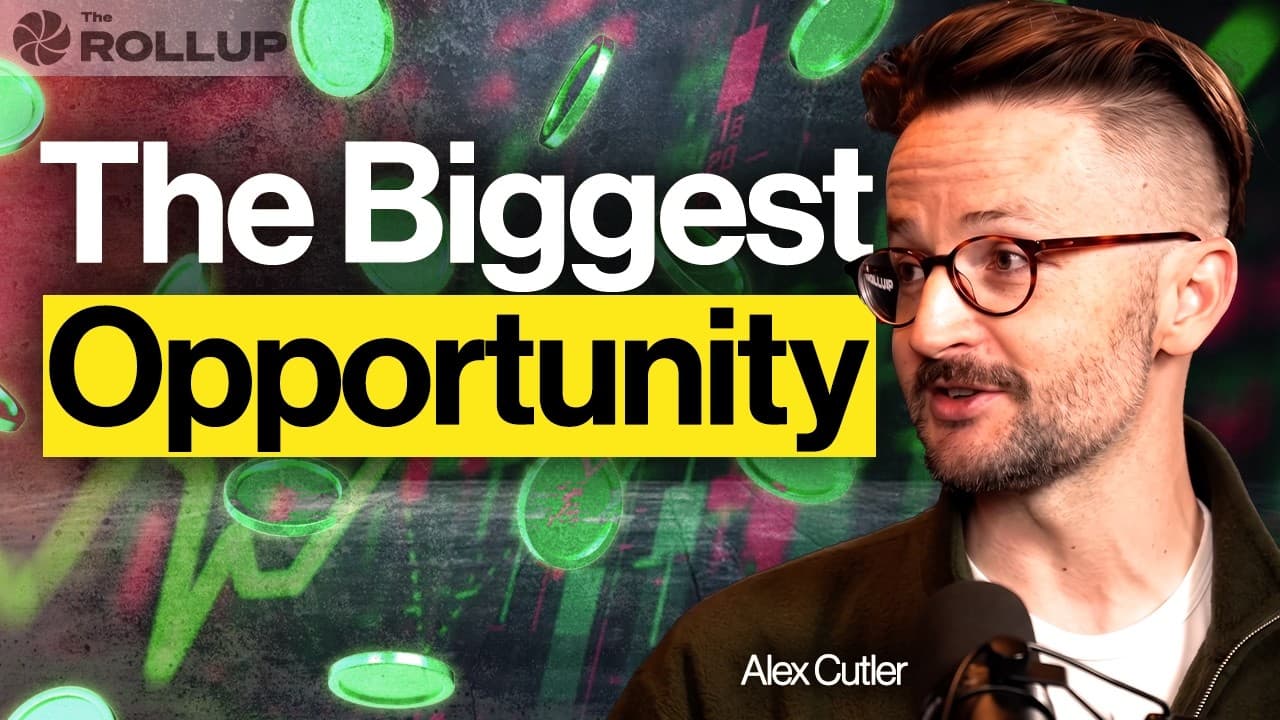
Illia Polosukhin, Alex and Anton argue NEAR's privacy, intents and inference stack position it to power an agent economy that rivals traditional banks.
AI summary of “Illia Polosukhin, Alex & Anton: User-Owned AI Is The Next Trillion Dollar Shift (Full Interview)”
Key takeaways
- Illia Polosukhin says finance and AI must be confidential by default, citing regulatory risk and personal data tracking.
- Alex argues NEAR's confidential intents plus TEEs finally put blockchain "on par" with modern banks.
- Anton says NEAR's multi-cryptography account model leaves it better positioned than Bitcoin for post-quantum migration.
- Anton pushes back on Justin Drake's quantum framing, calling an "AI will break all cryptography" narrative unscientific.
- Illia claims open-weight model token usage "completely flipped" in the last three months versus closed frontier models.
Tokens mentioned
The speakers' views, not ours
Agents will need to stake/hold NEAR for reputation, slashing and compute access
“I actually think agents will need to hold NEAR to to effectively like civil resistance, prove their reputation and kind of have some deposit for security”
Credited with leading the personal privacy wave that foreshadowed business demand
“I would say Zcash led the wave of like personal, which in this case was foreshadowing, I think, the business”
Confidentiality becomes a business requirement, not just a privacy preference
Illia Polosukhin opens by arguing that crypto has spent most of its history on speculation, but real businesses are now adopting it, which raises new problems: public blockchains expose every transaction, including payroll and income data that public companies are legally obligated to keep confidential before earnings calls. He frames this as the reason privacy must move from an optional "mixing" feature to a default.
He credits Zcash with leading the personal-privacy wave, calling it a foreshadowing of what businesses now need. He also ties privacy to post-quantum and cryptographic risk reduction, since transactions and public keys that are never broadcast cannot be targeted later. "Satoshi just didn't have technology to do it," he says, arguing blockchain was always meant to be private.
"I think we've seen that growth, so obviously Zcash leading this... I would say Zcash led the wave of like personal, which in this case was foreshadowing, I think, the business." — Illia Polosukhin
Alex: confidential intents and TEEs put blockchain on par with banks
Alex says NEAR's confidential intents, combined with advances in trusted execution environments, finally let blockchain match what traditional banks already offer customers. He recalls that six years ago obfuscating transaction amounts required artificial workarounds because the underlying technology lagged banking infrastructure; he argues that gap has now closed.
He frames this as giving users optionality rather than displacing incumbents: "it's not about killing Revoluts or Robinhoods of the world." He also notes NEAR currently has no single agreed-upon narrative the way Zcash does, which he calls "an absolutely amazing position to be in" because it invites experimentation — people variously describe NEAR as a "market of markets" or a "SWIFT" for blockchains.
Anton on quantum readiness and pushback against Justin Drake's framing
Anton argues NEAR's original multi-cryptography account model makes it more adaptable to post-quantum migration than earlier chains including Bitcoin, since NEAR can add new signing schemes without a one-time, permanent choice. NEAR has already rolled out ML-DSA 65 as one such scheme.
He pushes back specifically on how Justin Drake delivered a quantum-threat message, not on the underlying concern. He says treating "AI almighty will break all your cryptography" as a reason to go into "bunker mode" is unscientific, since there's no way to know when it would be safe to emerge. He welcomes the broader conversation about preparing for cryptographic "black swan" events generally, and says NEAR is working on having "a way out" if elliptic cryptography is broken, something the industry previously treated as unrecoverable.
"If you come from the angle saying AI almighty will break all your cryptography this is not scientific... except there is in the world where AI can break all the cryptography there is no post AI cryptography." — Anton
Open-weight models are overtaking frontier closed models
Illia says NEAR AI's goal is private, verifiable, secure inference, with cryptographic attestations covering prompts, responses, and hardware signatures. He points to a surge in open-weight model usage, saying token consumption from open-weight models "completely flipped" relative to closed models in the last three months, driven by lower cost and fewer imposed guardrails.
He cites an internal result where a customized DeepSeek-based harness matched Claude and GPT on formal verification tasks at "100 to 200 times cheaper." NEAR AI is also moving to host third-party proprietary models confidentially — the provider's weights and the user's data both stay encrypted — turning NEAR into what Illia calls "a marketplace of models and consumption inference in one place," accessible partly through staking NEAR.
Google's ad model and the risk of an AI "manipulation engine"
Alex presents what he calls a deliberately dystopian scenario: Google's ad business already profits by targeting users based on search queries, and chatbots now hold far more context about users than search engines ever did. He warns that if OpenAI and Anthropic pursue a similar extraction-based business model over "20 years of polishing," users may eventually be unable to tell whether their thoughts are their own or implanted by chatbots.
Illia illustrates the manipulation risk concretely, saying a single front-end engineer could alter a chatbot's system prompt to subtly steer political opinions across "a billion people's" conversations. Anton draws a parallel to Google's early years, when websites tried to block search indexing and ultimately became irrelevant by doing so; he predicts platforms blocking AI agents today will face the same fate.
"If you want to manipulate a billion people's minds right now, you just join as a front-end engineer into ChatGPT... and just change the system prompt." — Illia Polosukhin
Debate over whether user-owned AI should be free
Alex takes what he calls a more radical position than Illia's: truly user-owned AI "should be free," arguing that any attached business model will push the AI to maximize revenue at the user's expense, even under a flat subscription. He says NEAR Intents functions as the "money-making machine" needed to fund free, user-owned AI, similar to how Uber or Amazon earn a percentage of transactions rather than selling attention.
Illia frames the mechanism differently, describing agents needing to hold NEAR tokens for "civil resistance" and reputation — effectively staking collateral that can be slashed if an agent misbehaves — while also staking NEAR to access compute capacity. Anton adds that trusted execution enclaves and chain-signature-derived secrets let agents hold credentials (like payment access) under cryptographic proof of correct execution, which he calls a critical missing building block.
Where NEAR goes next and what's left unresolved
Illia closes by saying NEAR plans to keep scaling blockchain performance, bring more assets into Intents, and expand inference capacity, with near.com positioned as the product that hides blockchain complexity (gas fees, addresses) from end users. He says NEAR's historical approach was building infrastructure and letting apps build experiences, and that the team now wants to assemble those pieces into one coherent product.
The speakers leave open exactly how revenue generated through NEAR Intents would reconcile with Alex's vision of a free, user-owned AI layer — Illia's framing still involves staking NEAR for compute access, which he acknowledges differs from Alex's "free" ideal. No specific revenue figures, timelines, or token price targets are given for NEAR itself.
Written by AI from the video's transcript. It can compress, misattribute or miss context — the original video is the source. Not investment advice.