TBPN4 min read
TBPN hosts dissect Elizabeth Holmes film, SemiAnalysis's 50GW data center forecast, Anthropic's 17% GDP bet
From Theranos redemption talk to AI capex supply numbers and Poppi's shrunken earnout, the hosts cover a dense tech news day.
AI summary of “Elizabeth Holmes and Theranos, AI Data Center Forecast Jumps, Poppi’s Pepsi Deal | Diet TBPN”
Key takeaways
- The hosts say the "You Can See Everything" film left many viewers more sympathetic to Elizabeth Holmes, but they remain skeptical of a "Theranos 2.0."
- SemiAnalysis raised its 2027 data center capacity forecast from 43 to 50 gigawatts, which the host calls reassurance on AI compute supply.
- Anthropic staff reportedly expect AI to do 75% of their work by 2030 and GDP growth to hit 17.1%, a figure one host calls "bullish" and a critic calls "borderline mental illness."
- Brett Adcock's app Hark tried a $1 million pizza giveaway that the hosts describe as turning into a "PR disaster" over data permissions and glitches.
- Poppi's founders got $1.9 billion upfront but only $12 million of a possible $300 million Pepsi earnout, which Sean Frank says is typical for earnout deals.
Holmes film sparks debate over victimhood versus bad execution
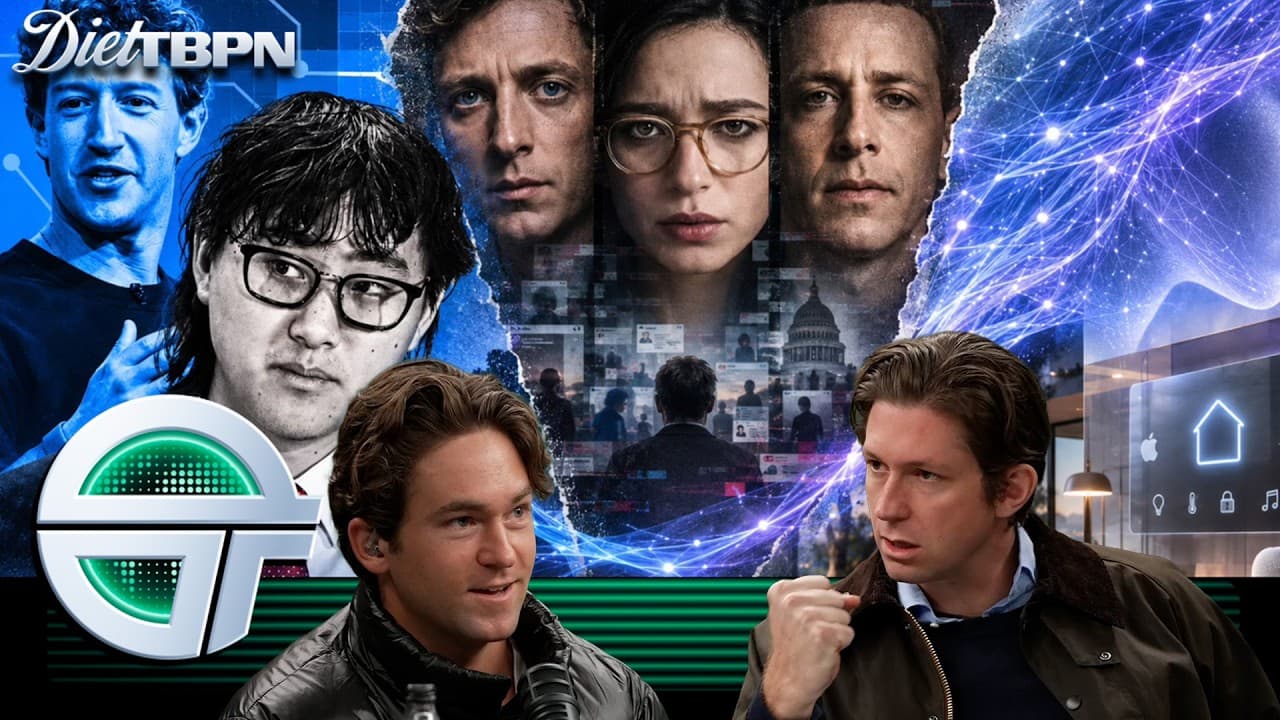
The hosts discuss the reaction to the Elizabeth Holmes film "You Can See Everything," noting that many viewers came away more sympathetic to Holmes, speculating she may have been manipulated. One host pushes back hard, arguing the issue isn't just fraud but incompetence:
"it just seems like like total slop in terms of the execution of that business and gives me absolutely no faith in a Theranos 2.0."He points out there have been "60 plus companies since Theranos started that sold for over a hundred million dollars in that category," arguing Holmes falsely framed a common diagnostics-box business as unique magic.
The hosts cite a breakdown attributed to Nikita Beer framing Holmes as a product of the "TED Talk entrepreneur" era between 2011 and 2015, when "fake it till you make it" was broadly excused until the market and FDA scrutiny caught up with her. One host recounts a real comparison: Diego Rey's GeneWeave built an actual diagnostics box, got FDA authorization in 2019, and sold for $425 million, raising only $25 million — contrasting a legitimate path with Theranos's.
A side deal and prison sentences raise questions about the Holmes family's finances
The hosts examine Billy Evans's "points on the back end" deal for profits from the film, which he later backed out of once it looked bad publicly. They speculate this was structured to avoid Holmes's restitution obligations, since money paid directly to her "immediately gets grabbed by investors," while money to Billy could fund their family without legal exposure.
They also note that Sunny Balwani received roughly "11 years and 3 months" originally for Holmes, reduced, while Balwani served "about a year longer" at 12 years. Both hosts express surprise that neither executive sold secondary shares despite running Theranos to an $11 billion valuation, with one joking they were "doing fraud purely for the love of the game."
SemiAnalysis lifts data center forecast as AI agent demand remains unclear
The hosts discuss SemiAnalysis raising its 2027 data center capacity forecast from 43 to 50 gigawatts, framing it as evidence against concerns about AI demand slowdown. One host says,
"I believe them on supply... I don't think anyone has a stronger read on what's actually getting built than them."He argues that even a 5% Nasdaq selloff wouldn't be enough to halt projects already underway, comparing the build-out to a train that "can't slow it down that quickly."
On the demand side, the hosts debate whether consumers or enterprises will pay for AI agents. One host says he's "less clear on what the willingness to pay will be" for consumer-facing agentic tools, floating a bearish estimate that the agentic commerce market could be only "a $40 billion market." The other argues the real leg-up must come from enterprise diffusion, not consumer subscriptions, since "we don't pay for all this capex... as consumers."
Hark's pizza giveaway and Anthropic's 17% GDP growth forecast draw skepticism
Brett Adcock's app Hark tried to give away $1 million in pizza, but the hosts say it became a "PR disaster," citing broad data permissions requested (including access to Google Drive files, spreadsheets, calendars and email) and app glitches that led one user to file an FTC complaint through the app itself.
The hosts then turn to a reported Anthropic staff survey expecting AI to do 75% of their work by 2030 and GDP growth to reach 17.1%, with one staffer apparently predicting 28% and the lowest estimate at 6%. One host calls the figures "bullish," while a critic referenced as Spoor says
"this is borderline mental illness... What are these people smoking?"The hosts note site visitors predicted 12.5% and US adults predicted 5.4%, both well above typical US growth, and acknowledge the Anthropic figure was reported by Shob Sankar and "has not been widely confirmed."
Poppi's $300 million earnout collapses to $12 million despite a strong overall deal
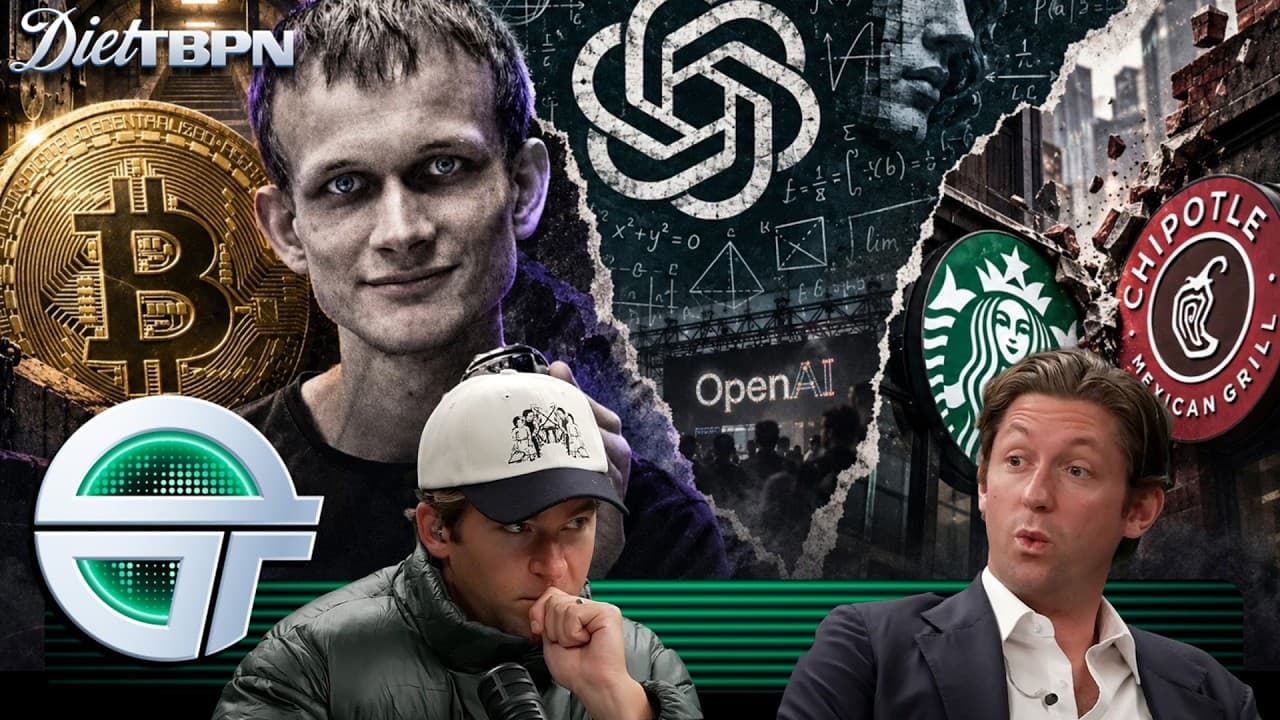
The hosts explain that Poppi sold to Pepsi for $2.2 billion, with $1.9 billion paid at closing and $300 million structured as a performance earnout. Pepsi reportedly will pay only $12 million of that earnout instead of the full $300 million. The hosts argue this isn't the disaster some commentators suggest, since the founders still captured "90% of the deal value" with the bulk of the money already front-loaded.
They cite Sean Frank's comment that founders should treat earnouts skeptically: "a quarter is what you should expect in an earnout most of the time. Write off that second bite to zero." The point being that once a company is sold, the acquirer controls budget and distribution decisions, leaving the earnout largely out of the founders' hands.
Written by AI from the video's transcript. It can compress, misattribute or miss context — the original video is the source. Not investment advice.