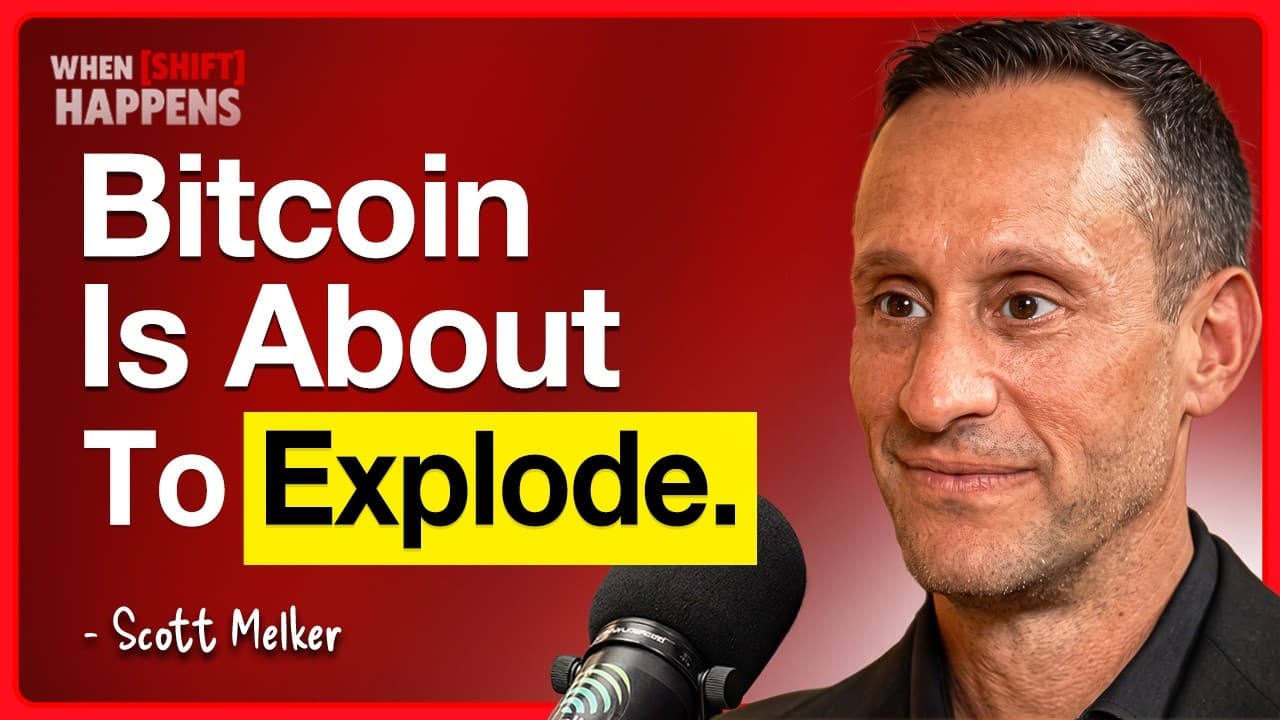
The cryptocurrency industry finds itself in a curious position: real institutional adoption and fundamental progress are accelerating precisely when retail sentiment has turned decisively bearish. This disconnect reveals critical insights about market psychology, investment strategy, and the structural evolution of digital assets.
📉 The Bearish Sentiment Paradox
Market observers note that investor bearishness has intensified just as meaningful adoption is occurring. The explanation is straightforward but revealing: many participants became bearish because the specific tokens they held declined in value, not because the underlying technology or use cases deteriorated.
This behavioral pattern exposes a fundamental truth about market participation — many investors entered crypto for speculation rather than conviction in the technology itself. There's no inherent criticism in this observation, but understanding one's true motivations proves essential for navigating volatile markets.
"You start as a trader, then you lift your stop loss when it's going against you because emotionally you don't want to lose the trade. Then you become an investor because now you're down so bad. Then you become a passionate community member... and forever you're part of the link army or the XRP army or whatever it is."
This progression — from trader to forced holder to community evangelist — describes a common path that applies non-exclusively to any asset. The irony is that real crypto adoption is materializing now, precisely when sentiment has soured.
💡 The Tokenomics Problem: Why Most Tokens Failed Investors
The disconnect between project success and token performance stems from structural design failures in tokenomics. The harsh reality: most projects didn't actually need tokens, and those that potentially did failed to structure them properly for value accrual.
Investors essentially held "lottery tickets with the name of a project on them" — the underlying project might generate revenue, even provide returns to equity shareholders, but token holders saw no economic benefit. This structural flaw remained obscured during bull markets because rising prices created the illusion of fundamental value.
The implication for future cycles is clear: the next generation of crypto projects will need to build genuine value accrual mechanisms into their tokens. For better or worse, successful tokenomics may increasingly resemble equity in public companies, with clearer utility and economic rights flowing to holders.
🏦 The Institutional Divide: Haves and Have-Nots
The cryptocurrency market has bifurcated into distinct tiers. A small number of assets have secured institutional adoption and access to institutional capital flows. Everything else — "coin number 75 on CoinMarketCap" — faces an uphill battle.
This institutional divide fundamentally reshapes investment strategy. Assets with institutional bids benefit from sustained capital inflows and infrastructure development, while the long tail of altcoins struggles for relevance without similar support.
📊 A Pragmatic Investment Approach
For investors with normal jobs who aren't building crypto businesses, the path forward emphasizes simplicity: buy Bitcoin and get on with life. This straightforward approach serves as the gateway, with deeper exploration following naturally as interest develops.
The alternative entry points — Doge in one cycle, NFTs in another, meme coins or celebrity tokens in the most recent — have proven fundamentally non-lasting. These speculative assets may generate short-term excitement but fail to provide durable investment vehicles.
💼 Dollar-Cost Averaging 2.0
Rather than traditional dollar-cost averaging, sophisticated approaches now focus on algorithmically optimized accumulation strategies. These systems aim to "buy the dip better" by securing the best price within specific timeframes — whether 4 hours, a day, or a week.
This "smart DCA" approach improves on traditional fixed-interval buying by capturing opportunistic entry points. For serious allocators, portfolio composition skews heavily toward established assets with proven institutional adoption:
- 80% Bitcoin — the foundational position
- 10% Ethereum — institutional adoption with yield strategies
- 10% Solana — emerging institutional interest
This concentration reflects a simple reality: assets with institutional bids and adoption have fundamentally different risk profiles than the broader altcoin universe.
⚖️ Bitcoin vs. Everything Else
The investment framework distinguishes between Bitcoin as a "forever asset" and other cryptocurrencies as long-term but not permanent holdings. Bitcoin has "bridged the gap" to institutional legitimacy and durability in ways that other assets haven't yet proven.
For Ethereum and Solana, the strategy incorporates yield generation — buying dips, selling rips, and recycling the cash flow back into Bitcoin. This acknowledges their value while recognizing that technological disruption and competition from new layer-1 blockchains prevent the same "forever" claim applicable to Bitcoin.
🏢 The Bitcoin Treasury Trap
The proliferation of Bitcoin treasury companies reveals a fundamental flaw in their thesis: you can't beat Bitcoin by simply buying Bitcoin. Without "weird magic or financial engineering," these companies inevitably underperform the asset they're supposed to outperform.
A more sustainable model would see cash-flowing businesses allocate 10% of their capital to Bitcoin — the same approach recommended to individuals. This would create genuinely productive Bitcoin treasury companies rather than vehicles that become "a drag on the market."
💰 The Yield Question: Post-PTSD Reality
Yield strategies in crypto carry understandable skepticism after numerous platform collapses. For context, participants who suffered through events like Voyager's bankruptcy (where some became top creditors) experienced firsthand the dangers of unsustainable yield products.
The DeFi ecosystem has faced relentless security challenges, with hacks occurring approximately every 2 days over the past year. These aren't disputed figures — they represent documented losses totaling billions. Beyond direct hacks, an estimated $10-14 billion in capital fled platforms that weren't directly affected, purely from fear that DeFi infrastructure was fundamentally broken.
The combination of sophisticated bad actors and AI-enhanced attack surfaces has expanded the risk profile dramatically. This doesn't mean yield strategies are inherently problematic, but the source of yield, transparency of operations, and individual risk tolerance must align before capital deployment makes sense.
🎯 Strong Opinions, Loosely Held
The most sustainable investment approach embraces strong opinions combined with flexibility. Conviction doesn't require blind adherence — when presented with superior information, changing course publicly and acknowledging previous errors demonstrates intellectual honesty rather than weakness.
The hard lesson many investors learned: had they simply bought and held what they fundamentally believed in most, rather than chasing narratives or trading momentum, their financial outcomes would have been substantially better.
✅ The Bottom Line
Crypto isn't dead — it's maturing and changing. The disconnect between bearish sentiment and accelerating real-world adoption creates opportunities for those who can distinguish between speculation and conviction, between fundamentally sound assets and structurally flawed tokens.
The path forward emphasizes:
- Simplicity over complexity — Bitcoin as the foundation
- Cash flow over treasury plays — productive businesses allocating to BTC
- Institutional adoption as a filter — focusing on assets with real institutional interest
- Skepticism about yield — demanding transparency and understanding risk
- Intellectual flexibility — adjusting views when evidence warrants
For most participants with normal jobs and lives, the answer remains straightforward: take a percentage of cash flow, buy Bitcoin, and observe how it performs over time. The rabbit hole will reveal itself to those genuinely interested, but the foundation should remain simple, durable, and focused on what has actually achieved lasting adoption.
The irony of the current moment is that real crypto adoption is happening precisely when everyone has stopped paying attention. That might be exactly the right time to pay attention.