💡 The Thesis: Everyone Should Own Bitcoin
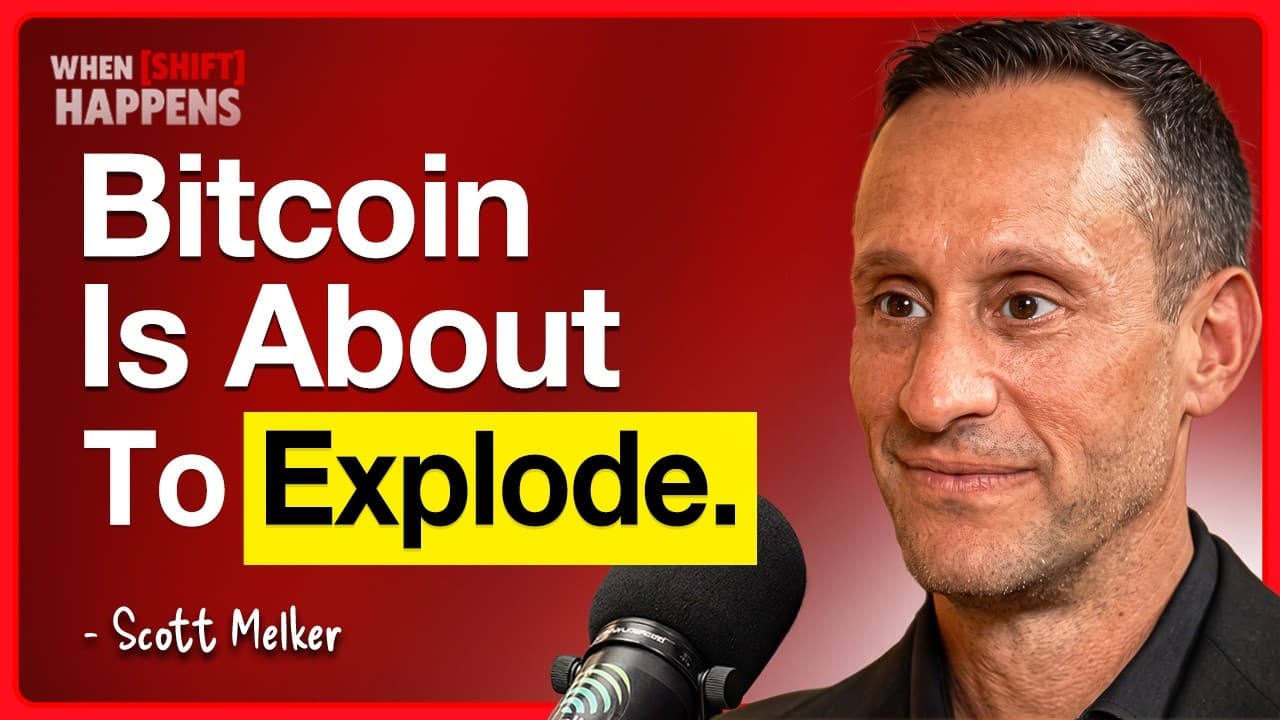
The core argument is straightforward: everyone should own Bitcoin. Not as speculation, not as a lottery ticket, but as a hedge against the structural forces slowly eroding purchasing power. The risk of not owning Bitcoin, or any hard asset, is remaining trapped on what some call the "hamster wheel of life" — working harder, earning more nominally, yet falling further behind in real terms.
"You're fighting an uphill battle that you can't win. No matter what gaslighting the government gives them about prices coming down or inflation being under control, you don't save any money. You go to work, you go to your second job, you still don't save any money. And you need to get off that hamster wheel."
This perspective highlights a blunt reality: an estimated 90% of people worldwide do not own any hard asset that benefits from inflation. For the vast majority, wages struggle to keep pace with rising costs, and savings erode in real terms. The systemic headwind is irresponsible monetary policy and inflation — forces that require a strategic response, not just harder work.
📊 The Solution: Hard Assets as a Defensive Position
The recommendation is clear: even modest, regular exposure to hard assets can make a meaningful difference. Whether it's $10 or $20 in Bitcoin, or stocks, or other inflation-resistant assets, the goal is to position capital where it can benefit from — rather than suffer under — the structural tailwinds of loose monetary policy.
This isn't about getting rich quick. It's about participating in the same system that institutions and governments use to preserve and grow wealth. Most individuals simply don't know this dynamic exists, or how to access it.
🎙️ Behind the Scenes: The Gap Between Public Optimism and Private Reality
One of the more revealing insights comes from conversations that happen off-camera. Public narratives in crypto and policy circles often project optimism and momentum. Behind the scenes, the tone can be starkly different.
Take crypto legislation as an example. Despite repeated assurances that bills like the Clarity Act would pass "next month," the reality has been far more uncertain. Off-record, even those closest to the legislative process admit to exhaustion and doubt:
"Sometimes we get off camera and they're just beat down. Like they're like, I don't know, man. You know, I'll get a text here or there from someone very close to it and they'll be like, come on, man. Your pessimism is killing me."
This dynamic — public cheerleading masking private skepticism — is common across the industry. The whole story is often more nuanced, more fragile, and more uncertain than the narrative presented to the public.
🐻 Bear Market Signals: Classic Capitulation
Ironically, some of the most bearish sentiment emerging now may be the strongest signal that the worst is behind us. Founders questioning their purpose, prominent figures declaring "crypto is over" (or that everything except Bitcoin is going to zero) — these are classic bottom signals.
"I talk to some mega founders in the space and when I'm in the car with them they tell me sometimes I'm really wondering what I'm doing here. Like literally, I'm like, 'Holy shit.' If this dude is telling me this, who else is left?"
The recency bias in the current market is extreme. Many participants believe this bear market is the worst the industry has ever faced. In reality, it pales in comparison to the existential crises of 2021 and 2022, when:
- The U.S. government was wholesale attacking the industry
- Bitcoin had not yet made new all-time highs
- There was genuine uncertainty about whether the industry would survive
Today, the landscape is radically different. Bitcoin ETFs exist. Larry Fink — arguably one of the most powerful figures in global finance — speaks about Bitcoin with deep conviction. Even Jamie Dimon, historically one of the industry's biggest skeptics, now acknowledges that blockchain is the future.
🚀 Why This Is the Best Time Ever
Despite the pessimism, the current environment represents the strongest structural foundation the industry has ever had:
- Full institutional adoption: ETFs, BlackRock, JPMorgan, and more
- Government engagement: Strategic Bitcoin reserves being discussed, governments mining Bitcoin
- Tokenization: Real-world assets moving onto blockchain rails
- Higher price floors: Bitcoin is trading at multiples of previous cycle highs, even during consolidation
"Bitcoin is gonna go so much higher. It's going to blow people's minds. And they also forget that Bitcoin spends almost all of its time sideways and boring. It's like 10 days a year you make all of the money. So you just need to be in it."
This dynamic mirrors equity markets. Studies show that missing the best 10 days in the S&P 500 can reduce returns by roughly 50%. The same logic applies to Bitcoin: the strategy is to stay invested, not to time the market.
📈 Historical Context: The Post-COVID Rally
Consider the generational buying opportunity that emerged after the COVID crash in 2020. Bitcoin fell to around $3,500, down from roughly $10,000. At the time, the idea that Bitcoin would reach $100,000 seemed implausible to many.
What followed was a rally that took Bitcoin to $69,000 — a 17x increase from the lows. Ethereum surged 50x in the same cycle. Meanwhile, traditional equity markets merely doubled.
"In hindsight, it was obvious. You just have to believe. You don't need to guess what the catalyst will be. You just need to wait. It's always happened."
The lesson: the catalyst is rarely obvious in advance, but the pattern has repeated consistently. Whether the next target is $500,000 or $1 million, the argument is the same — stay invested, stay patient, and let the structural forces work.
✅ Key Takeaways
- 90% of people globally do not own hard assets that benefit from inflation
- Even small, regular investments in Bitcoin or other hard assets can provide meaningful protection
- Public narratives often mask private uncertainty — off-record conversations reveal a more fragile reality
- This bear market is mild compared to 2021-2022, when existential threats loomed
- Institutional adoption is at an all-time high, with ETFs, government reserves, and tokenization advancing rapidly
- Bitcoin spends most of its time sideways — missing the 10 best days can erase most returns
- Historical precedent is clear: Bitcoin went from ~$3,500 to $69,000 (17x) in the last cycle
🔮 Final Word
The case for Bitcoin is not about predicting the next catalyst or timing the next rally. It's about recognizing the structural forces at play — inflation, irresponsible monetary policy, and the widening gap between those who own hard assets and those who don't. The solution is not to work harder on the hamster wheel. It's to get off it entirely, even if that means starting with just $10 or $20 at a time.
The best time to start was yesterday. The second-best time is now.