🚀 From 650K to 13M Users in 6 Months: The OpenCode Story
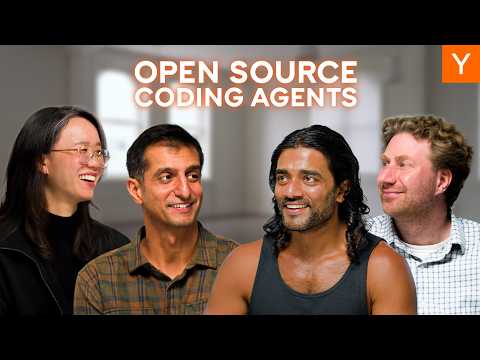
The coding agent wars have a new protagonist. While Claude Code and Cursor dominate headlines in Silicon Valley, OpenCode — an open-source alternative that works with any model — has quietly scaled to 4.6 million weekly active users and is processing 7 trillion tokens per day. For context, that's more than OpenRouter's entire daily volume of 6 trillion tokens.
The numbers tell a remarkable growth story. OpenCode ended June with approximately 13 million monthly active users, representing a 20x increase since the beginning of the year. The company now has around 160,000 monthly paying subscribers and is on track for an annualized revenue run rate of $38-40 million — just 8 months after launching their inference product in late September.
📊 The Accidental Marketing Breakthrough
OpenCode's inflection point came from an unexpected source: competitive friction. In early January, when the company had around 650,000 monthly active users, Anthropic began blocking users who tried to use their Claude subscription with OpenCode. The mechanism was blunt — if a system prompt mentioned the word "OpenCode," the request would be rejected.
"What it inadvertently did was it put OpenCode and Claude Code on the same sort of pedestal. It like equated the two products in some ways," Jay V, OpenCode's founder and CEO, explained. "Even for the people that weren't using OpenCode at the time, they sort of took notice of the fact that Claude Code is taking that kind of an action against OpenCode."
The Instacart playbook played out in real time: perceived competitive threat became free marketing, validating OpenCode as a serious alternative worth investigating. The result was explosive user growth throughout the first half of the year.
🌍 A Global-First Growth Strategy
Unlike most YC companies, OpenCode's growth story is fundamentally global. Their usage data reveals a striking geographic distribution:
- China: 17% of traffic — making OpenCode possibly the only YC company with meaningful Chinese user adoption
- Indonesia: 4% of traffic
- Brazil: 5% of traffic
- Significant presence in Vietnam and other developing markets
"The premise of the product is that most people in the world still haven't experienced the magic of a coding agent," Jay explained. "The frontier models and the frontier labs charge so much per token that it's going to be hard for a lot of people across the globe to have that experience."
This global footprint creates an unexpected competitive advantage: stable 24-hour GPU utilization. When the East sleeps, the West works, and vice versa — resulting in consistent compute demand that improves unit economics compared to regionally concentrated competitors.
💰 New Token Economics: The Whale Model
OpenCode has discovered what may become the standard CAC model for AI companies: token-subsidized acquisition leading to high-value enterprise whales.
The traditional SaaS playbook relied on advertising spend to acquire customers. The new AI playbook replaces ad spend with token subsidies — free tiers that let users experience "aha moments" with AI agents. The challenge: crossing the chasm from casual user to power user is extremely expensive in token terms.
OpenCode's solution involves three tiers:
- Free tier — Token-subsidized to deliver that first magical coding agent experience
- OpenCode Go ($10/month) — Unlimited access to open-source models for real work
- Enterprise — Pay-per-token with volume discounts that create healthy margins
The company is now the largest customer for most open-source model providers by token volume, giving them negotiating leverage that translates directly into margin.
What's remarkable is how enterprises are adopting the product. Jay recounted: "You really know you have product market fit when like enterprises are bugging you to sign the security agreement so they can use your product." Instead of traditional procurement cycles, OpenCode receives inbound requests that start with: "There are a bunch of people at our company using you guys. Can you fill out the security questionnaire?"
Dozens of Fortune 500 companies now have significant OpenCode footprints — often unknown to the company itself until enterprise IT departments reach out to formalize usage.
📈 The Model Marketplace Advantage
OpenCode publishes detailed usage data at opencode.ai/data, offering unprecedented transparency into how different models perform in real-world coding scenarios. The data reveals fascinating competitive dynamics:
By Token Volume (Top 3):
- DeepSeek Flash dominates usage
- DeepSeek Pro follows
- GLM-5.2 rounds out the top three
By Unique Users:
- DeepSeek Flash: ~38,000 users
- DeepSeek Pro: ~31,000 users
- GLM-5.2: ~30,000 users
Contrary to Twitter hype cycles, DeepSeek maintains dominance despite GLM's buzz. Jay attributes this partly to DeepSeek Flash's exceptional tokens-per-second performance and rock-bottom pricing, which enables developers to extend their usage as they approach daily limits by switching to ultra-cheap models.
The data also reveals regional model preferences — Chinese developers favor domestically-built models they can access through OpenCode, while global users optimize for different characteristics: cost, speed, or specialized capabilities like front-end design.
🛠️ Product Decisions That Mattered
Several intentional design choices set OpenCode's trajectory:
1. The Name Itself
"When you've got a dominant or in this case two dominant players in the market, the rest of the market coalesces around an open alternative," Jay explained. "Picking that position ends up being really valuable because if you pick it, it's very hard for somebody else to displace you."
The "Open" positioning was deliberate — when enterprises want vendor neutrality, OpenCode becomes the obvious choice.
2. Terminal UI Excellence
As Neovim/Vim users, the founding team looked at Claude Code's terminal experience and saw room for improvement. They had built terminal UIs before (including, memorably, a terminal-based e-commerce site for buying coffee via SSH). For the hardcore developer community they targeted, a polished terminal experience was non-negotiable.
3. Model Neutrality at Scale
At launch, OpenCode claimed support for 70+ models and providers. To make this possible, they created an open-source project called models.dev — now probably the best database of models and providers globally. This commitment to choice became their moat.
⏰ The 16-Year Overnight Success
Perhaps the most inspiring part of OpenCode's story is what happened before the hockey stick. The company incorporated in 2010. Jay and co-founder Frank applied to Y Combinator nine times between 2016 and 2021, with four interviews along the way — all with the same legal entity, though with different product ideas.
Their first YC interview was in the Mixpanel batch, waiting in the same room where an Airbnb founder happened to be hanging out. It would take over a decade more to finally get accepted, with a serverless platform idea in 2021.
The winding path included consumer products, enterprise tools, open-source frameworks, and multiple pivots. Each detour built capabilities that would prove essential: consumer acquisition expertise, enterprise sales experience, open-source community building, and product taste refined over years.
"Partly maybe being a little stubborn," Jay admitted when asked what kept him going. "Maybe we should put a little warning that, you know, don't try this at home." The prudent path would have been joining a high-growth startup to learn faster. Instead, they kept building — living with parents when money ran out, seeing just enough progress to justify continuing.
When the coding agent wave hit in early 2024, OpenCode wasn't scrambling to catch up. They had the technical chops, the open-source credibility, the global distribution instincts, and the product taste to capitalize on the moment. The bottle was positioned correctly when lightning struck.
🔮 Market Structure and Model Commoditization
OpenCode's success raises fundamental questions about AI market structure. As models proliferate and capabilities converge, will intelligence become a commoditized utility?
Jay's take is more nuanced: "The market is so large that it is hard to imagine people not or model labs not picking off niches and chunks of their own in that they're specializing for specific areas or specific characteristics."
DeepSeek's success targeting the cost-performance axis demonstrates this specialization thesis. GLM's strength in front-end design tasks suggests similar differentiation. The coding agent use case alone is large enough to support multiple specialized models optimizing for different attributes.
OpenCode isn't picking winners — they're betting the field. And as the only platform giving developers true choice across all models, they're positioned to capture value as the market fragments and specializes.
"This is just an unprecedented market. Like the market for intelligence has not existed before. Everybody should be thinking in a positive sum growth of pie mentality."
🎯 What's Next
With 13 million monthly users and a $40M run rate just 8 months post-launch, OpenCode is still in the early innings. The company is fielding enterprise requests for expanded use cases beyond developer tooling — non-technical employees wanting agent access, product teams embedding coding agents into core loops, and organizations seeking sophisticated token management across different teams with varying frontier model access needs.
The most unusual enterprise request Jay mentioned: detailed visibility into exactly what every employee is doing with the tool — raising questions about privacy and surveillance that OpenCode is still wrestling with.
As frontier model costs remain prohibitive for global developers and open-source alternatives continue improving, OpenCode's positioning as the neutral, global-first platform looks increasingly prescient. They've built the infrastructure for a world where intelligence is abundant, diverse, and specialized — and where choice itself becomes the competitive advantage.
For anyone building in AI, the OpenCode story offers a clear lesson: when you hear "this will be commoditized," the right response isn't to panic about margins — it's to build the platform that makes that commoditization accessible to the world.
More from Y Combinator

How Two French Founders Built Europe's Biggest YC Company by Learning to Think B
📸 From Paris to Global ScalePhotoRoom stands as a compelling case study in entrepreneurial ambition. The company provid...
From Zero to Decacorn: The Superbase Story and the Rise of Agent-First Developme
💡 The Bootstrap Philosophy: Why Money Won't Save Your StartupIn an era where venture capital headlines dominate tech di...

The New Design Paradigm: Building Interactive Products with Voice, AI Agents, an
The design process has fundamentally changed. What once required months of manual coding, painstaking iteration in Figma...

Why Aggregate Metrics Hide the Truth — And How Dot Plots Reveal What Users Actua
Most founders obsess over the wrong numbers. Daily active users, monthly active users, aggregate retention rates — these...

The Dawn of India's Global AI Era: Insights from Y Combinator's Delhi Event
Y Combinator recently convened hundreds of builders, founders, and aspiring entrepreneurs in Delhi for an electrifying d...

Ploy, Webflow, and the New Economics of Entrepreneurship
🎯 The Shift: From Technical Gatekeeping to Taste & ExpertiseA profound transformation is underway in how products get b...