📊 The Three Screens Strategy That Never Was
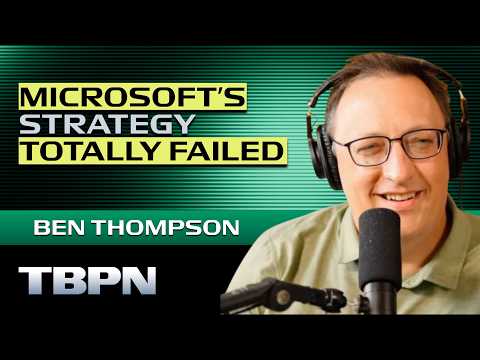
Microsoft's Xbox journey represents one of corporate tech's most fascinating strategic misfires—a multi-decade attempt to own the living room that consumed tens of billions of dollars while fundamentally misunderstanding what gamers actually wanted.
The story begins with Microsoft's pre-iPhone corporate vision: "three screens and the cloud." Having dominated the desktop via PC and attempting mobile through Windows CE, Microsoft targeted the living room as its third pillar. The vehicle? A gaming console that would double as an internet portal for the home.
This fundamental strategic confusion—building an expensive gaming console primarily to serve non-gaming corporate objectives—would haunt Xbox for two decades.
"People buy consoles to play games, not to have a portal to the internet in their living room. You're selling a multi-hundred dollar console to people who want to play games, but people who don't want to play games aren't going to randomly start buying consoles."
While Microsoft chased its living room dreams, cheaper solutions like the Fire Stick, Chromecast, and Roku TV quietly captured that market—proving Microsoft right about the opportunity but catastrophically wrong about the approach.
🎯 The Hardware Wars and Sony's Killer Move
The console generation wars reveal crucial lessons about platform strategy and developer economics. The Xbox 360 era represented Microsoft's competitive peak, but not because of superior vision—rather because the entire gaming industry fundamentally shifted.
Sony's PlayStation 3 stumbled badly by prioritizing corporate goals (launching Blu-ray) over gaming economics, releasing an overpriced console with exotic hardware that developers struggled to utilize. Meanwhile, the transition to HD gaming and 3D graphics drove a seismic shift: game development moved from custom engines to universal platforms like Unreal Engine.
This change in development economics forced publishers toward multi-platform releases. When asset creation costs exploded with HD graphics, developers couldn't afford PlayStation exclusivity—they needed to be everywhere. Xbox 360's PC-like architecture made it the easiest platform to develop for during this cross-platform gold rush.
But Sony learned its lesson. For the PS4 generation, they abandoned hardware differentiation, built developer-friendly generic architecture, and executed the opposite strategy: strategic acquisitions of small studios producing exclusive titles. Games like Spider-Man and The Last of Us became PlayStation-only experiences that drove console adoption.
The strategy worked brilliantly. When 80% of gamers own your console, you collect licensing fees from every multi-platform Call of Duty and Madden sale while your exclusives create insurmountable competitive moats.
💸 The Game Pass Catastrophe: A Case Study in Value Destruction
Facing PlayStation dominance, Microsoft pivoted to a services-first model that would prove disastrous: Xbox Game Pass—a Netflix-style subscription offering unlimited games for one monthly fee.
The pitch seemed compelling: instead of paying $60-80 per game, pay $20 monthly for access to everything. Microsoft believed this would expand the gaming market, attract new users, and leverage volume to compensate publishers.
The execution required massive acquisition spending. Microsoft bought Bethesda, ZeniMax, and eventually Activision—paying premiums for established businesses built on selling individual game copies across all platforms. Then they forced these studios to "take a bath" by bundling their titles into Game Pass.
"They expected to have 75 million Game Pass subscribers by this year. They have like 30 million. And that number is actually decreasing."
The business model failed on every level:
- Market expansion never materialized – No new gamers entered the ecosystem
- Massive cannibalization – Existing customers who would've paid $70 per game now paid $20 monthly
- Publisher economics destroyed – Studios optimized for upfront sales were forced into subscription models
- Platform fragmentation – The Series S created a lowest-common-denominator problem, neutering the Series X's capabilities
Microsoft's bet assumed gaming would follow music industry economics—that accessibility and bundling would generate compensatory volume. Instead, they discovered that console gamers are a fixed market with different consumption patterns than streaming music listeners.
🔄 The Restructuring: 1,600 Layoffs and Strategic Limbo
Recent developments signal the reckoning. Phil Spencer, Xbox's long-time leader, was "retired"—corporate euphemism for termination at that level. New leadership announced 1,600 immediate layoffs with explicit warnings that another 1,600 jobs remain at risk through year-end.
The staggered cut approach reflects the depth of Xbox's problems. While every VC playbook prescribes cutting hard and deep to preserve remaining team morale, Xbox's situation is complex enough that leadership opted for transparency about ongoing uncertainty over false reassurance.
The strategic question now: what is Xbox's path forward?
Options include:
- Making exclusives truly exclusive – Writing off acquisition costs and making Call of Duty Xbox-only (testing whether a killer title can force platform switching)
- Full services pivot – Abandoning hardware entirely and becoming a multi-platform game publisher
- Corporate spin-out – Separating Xbox from Microsoft to pursue independent strategy
The most intriguing development: Microsoft hired Matthew Ball as Xbox's Chief Strategy Officer—a respected gaming strategist whose vision for the division remains unclear but potentially signals another strategic reset.
📈 The Bigger Picture: When Consolidation Gets Blocked
The discussion extended beyond Xbox to broader regulatory dynamics, touching on the failed Getty Images-Shutterstock merger—a $3.7 billion deal blocked by UK regulators despite both companies facing existential threats from generative AI.
This illustrates a persistent regulatory paradox: consolidation becomes most necessary precisely when it becomes easiest to block.
When industries face external disruption (AI destroying stock photography economics), consolidation represents the natural defensive response. But mature, declining businesses have knowable cash flows and straightforward valuations—making regulatory analysis simple and objections easy to justify.
Conversely, when fast-growing companies make strategic acquisitions that genuinely reshape competitive dynamics, uncertainty about future outcomes makes regulatory intervention much harder to justify or execute effectively.
"The moment that an industry needs to consolidate is the moment regulators are most likely to stop them consolidating. Whereas the actual time when action would matter—when a company is making acquisitions to take over a growing industry—regulators don't do anything."
💭 Gaming's Pricing Paradox
A fascinating tangent emerged around game pricing. With GTA 6 launching at $80, the conversation highlighted how gaming has resisted inflation far longer than other entertainment categories.
The argument: Rockstar should charge $200+ for GTA 6. As potentially the last great AAA game built entirely pre-AI through years of traditional craftsmanship (with analysts literally counting cigarette butts outside studios to gauge crunch intensity), it represents peak traditional game development.
The pricing discussion underscores a broader economic reality—gaming companies have long underpriced their premium products, leaving substantial value on the table while conditioning consumers to expect impossibly low prices relative to development costs and entertainment value delivered.
🎯 Lessons for Platform Strategy
Xbox's saga offers crucial insights for anyone building platforms or multi-sided markets:
1. Corporate synergies destroy product focus – Xbox failed because it optimized for Microsoft's living room strategy rather than what gamers wanted
2. Developer economics determine platform economics – The shift to game engines and HD asset creation fundamentally changed console competition regardless of hardware specs
3. Subscription cannibalization is real – You can't assume volume will compensate for massive per-unit revenue destruction
4. Market size matters more than business model innovation – Game Pass failed because the console gaming market is fixed, not because the subscription model was flawed
5. Strategic pivots require full commitment – Microsoft's half-measures (keeping games multi-platform while pushing Game Pass) destroyed value without achieving strategic goals
The Xbox story isn't finished. But after two decades of strategic confusion, tens of billions in acquisitions, and a business model that destroyed more value than it created, the path forward requires confronting uncomfortable realities about what Xbox actually is versus what Microsoft wished it could be.
Sometimes the hardest strategic decision is admitting a twenty-year experiment simply didn't work. 🎮