📊 The Volatility Trap
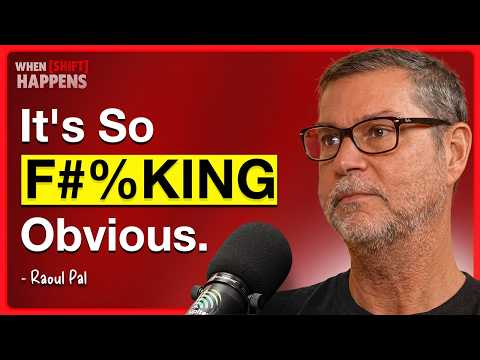
More volatility doesn't make markets easier to trade — it makes them appear easier to short-term thinkers. The allure is understandable: rapid price swings create the illusion of opportunity. But even legendary traders with decades of experience describe active trading as "a terrible way to make a living." The Chicago pit traders — professionals who lived and breathed the market daily — rarely enjoyed the grind. Timing markets is hard to sustain emotionally, financially, and energetically.
The real inefficiency isn't in the market. It's in how energy gets allocated. In a secular bull market, the optimal strategy is simple: own the asset. Trading around it may feel productive, but it's performance theater. A better use of that energy? Build with AI. Experiment. Create. And hold Bitcoin.
"Go and play with AI and just hold your Bitcoin. Use your productive energy somewhere else."
💎 Conviction Through Drawdowns
How does one maintain conviction when portfolios are down 60% to 80% and remain underwater for months? The answer isn't psychological gymnastics — it's structural detachment and thesis clarity.
Living off salary and income creates separation from portfolio volatility. When markets become two standard deviations oversold, the question isn't "how much am I down?" — it's "can I compound at better entry points?" The mental reframe is critical: drawdowns aren't losses, they're opportunities to add capital at discounted levels.
The core thesis remains binary and durable: Will tomorrow be more digital than today? If the answer is yes, the strategy doesn't change. Oversold conditions simply improve future returns through compounding.
"Has my thesis changed? Is tomorrow going to be more digital than today? Yes, keep buying."
🎯 The Discipline Framework
The challenge isn't identifying opportunity — it's avoiding noise. Most market participants either trade too frequently or hesitate when genuine dislocations occur. The solution is a rules-based framework:
- One to two standard deviations oversold on the log trend: Add capital
- Two standard deviations overbought: Consider taking profits for lifestyle or specific purchases
- Everything in between: Do nothing
This approach eliminates the middle — the noise that generates commissions but erodes returns. Execution frequency drops to two or three times every five years. Once to add during severe dips. Once to trim during euphoric extensions. That's it.
"You really have to trade like three times every five years. That's for taking money off or twice every five years just to add to your bets."
🤖 The AI Paradigm: Bubble or Acceleration?
Current conditions present a legitimate analytical challenge. Semiconductor stocks, including the SMH ETF, Nvidia, and Google, have all moved through two standard deviations above their long-term log trends. This triggers the hard question: Is this a bubble, or has the trend itself fundamentally shifted?
History offers two reference points. The internet was dismissed as a bubble — and it was, briefly. But the underlying paradigm shift was real and reshaped the economy. AI represents something potentially larger. If the thesis holds that humanity is being replaced by apex intelligence, the capital flows into "anything that produces output of intelligence" could justify an accelerated trend.
The evidence isn't just valuation multiples expanding — it's earnings growth. Companies aren't being repriced on hope; they're generating revenue at scale. Google, despite massive growth, trades at 22 times forward revenue — modest for a company experiencing this kind of expansion. The demand for intelligence, by definition, is infinite.
"It's not P/E ratios going up, it's earnings going up. Everybody's making a fortune. Everyone's like, it's a Ponzi scheme. No, they're all making money from this massive Cambrian explosion of intelligence."
The risk, of course, is that every bubble participant believes "this time is different." The counterfactual is always the same: charts look parabolic, justifications sound rational, and corrections feel impossible — until they aren't. The answer likely lies in time horizon. For those operating on multi-year or multi-cycle frameworks, the question isn't whether AI will correct, but whether the secular shift justifies holding through volatility.
✅ The Takeaway
Patience isn't passive. It's the result of structural decisions: living off income, maintaining thesis clarity, and using rules-based entry and exit points. Volatility doesn't create opportunity — it reveals it. The real alpha isn't in trading skill. It's in doing nothing when others panic, and adding capital when conditions become statistically extreme.
In crypto, that means buying dips at one to two standard deviations oversold. In AI and equities, it means assessing whether the trend has genuinely shifted, or whether valuations have simply detached. Either way, the framework remains the same: compound through dislocations, trim during euphoria, and ignore the noise in between.