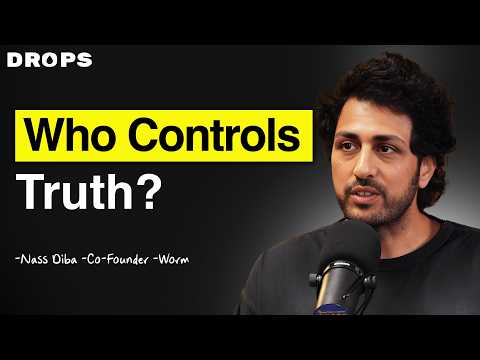
🎯 Prediction Markets as the New Media Layer: Why 2026 Changes Everything
🔮 The Core Thesis: Markets as Truth Mechanisms
As artificial intelligence reshapes information landscapes and social media algorithms optimize for engagement over accuracy, prediction markets emerge as a fundamental technology for distinguishing signal from noise. The thesis is simple but powerful: when money is at stake, market participants have skin in the game—and markets naturally converge toward truth through financial incentives.
The 2024 U.S. presidential election provided a watershed moment. While traditional media outlets presented conflicting narratives—CNN favoring one candidate, Fox News another—prediction markets like Polymarket showed clear probabilistic outcomes weeks before election day. The contrast was stark: centralized media optimized for audience retention, while decentralized prediction markets optimized for accuracy.
"Truth is what has roots in reality—what is out there versus what is synthetic. Prediction markets have phenomenal forces behind them, which are market forces that anchor what we think is right to the truth."
📊 Why Traditional Media Fails the Truth Test
The fundamental problem with traditional media lies in incentive misalignment. Whether newspapers, radio, television, or digital platforms, these centralized entities aggregate information and distribute it—but their business model depends on monetization, not accuracy.
Key structural problems:
- Centralized aggregation and distribution creates bottlenecks where editorial bias enters
- Advertising-based revenue models prioritize engagement over truth
- Echo chamber dynamics where outlets serve pre-existing audience beliefs
- Asymmetric information advantages that benefit those controlling distribution
Social media promised to democratize information by giving everyone a voice. However, it maintained centralized distribution through platforms like Meta and Twitter, changing the source but not the fundamental architecture. The result: algorithmic feeds optimized for ad revenue, not information quality.
💰 The Economic Logic of Market-Based Truth
Prediction markets function as aggregation mechanisms for distributed knowledge. Unlike polls or expert opinions, they create direct financial consequences for accuracy. The mechanism works through several channels:
Financial Accountability: Participants risk capital based on their beliefs. Correct predictions generate returns; incorrect ones create losses. This creates continuous pressure toward accurate probability assessments.
Self-Correcting Dynamics: When markets deviate from reality—whether through manipulation or misinformation—arbitrage opportunities emerge. Larger capital flows enter to correct mispricing, anchoring odds back to true probabilities.
Distributed Intelligence: Markets synthesize information from thousands or millions of participants, each contributing their unique knowledge and analysis. This "wisdom of crowds" effect typically outperforms individual experts or centralized forecasting.
"If money comes to manipulate a market that is performing well and is healthy, they would be wrong and lose money. The incentive gets bigger for larger money to come anchor it to the truth."
🌍 The Telegram Moment: Global Participation in Local Events
A revealing discovery emerged during the 2024 election cycle. A team built a Telegram mini-app as a wrapper on Polymarket and acquired 56,000 users overnight. The surprising insight: over 90% of users came from outside the United States.
When questioned about their motivation, international users explained they felt like they were "participating in the U.S. election" despite having no voting rights. This revealed prediction markets' power as a global participation layer—anyone, anywhere can stake their analysis and conviction on outcomes that matter to them.
This points to a broader opportunity: while the U.S. presidential election happens every four years, thousands of consequential events occur globally every day. Local elections in China, Iran, or smaller municipalities. Corporate decisions. Product launches. Cultural trends. Current centralized platforms can't efficiently serve these long-tail markets—but permissionless infrastructure can.
⚡ Enter Worm: Permissionless Prediction Markets on Solana
Recognizing the limitations of centralized prediction market platforms, a team of seven technologists is building Worm—a permissionless prediction market protocol on Solana. The founder, Nas, brings experience from quantum computing research, Facebook's consumer product organization, and years building in crypto since 2019.
The fundamental difference: Polymarket and Kalshi focus on high-profile U.S.-centric events. Worm enables anyone to create markets on any topic, distributing both market creation and participation. This architectural choice solves the "long tail problem" where smaller but meaningful events lack liquidity and price discovery.
"If this is media and it's going to be distributed, it has to be decentralized. Polymarket focuses on very important things happening in the U.S.—rightly so—but this is just the beginning of the technology."
📈 The Leverage Innovation: Capital Efficiency for Conviction
Worm introduces leverage to prediction markets—a significant innovation borrowed from traditional finance but adapted for binary outcome markets. The mechanism works by lending users capital to open larger positions while the protocol opens hedging positions on the opposite outcome.
Why leverage matters:
- Hedging Financial Exposure: Professional traders with large positions in oil stocks, for example, can use leveraged prediction markets on geopolitical events (like the closure of the Strait of Hormuz) to hedge their risk efficiently without deploying equivalent capital
- Young Demographics: Research shows the majority of Worm's users are college-aged. They develop strong convictions about events but lack significant capital—leverage allows them to express those convictions
- Enhanced Sports Engagement: Users are opening and closing leveraged positions during live games, adding a dynamic element to social viewing experiences. The liquidation risk adds urgency and excitement
Unlike perpetual contracts in crypto markets, prediction market leverage operates differently. Users don't trade synthetic assets—they hold actual outcome shares. Liquidation occurs when the probability moves against a position enough that the protocol's hedged exposure requires closing the position to protect the liquidity vault.
🎯 Solving the Long Tail: Liquidity for Smaller Markets
A persistent challenge for prediction markets is the 80/20 problem: major events like presidential elections or Super Bowls attract significant liquidity and achieve excellent price discovery. But thousands of smaller markets languish with insufficient participation.
Worm's approach involves finding the "right amount of liquidity" rather than maximizing it. The analogy to memecoins is instructive: excessive liquidity causes rapid pumps followed by dramatic dumps. Too little liquidity prevents accurate price discovery.
The solution involves several innovations the team is developing:
- Algorithmic liquidity provision that scales with market characteristics
- Cross-chain liquidity aggregation drawing from multiple blockchain ecosystems
- Incentive mechanisms that attract market makers to underserved events
"Right now, maybe a local election market has $100 or $1,000 in liquidity. That's not the right amount. But putting a billion dollars isn't right either. Liquidity helps with price discovery—that's the right amount of liquidity."
🌐 The Multi-Chain Future: Solana, Hyperliquid, and Beyond
While Worm builds primarily on Solana—leveraging its international user base and existing liquidity—the team maintains a multi-chain philosophy. Different blockchains serve different purposes:
Solana's Advantages:
- Large existing trader base with international reach
- Strong infrastructure for spot trading and token markets
- Lower barriers to entry for retail participants
Hyperliquid's Hip-4 Infrastructure:
- Decentralized derivatives infrastructure optimized for perpetual contracts
- Proven order book technology and liquidity mechanisms
- Potential foundation for Wall Street-grade tokenized assets
Worm is launching on Hyperliquid's Hip-4 as an early builder on that infrastructure, positioning itself as "the Trade XYZ of Hip-4." The reference is to Trade, which built commodity trading on Hyperliquid's Hip-3—demonstrating how specialized applications can leverage powerful underlying infrastructure.
The bet is that institutional capital will increasingly flow on-chain as Wall Street embraces tokenization. No single blockchain currently handles the transaction volume traditional finance requires, suggesting multiple chains will serve different segments of the financial stack.
🔄 Prediction Markets as Web3's Engagement Layer
Beyond financial applications, Worm sees prediction markets as fundamental social infrastructure—the engagement mechanism for Web3, analogous to comments in Web1 and likes in Web2.
The hypothesis: people spend hours daily on social media despite recognizing diminishing value. Algorithmic feeds optimized for ad revenue create engagement but not meaningful interaction. Prediction markets could redirect attention through economic signals rather than algorithmic manipulation.
Instead of likes or comments, users stake conviction on outcomes. This creates:
- Skin-in-the-game participation that filters signal from noise
- Measurable accuracy as outcomes resolve and track records emerge
- Financial rewards for contributing valuable information or analysis
- Attention markets where crowds decide what matters, not centralized algorithms
"Prediction markets are the engagement instrument for Web3. Rather than algorithms deciding based on incentives of selling more ads, we can decide where the attention goes."
🎲 Hedging in Practice: Financial Markets Meet Prediction Markets
One compelling use case emerging organically involves professional traders using prediction markets for portfolio hedging. The mechanism offers advantages over traditional options:
Granularity: While options provide general exposure, prediction markets allow betting on specific events. A trader with energy stock exposure can hedge specifically on geopolitical events affecting oil supply—not just oil price movements generally.
Simplicity: Options require understanding strike prices, expiration dates, Greeks, and complex pricing models. Prediction markets operate on intuitive probabilities: "Will this event happen? Yes or no."
Liquidity-Driven Price Discovery: Because prediction markets are simple and accessible, they attract broader participation. More participants mean better liquidity and more accurate pricing.
Traders are already opening large positions on Worm related to crude oil markets, driven by Middle East geopolitical tensions. These positions aren't profit-seeking bets—they're hedges against exposure elsewhere in their portfolios. Other market participants follow these whale positions, assuming insider knowledge, creating secondary effects.
⚠️ The Liquidation Mechanics of Leveraged Positions
Understanding liquidation in prediction markets requires recognizing the unique structure of binary outcomes. Unlike perpetual contracts where prices theoretically move infinitely, prediction markets have bounded outcomes between 0% and 100%.
When a user takes a leveraged position:
- The protocol lends capital to open a larger position than the user's collateral would normally allow
- The protocol simultaneously opens a hedging position on the opposite outcome
- As the probability shifts, the protocol monitors exposure
- If the probability moves sufficiently against the user's position (e.g., from 70% to 30% or 20%), liquidation occurs to protect the lending vault
This differs from standard leverage because prediction markets map price directly to probability. A 70-cent share price equals 70% probability—the beautiful simplicity of the mechanism.
🏗️ Building Against the Complexity Curve
The Worm team spent nine months building their leverage system—the first of its kind in prediction markets. The technical challenges included:
- Designing robust hedging mechanisms for binary outcomes
- Creating liquidation engines that protect protocol solvency
- Building user experiences that communicate risk clearly
- Solving cross-chain liquidity aggregation
Beyond leverage, the team is developing additional innovations targeting the long-tail liquidity problem and exploring how prediction markets integrate into broader social and financial infrastructure.
🌏 Growing Through Conviction: Word-of-Mouth Distribution
Despite the competitive landscape and marketing pressures in crypto, Worm has grown entirely through organic word-of-mouth. Users who profit from accurate predictions share the platform with friends. College students introduce roommates. Traders discuss it in group chats.
This distribution model reflects product-market fit: when users genuinely benefit from a product, they become advocates. In an era of paid acquisition and influencer marketing, organic growth signals real value creation.
"If the product works well, people talk about that product to their friends. When people use a product and are happy with it, make profit on it, they talk about it. This is the right way to grow a product."
🚀 The Inflection Point: When Long-Tail Markets Achieve Price Discovery
The team identifies their key inflection point: successfully enabling price discovery across the long tail of smaller markets. When local elections, niche events, and specialized questions achieve reliable probability assessments, prediction markets fulfill their potential as distributed information infrastructure.
This goes beyond replicating what Polymarket does for major events. It means democratizing access to prediction market technology for any community, topic, or question that matters to a group of people—regardless of size or mainstream attention.
The vision extends to replacing algorithmic social media engagement with markets-based engagement—where economic signals surface valuable content and filter noise, where users control attention flow rather than corporate platforms optimizing for ad revenue.
🔮 Looking Forward: The AI Age Demands Truth Infrastructure
The timing for prediction markets feels particularly urgent. As AI-generated content proliferates, distinguishing authentic information from synthetic media becomes exponentially harder. Deepfakes, language models, and algorithmic manipulation create an information landscape where traditional verification breaks down.
Prediction markets offer a solution grounded in economic reality: money flows toward truth. While individual pieces of information may be manipulated, markets aggregating thousands of financial decisions create robust signals that resist misinformation.
"The next few years are going to be very weird because of AI. It's going to be very hard to really understand what is real and what is not real. Prediction markets have this superpower to filter out noise from signal. At the end of the day, signal matters—and prediction markets are probably the best technology we have for that future."
✨ Key Takeaways
- Prediction markets solve incentive misalignment plaguing traditional and social media by putting money behind information accuracy
- Current platforms (Polymarket, Kalshi) proved product-market fit but remain centralized and focused on high-profile U.S. events
- Permissionless infrastructure enables long-tail markets—local elections, niche topics, global events outside mainstream attention
- Leverage increases capital efficiency for hedging, conviction expression, and engagement—particularly valuable for young users and professional hedgers
- Multi-chain approach positions prediction markets across Solana, Hyperliquid, and future ecosystems as institutional capital flows on-chain
- Prediction markets may become Web3's engagement layer—replacing likes and comments with economically-meaningful signals that surface valuable information
- The AI age demands truth infrastructure—and markets-based mechanisms offer the most robust solution for distinguishing signal from noise
As blockchain infrastructure matures and traditional finance explores tokenization, prediction markets stand at the intersection of information verification, financial innovation, and social coordination. The question isn't whether they'll grow—it's how quickly they'll scale from niche crypto application to mainstream truth infrastructure.
More from When Shift Happens

Why the Digital Asset Ecosystem Will Reach $50 Trillion — And Why Most Investors
📊 The Hardest Game: Making Money vs. Keeping ItThe cryptocurrency and digital asset space presents a unique paradox: it...

Why Gen Z Might Choose Bitcoin Over AI—And What That Means for Markets
📍 The New Occupy Movement: From Wall Street to AIA fundamental shift is emerging in how younger generations perceive fi...
Why Millennials Can't Afford Homes — And How Bitcoin Disrupts the American Dream
The intersection of housing affordability, wealth preservation, and investment philosophy is undergoing a fundamental sh...
The Preferred Stock Revolution: Inside Strategy's Tax-Deferred Bitcoin Play
📊 Bitcoin's Journey & Strategy's RoleWhen MicroStrategy first began its Bitcoin accumulation strategy, BTC was trading ...

The Universal Code: Why Smart Contract Layer Ones Will Dominate Crypto's Future
There's a phrase that echoes through every market cycle: "In hindsight, it was obvious." It's usually uttered by those w...
The End of Hard Work: How AI is Redefining Productivity and Value Creation
The conventional wisdom around hard work and talent is facing its most serious challenge yet—not from laziness or entitl...