🔎 Big Picture
A packed tape: a landmark jury verdict puts social platforms’ features on trial; Nvidia’s inference boom collides with supply constraints as public markets reset software multiples; enterprise agents move from Tier-1 to Tier-2 work; and macro sentiment swings as mega-cap drawdowns meet activist optimism. Plus, an under-the-radar M&A whale and a near-term moonshot.
🧑⚖️ Platforms vs. Plaintiffs: A Trial That Could Reshape Social Media
A jury found that certain Instagram and YouTube features were designed to be addictive and harmful to teens, delivering a headline verdict that pierced years of Section 230 insulation by focusing on features, not content.
- Damages: A jury ordered the company to pay $3 million each in compensatory damages and $3 million in punitive damages after nine days of deliberation.
- The props-and-parables playbook: Lead attorney Mark Lanier (age 65) deployed simple analogies to frame complex product design. He brought cupcakes and tortillas to illustrate how features can amplify harm and held up a jar of 415 M&M’s to argue a $1 billion fine would be a fraction of Alphabet’s $415 billion in shareholder equity.
- Quote to note: “Whether we will even have social media in the future” was raised as a live question by legal scholars tracking the cases, underscoring potential existential risk if features can be litigated en masse.
- Broader docket: This case is among thousands consolidated against Meta, YouTube, TikTok, and Snap. TikTok and Snap have settled the first case, while more trials are slated this year.
“It’s as easy as ABC.” — A key courtroom refrain linking design features to amplified teen vulnerability
Strategic take: The feature-versus-content pivot invites a new regulatory and litigation perimeter (infinite scroll, recommendation engines, autoplay, notifications, filters). The episode also sharpened the content vs. features debate via a useful “placebo” test: a Sora-style feed with all the usual engagement mechanics failed to addict users at scale absent sufficiently compelling content.
⚙️ AI Infrastructure: Demand Roars, Supply Feels Tight
Inference demand is exploding, driven by AI agents and code assistants. Engineering leaders across large platforms reported compute shortages and rate-limit workarounds as builders chase tokens wherever capacity frees up.
- Nvidia positioning: The discussion framed Nvidia as locking in critical supply (memory, connectors) ahead of the inference surge. The company was also said to be blending general-purpose and low-latency approaches, with the split described as ~75% on one architecture and ~25% on a complementary, low-latency stack.
- Roadmap signals: A GTC session with Jeff Dean and Bill Dally highlighted near-term vectors: much larger effective context windows (e.g., focusing on 10,000 documents per query), stacked memory atop accelerators, and synthetic data for audio/video.
- China channel: It was noted that Nvidia said it received license approvals on both the US and China side, with expectations for billions of dollars of H200 orders.
- Supply constraint watch: The industry remains capacity-limited at leading-edge fabs. Commentary emphasized Nvidia’s priority wafer allocations, while hyperscalers with ASICs are also scrambling for slots. A CPU shortage is brewing as agents drive higher orchestration and tool-use loads—an ARM CEO comment cited 4x more CPU cores versus last year’s AI infrastructure baseline.
- Depreciation fears cool: Operators reported 5–6 years of useful life for deployed GPUs and ~90–95% resale pricing retention so far, with rental demand extending even to older chips.
Public build-out: DOE goes big
- Solstice is slated as the US DOE’s largest AI supercomputer with 100,000 Blackwell GPUs.
- Equinox will include 10,000 Blackwell GPUs, expected in 2026.
- Both systems, to be located at Argan, will deliver a combined 2,200 exaflops of AI performance.
Materials and logistics
- Helium: Bernstein estimates 6–9 months of inventory in-channel; a prolonged disruption would only bite if geopolitical chokepoints extend for months.
- Oil: $100 oil was flagged as unsustainable for long stretches, a reminder that macro inputs still matter for capex cycles and sentiment.
📉 Markets: A Software Reset Meets an AI Wave
Public investors are demanding real cash flows and pushing back on stock-based comp as they reassess terminal values in a world where AI could abstract value away from traditional software layers.
- Multiples crunch: Public software names were cited as trading at ~4.1x NTM revenue while private rounds still print at 200–400x ARR—a stark optimism disconnect.
- The newspaper analogy: Earnings stayed stable for ~5 years post-internet, even as valuations collapsed. Expect long lags between narrative shifts and reported financials.
- Follow the AI dollars: The long-term question is who captures net new AI budget. If incumbents miss the wave, growth can decelerate toward zero even absent material churn.
Buy vs. build: the economics still favor buying
- Slack case study: For 1,000 employees, Slack was pegged around $220,000/year versus ~$2 million/year to build and maintain an in-house clone—with steep opportunity costs before factoring network effects.
“Your incumbent vendors are going to get shot one, two, three at getting it right.” — On why customers will test incumbents’ AI before defecting
Actionable lens
- Models vs. apps: AI model providers may capture a significant share of new value, while application layers will likely bifurcate into durable platforms and ephemeral point-solutions.
- Terminal value matters again: With rates not at zero, distant cash flows are meaningfully discounted. Real free cash flow—and durable moats—are back at the center of valuation debates.
🏢 Agents Are Moving Up the Stack
Console: from Tier-1 answers to Tier-2 actions
Console launched Assistant, an agent that automates Tier-2 IT/HR/finance workflows by orchestrating across tools—investigating outages, pushing device updates, running access workflows—and can now read API docs and build its own connectors before deploying end-to-end automations.
- Adoption model: Many IT orgs run at ~1:100–1:200 staff-to-employee ratios; Console customers reported stretching that to ~1:400–1:500 by offloading Tier-1 and Tier-2 workloads.
- Customer logos: Examples mentioned include Databricks, Cursor, Figma, Chime, and Founders Fund portfolio companies.
Granola: meetings as the new context graph
Granola announced a $125 million Series C led by Index Ventures (with KP participating), following momentum behind its meeting-native agent that produces structured briefs and powers downstream tasks.
- Valuation: The business was discussed around a $1.5 billion mark.
- Usage: Some users logged thousands of meetings over the past year, enabling a remarkably accurate year-end “Granola Crunched” recap.
🧠 NVDA, Agents, and Token Demand
Token demand is being driven by code generation—and remains early innings. The next leg up could come from agents expanding into the $6 trillion knowledge economy (customer service, research, chip verification, drug discovery). Even single-workflow models can 10x token demand by collecting far more data per decision, not just by spinning more models.
📊 Market Tape, Flows, and Sentiment
Mega-cap drawdowns (from 52-week highs)
- Nvidia: -21%
- Google: -22%
- Microsoft: -36%
- Apple: -14%
- Amazon: -23%
- Meta: -34%
- Tesla: -28%
Activist optimism
“Some of the highest quality businesses in the world are trading at extremely cheap prices... One of the best times in a long time to buy quality. Ignore the bears.” — Bill Ackman
Ackman also called Fannie Mae and Freddie Mac “stupidly cheap” with “10x” potential, posting alongside sharp pops of +42% and +37% at one point, respectively.
🧱 M&A, Policy, and Tech Adoption
- M&A: Cisco (with an S) to acquire Restaurant Depot for $29.1 billion.
- Linear agents: 70% of enterprise workspaces on Linear are already using agents—evidence that agent workflows are rapidly normalizing in modern development.
- EVTOLs inch forward: Pivotal’s Helix solo-piloted aircraft is now offered at $190,000 and reportedly does not require a pilot’s license.
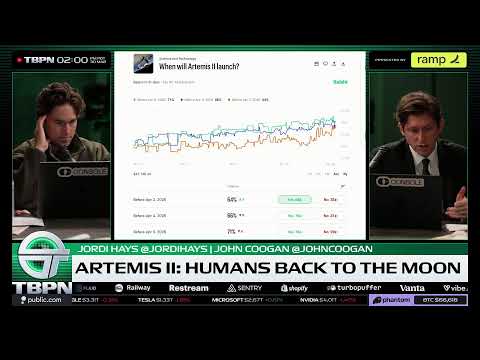
- Artemis II: A forecaster put a 64% chance on a launch before April 2, sending four astronauts on the deepest human spaceflight since 1972.
🧭 What Matters Next
- Feature-liability perimeter: Expect accelerated compliance, parental-control investments, and opt-out controls across feeds, autoplay, and notifications as tech tests settlement-safe design without killing engagement.
- Compute allocation: Watch for US/China licensing cadence, CPU bottlenecks, and DOE-scale public capacity additions—plus any signs of durable depreciation pressure finally appearing in secondary pricing.
- Software re-rating: The path forward likely favors AI-native shipping cultures and incumbents that prove they can capture AI dollars, not just bolt on features.
- Enterprise agents: The center of gravity is shifting from knowledge retrieval to multi-system action. The killer app is an agent that can build its own connectors and workflows.