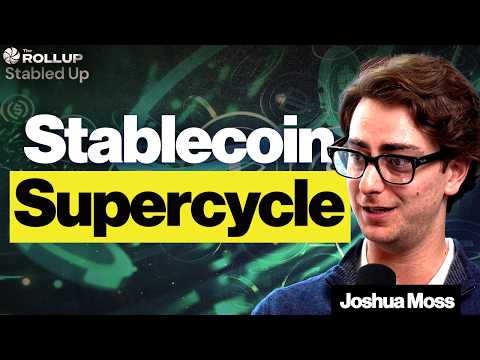
DC’s Stablecoin Curveball: Yield Limits, DeFi Tailwinds, and a Step-Function Adoption Path 🚦
TheRollupCo
March 27, 2026

DC’s Stablecoin Curveball: Yield Limits, DeFi Tailwinds, and a Step-Function Adoption Path 🚦

Executive Take

Policy winds in DC are shifting again. A fresh amendment to the stablecoin Clarity framework would curb yield distribution at the issuer and distributor layers — a blow to centralized programs like exchange "Earn" products, and a tailwind for DeFi-native, activity-based designs. The political process won’t end with this bill, but the direction of travel is clear: compliant, onchain-first stablecoins that stream risk-free yield through activity mechanics stand to gain, while offchain distributor models get squeezed.

“This is pure politics… this is not going to stop with this yield thing or even after clarity.”

⚖️ DC’s Amendment: A Yield Clamp, Not a Full Stop

  • Context: Last year’s framework was a near-win for compliant stablecoins, limiting only the issuer’s ability to promise a legal claim to yield while allowing distributors (e.g., centralized exchanges) to offer it.
  • What’s new: The latest amendment effectively bans distributor-led yield as well. That likely ends simple “hold-to-earn” constructs in the centralized stack.
  • Activity-based carve-outs: Rewards tied to activity may still be possible, but there’s risk regulators later narrow what qualifies as substantive “activity.”
“That’s essentially… kind of banned.”

Bottom line: This is classic omnibus politics with “pork” add-ons. Expect incrementalism, revisions, and future guidance shaping how “activity” is defined.


🏆 Winners, Losers, and the New Distribution Stack

  • Winners: Tether and DeFi-native, genius-compatible stablecoins that already deliver activity-based, risk-free yield onchain.
  • Losers: Centralized exchange earn programs and offchain distributor agreements that paid open-ended yield simply for holding.
“It’s really good for DeFi strong stable coin teams… and not that great for… Coinbase and USDC’s earn program.”

Frax’s roadmap fits the new design space: a v4 launch next week aims to “stream the actual risk-free yield as… a base of the floor” to peg pools and lending hubs.


🔁 DeFi’s Playbook: Activity-Based and Tax-Aware

  • Card rails: EtherFi cards already integrate spend for Frax’s stablecoin flow, with daily distribution of risk-free rates based on a proprietary activity algorithm.
  • Tax angle: Structuring rewards as cash-back style rebates can make payouts non-taxable in the U.S., consistent with IRS treatment of card rebates.
“If you pay out in cash… the accumulated yield, it’s not a taxable event… the IRS has said these are cash rebates.”

🧭 Pass It Now or Punt to 2027?

  • Timing: The legislative calendar matters. Without movement before July recess, the process could slip into 2027.
  • Industry stance: Coinbase leadership is opposing the amendment. Still, political arithmetic may override industry preferences.
  • Probabilities: “Polymarket has a 61% chance [of the] Clarity Act signed into law 2026.”

Strategically, there’s an argument to “take the half-W” on yield limits in order to bank broader clarity — then iterate through future amendments.


🏦 Bank Adoption: From Pilots to a Step-Function in Market Cap

  • Direct acceptance: Banks are exploring holding select stablecoins on balance sheet rather than redeeming to cash first — treating a short list as deposits and cash equivalents.
  • Selection filter: That short list will be set by onchain penetration and utility: liquidity in critical DeFi hubs, card rails, CEX access, and real usage.
  • Timeline: Expect visible traction into 2027, with pilots and integrations over the next 6–12 months.
“We’re going to open our eyes… in 6 to 12 months… and [banks] are going to natively accept a short list of… stable coins as actual deposits and cash equivalents.”
“[The] stable coin market cap [could go] from… 190 or 200 billion… to like 500 billion in… 3 to 6 months.”

📉 Market Pricing: Differentiation Is Here

  • Circle’s drawdown: “Circle went down by 20%.” The market is parsing who’s most exposed to distributor-led yield bans.
  • Investable lanes: Stablecoin exposure now spans diverse theses — payment money (e.g., centralized issuers and DeFi money primitives) vs. yield-bearing DeFi stables (e.g., “Sky”), plus other models (e.g., “Athena”).
“It’s good that… investors are specifically able to make these kinds of changes… this hurts Circle the most.”

Takeaway: Expect more dispersion as policy clarifies distribution layers and as onchain-native models scale where centralized programs retreat.


📈 Long-Run TAM: The $3T Call

  • Scott Bessent’s line in the sand is $3 trillion by 2028. The path likely won’t be linear.
  • Outlook favors a step-function: not much until the banking/card layer flips live for a short list of stables, then a rapid repricing of adoption.
“I would still take the estimate as real, but I would take it as a step function… I’d put it still there by 2030.”

Macro risks (e.g., geopolitical shocks and energy spikes) remain wildcards for timing — but the structural direction remains intact.


🔎 Key Quotes

“Once the [framework] passed, the cat is out of the bag… [these] safe stable coins… are going to be used in really big places.”
“The two biggest winners… would be Tether… and also DeFi strong teams that have genius compatible stable coins.”
“[Frax] v4… launching next week where we stream the actual risk-free yield as… a base of the floor.”

🧭 What to Watch Next

  • Legislation: Whether lawmakers push a vote pre-July recess, and any final tweaks to “activity-based” language.
  • Enforcement/guidance: How regulators subsequently define “substantive” activity.
  • Product rollouts: Frax v4 next week; continued EtherFi card distribution of risk-free rewards.
  • Audit signals: Tether’s Big Four audit and reserve transparency.
  • Bank rails: Early announcements on native stablecoin acceptance and cash-equivalent treatment.

Clarity with constraints is still clarity. The amendment may crimp centralized yield programs, but it points capital and product design toward onchain-native, activity-based distribution — a powerful accelerant for DeFi money and a meaningful moat for teams already building in that direction.

More from TheRollupCo