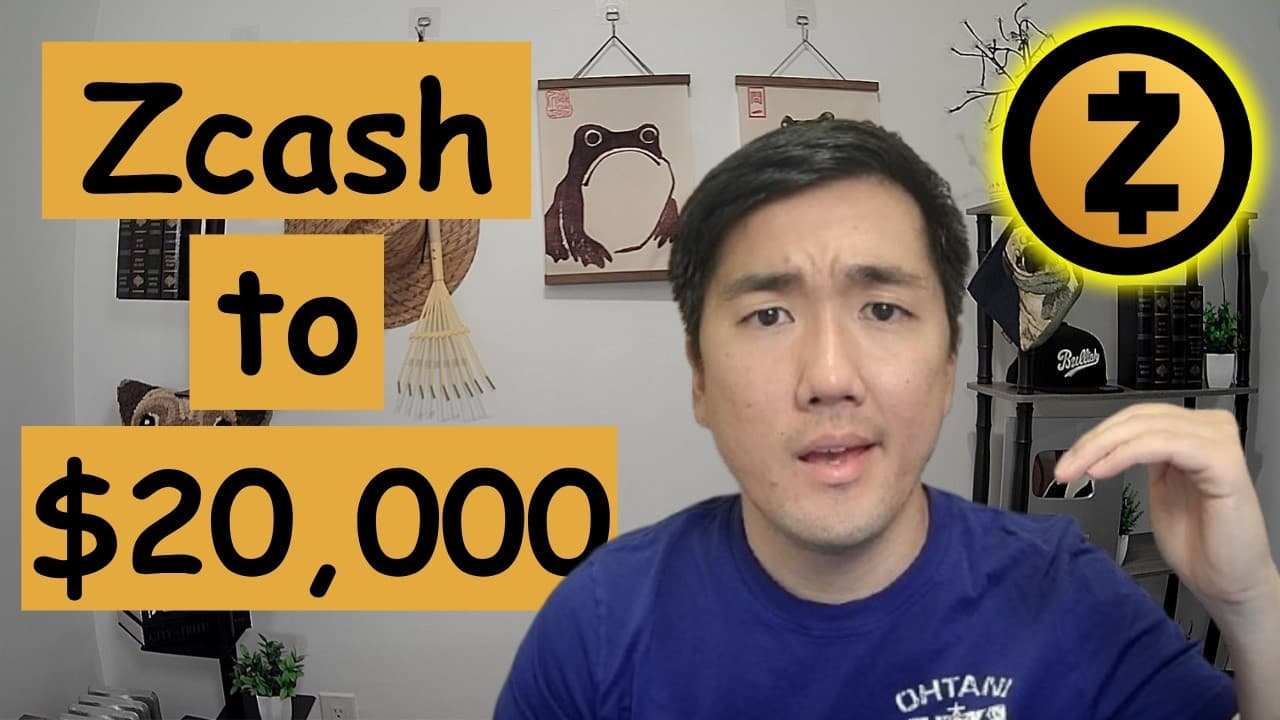
🚀 Why $20,000 Zcash Is a Realistic Target — Bull Market Pep Talk Edition
💉 Bull Market Reality Check
The bear market narrative continues circulating across crypto social media — predictions of Q4 dumps, Bitcoin crashing to $54,000, and altcoins bleeding to zero. Yet the market data tells a different story. Bitcoin remains well off its all-time highs, but specific sectors are experiencing their own secular bull markets independent of BTC's trajectory.
Recent performance highlights the divergence:
- Hyperliquid: Trading around $90, with three-digit prices appearing increasingly plausible
- Zcash: Surged from $800 two weeks ago to nearly $1,500
- Lighter: Climbed from under $1 a few months ago to $5
This represents a fundamental shift in market structure. Certain crypto assets are entering K-shaped recoveries — where most altcoins trend toward zero due to lack of utility, while a select few experience parabolic growth regardless of Bitcoin's movements. The thesis centers on perpetual exchange tokens like Hyperliquid and Lighter, which capture revenue directly from growing market share and return value to token holders through buybacks or distributions.
"In a bull market, even the dumbest people make money. If you're sitting in cash while conviction plays are breaking counter-signal curses, the market is telling you something."
📊 Zcash as a Bitcoin Alternative: Historical Context
The bull case for Zcash rests on positioning it as an alternative store of value to Bitcoin — specifically addressing Bitcoin's key criticisms around privacy, programmability, and quantum resistance.
While Ethereum and Solana solved Bitcoin's scalability and programmability limitations (achieving massive returns in the process), Zcash targets the privacy gap. With growing concerns around financial surveillance and quantum computing threats to early Bitcoin addresses, Zcash offers solutions Bitcoin's ossified development process struggles to address.
Current market positioning: Zcash trades at approximately 1.8-1.9% of Bitcoin's market cap. Historical precedent from previous cycles provides context for potential repricing:
2017-2018 Bitcoin Competitor Ratios:
- Litecoin peak: Reached 8% of Bitcoin's market cap, sustained 3-6% for roughly a year
- Bitcoin Cash peak: Hit 40% (brief spike), sustained 10-20% range for nearly a year
These ratios reflected market participants' willingness to allocate significant capital to Bitcoin alternatives during peak euphoria — even for assets with far less differentiation than Zcash currently offers. Litecoin's innovation was simply faster block times. Bitcoin Cash increased block size limits. Neither addressed fundamental use cases the way privacy and quantum resistance do.
For comparison, silver maintains approximately 13% of gold's market cap — providing another benchmark for alternative store-of-value positioning.
🎯 Price Target Framework: The 5-20% Scenario
Conservative estimates place Zcash's potential Bitcoin market cap ratio between 5-20% during this cycle:
Base Case (5% ratio):
- If Bitcoin reaches $100,000
- 5% ratio implies $5,000 Zcash
- Represents only modest outperformance versus Litecoin's historical 8% peak
Bull Case (20% ratio):
- If Bitcoin reaches $100,000
- 20% ratio implies $20,000 Zcash
- Aligns with the "two cycles behind Bitcoin" theory — Bitcoin itself hit $20,000 two cycles ago
The "next 2x" framework provides tactical guidance:
- 1% to 2%: Easy (already achieved in two weeks)
- 2% to 4%: Reasonable near-term target
- 4% to 8%: Approaching historical resistance zones
- 8% to 16%+: Requires peak euphoria and narrative strength
🔐 Fundamental Thesis: The Shielded Pool Metric
Unlike most crypto assets, Zcash has measurable on-chain fundamentals tied directly to its core value proposition. The protocol offers two address types:
- Transparent addresses: Function like Bitcoin (fully visible balances)
- Shielded addresses: Private transactions within a confidential pool
The key metric: Amount of Zcash held in the shielded pool. This number has increased substantially over the past year after remaining flat for the first nine years — correlating directly with the recent price appreciation.
The relationship is reflexive and self-reinforcing:
- Higher prices + more coins shielded = larger total value in the privacy pool
- Larger pool = better privacy guarantees (individual transactions represent smaller percentage of total)
- Better privacy = attracts higher net-worth users and larger transaction sizes
- Increased usage drives price higher, continuing the cycle
"The product literally gets better as the price increases. Privacy features improve as the shielded pool grows in both size and USD value. This is the definition of reflexivity."
This dynamic mirrors Bitcoin's own value proposition — both assets strengthen as network effects compound. The difference: Zcash's developer community demonstrates willingness to upgrade and adapt (including quantum resistance measures), while Bitcoin's ossification creates both stability and rigidity.
⚡ Catalyst Landscape and Risk Factors
Potential positive catalysts:
- Quantum computing concerns: Growing awareness of threats to early Bitcoin addresses (including Satoshi's coins)
- Privacy regulation: Increased surveillance and wealth tax discussions driving demand for confidential transactions
- Institutional allocation: Reasonable Bitcoin maximalists converting 1-10% of holdings to Zcash
- Ecosystem development: Recent NFT mints gaining traction; Project Tachyon upgrade improving scalability
- Technical breakout: Bitcoin clearing $83,000-$84,000 would invalidate bearish four-year cycle theories, triggering capitulation buying
The Michael Saylor factor: Bitcoin's increasing association with corporate treasury strategies and AI-generated meme marketing has shifted the narrative away from its cypherpunk roots — potentially making alternative store-of-value assets more appealing to the original crypto ethos.
📈 Tactical Playbook and Profit-Taking Strategy
Risk Management Philosophy: Maximum position sizing and conviction early in bull markets (when perceived risk is highest but actual risk is lowest), then gradually de-risk as euphoria builds.
Proposed profit-taking levels:
- First target: 3-4% Bitcoin market cap ratio
- Estimated range: $2,400-$3,200 (assuming Bitcoin around $80,000)
- Action: Close leveraged positions, raise cash, maintain spot holdings for long-term capital gains treatment
- Second target: 8-10% ratio
- Approaching historical Litecoin peak levels
- Likely accompanied by strong narrative momentum and potential institutional involvement
- Extended target: 15-20%+ ratio
- Requires peak mania and broad market recognition
- Extremely difficult to time; better to scale out systematically than attempt perfect exit
The dead-cat bounce trap: Last cycle, many traders planned to "sell the dead-cat bounce" on Bitcoin at $120,000-$125,000 after any correction from higher. The level never materialized — the market simply collapsed without providing the anticipated re-entry point. Better to take profits incrementally on the way up than bet on a perfect parabola-break timing.
🎲 Slugging Percentage Over Batting Average
The emphasis remains on concentrated conviction rather than diversified mediocrity:
"Would you rather be right 55% of the time with small position sizes, or wrong 90% of the time but make significant money on the 10% you get correct? Superior returns come from putting eggs in one basket and watching it closely."
Key principles:
- Size up high-conviction ideas early when perceived risk is high (actual risk often lowest)
- Add to winners as thesis validates — don't average into losers
- "Pull flowers, not weeds" — reinforce positions that work rather than throwing good money after bad
- Maintain strict risk controls even with concentrated bets
The current portfolio focus: Hyperliquid, Lighter, Zcash, Bitcoin — concentrated exposure to large-caps with clear fundamental drivers rather than speculative long-tail assets.
🔮 Market Structure and Positioning
Current sentiment indicators suggest the bull market remains in early stages:
- Persistent bearish narratives across social media despite price strength
- Four-year cycle theorists maintaining Q4 dump predictions
- Cash-heavy positioning among vocal market participants
- Selective outperformance rather than broad-based mania
Historical pattern: Peak conviction and maximum position sizing opportunities occur when perceived risk is highest — typically 10-30% into a bull market. The final 40-80% of a move often sees reduced risk-taking as euphoria builds and actual risk increases.
The reflexive loop ahead: As Zcash crosses psychological milestones ($1,000 already achieved, $2,000-$3,000 next), it gains legitimacy as an emerging store of value. Marginal flows from Bitcoin-only portfolios (even small 1-10% allocations) compound as narrative strength builds. The asset becomes harder to ignore as the ratio expands.
⚠️ What Could Go Wrong
Realistic bear cases to monitor:
- Bitcoin's quantum roadmap accelerates: If Bitcoin implements quantum resistance quickly, reduces Zcash's differentiation
- Regulatory crackdown on privacy coins: Though Zcash's optional transparency may provide regulatory flexibility
- Extended crypto winter: Macro deterioration could postpone the cycle thesis entirely
- Execution risk: Failed upgrades or ecosystem development setbacks
- Overleverage: Individual position management matters regardless of thesis correctness
The path forward involves systematic profit-taking rather than attempting to time absolute tops — particularly given the difficulty of selling parabolic assets when narrative momentum peaks.
Bottom Line: Zcash currently trades at less than 2% of Bitcoin's market cap despite offering material improvements in privacy and quantum resistance. Historical precedent from far less differentiated Bitcoin alternatives suggests 5-20% ratios are achievable during peak market phases. The shielded pool metric provides measurable on-chain validation of growing adoption. While $20,000 Zcash sounds extreme at current levels, the framework relies on observable patterns rather than hopium — with the understanding that both execution and timing remain challenging even when the thesis proves directionally correct.
More from Taiki Maeda

Zcash Crosses $1,000: Why This Marks the Beginning, Not the End
The crypto markets are witnessing a significant shift in narrative, particularly around privacy-focused assets. Zcash (Z...
Zcash as the Alternative Store of Value: A High-Conviction Thesis on Privacy, Re
📊 Market Context: Early Bull Market DynamicsThe cryptocurrency markets appear to be entering the early stages of a bull...

History Rhymes: Why The Bear Market Ended and The Bull Case for Perpetuals & Pri
📊 The Inflection PointAfter enduring a one-year bear market, the crypto landscape appears to have reached a critical tu...

After the Washout: Why Perpetual Exchanges and Privacy Coins Are Setting Up for
💼 A Portfolio Built for the Next PhaseFollowing a challenging period that included significant losses on Bitcoin and Zc...

ETH’s Safety Bid Runs on Incentives: DAT Flows, a January 15 Crossroads, and the
Overview A high-conviction bear framework is back in focus: an actively managed ETH short has been rebuilt at an average...

Shorting ETH Paid. Now Comes the Grind: The ETH Bear Case, DATs, and Capital Pre
Top Line Trade recap: Over $570,000 made shorting Ethereum and altcoins in two months, with accumulated profits of ro...