📊 The Issuance Debate Takes a Backseat
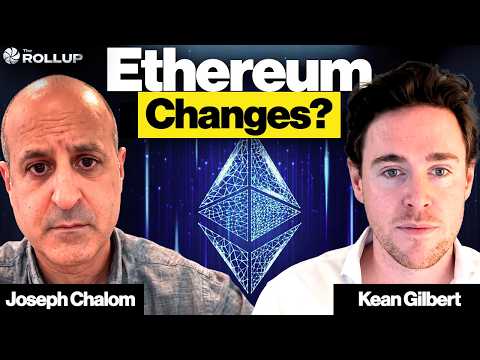
The conversation around Ethereum's monetary policy continues to generate debate, but leading voices in the ecosystem are increasingly pushing back against the focus on protocol-level changes. The consensus emerging from institutional participants? Ethereum's issuance isn't perfect, but it's not the priority.
As one industry veteran put it: "There's so many other things you could focus your attention on and make a more meaningful impact." The argument centers on a simple premise — at a moment when Ethereum is positioned to capture massive institutional adoption, developer and community resources would be better spent on accessibility and application development rather than fine-tuning tokenomics.
"Everyone wants to grow Ethereum adoption at an institutional and also at a retail or personal level. More effort could be spent on making Ethereum more accessible, building applications on Ethereum that grows adoption."
🏦 Institutional Adoption: The Scoreboard That Matters
From the perspective of institutional participants, the metrics that matter most right now are clear: stablecoin adoption, tokenized real-world assets, and DeFi growth. These are the battlegrounds where Ethereum is demonstrating dominance — and where the focus should remain.
The institutional momentum is real and accelerating. BlackRock's journey illustrates the shift perfectly: after spending years planning and launching BUIDL as the largest tokenized fund in the world, the firm moved to tokenize existing money market funds with $8 billion of existing assets — representing approximately 30% of all tokenization happening in one shot.
This transition from de novo products to tokenizing existing funds signals a fundamental shift. The infrastructure is proven, the regulatory path is clearer, and major institutions are moving from experimentation to implementation.
🎯 The Three-Layer Strategy
The strategic focus for Ethereum breaks down into three critical layers:
- Money Layer: Stablecoins, where Ethereum already dominates settlement and issuance
- Asset Exposure Layer: Tokenized real-world assets bringing traditional finance on-chain
- Execution Layer: DeFi and on-chain finance handling the actual transactions and operations
Beyond these three, there's a fourth layer gaining attention: the Agentic layer. While it may sound like a buzzword, the automation and AI-driven transaction layer represents the next wave of users — potentially billions of them. These may be agents rather than humans, but they'll transact on decentralized rails and require the trust guarantees that Ethereum provides.
"When you get that level of transactions, the burn will pick up and you'll start seeing Ether be what it is, which is a really important trust commodity that you're going to need to do on-chain finance."
💰 The Revenue Meta Shift
A significant evolution is underway in how crypto protocols think about value accrual. Protocols generating substantial revenue from actual product-market fit — whether through perpetuals, trading, yield, staking, or stablecoins — are restructuring their token models to treat token holders as first-class citizens.
This shift manifests in several ways:
- Direct profit sharing mechanisms
- Buyback programs
- Increased transparency around P&L
- Token models that align with equity-like value accrual
The catalyst? A combination of factors including regulatory clarity under the new administration, successful models like Hyperliquid's buyback program, and maturing investor expectations. Institutional and sophisticated investors increasingly want to see protocols where "the equity is the token and the token holders are being treated as first-class citizens."
🔄 Lido's Response: Listening and Adapting
Lido, as one of Ethereum's tier-one protocols, exemplifies this evolution. The protocol has faced criticism around revenue distribution — specifically that staking revenue wasn't flowing to LDO token holders. The response has been deliberate and community-driven.
Over the past year, and particularly accelerating in recent months, Lido implemented an LDO buyback program as the first significant step toward aligning token holder incentives with protocol revenue. But this is explicitly described as just the beginning — "the first prong" of a broader strategy.
What sets Lido apart in this transition is the emphasis on feedback mechanisms. The Lido research forum serves as an open channel where community members can post ideas and receive substantive engagement from protocol contributors. This feedback loop has proven critical to the protocol's evolution and responsiveness to stakeholder concerns.
📈 Signs of Maturity
The broader shift toward revenue focus and product-market fit represents a fundamental maturation of the crypto space. Over the past decade in crypto, serious discussions about P&L, risk management, and sustainable business models were often absent. The focus was more experimental — "throw at the dartboard, see what sticks."
Now, institutions entering the space are asking fundamentally different questions. The presence of organized institutional efforts — including business development initiatives, the Enterprise Ethereum Alliance, and structured institutional working groups — signals that Ethereum is being approached with the rigor and seriousness of traditional financial infrastructure.
This maturation extends beyond just financial metrics. It encompasses:
- Professional risk management frameworks
- Sustainable tokenomics aligned with business fundamentals
- Regulatory engagement and compliance structures
- Institutional-grade custody and operational infrastructure
⚡ The Bottom Line
The current moment for Ethereum isn't about perfecting protocol mechanics — it's about capitalizing on a wave of institutional adoption that's already in motion. With major financial institutions tokenizing billions in existing assets, stablecoin dominance cementing Ethereum's role as the internet's settlement layer, and DeFi infrastructure maturing rapidly, the priority is clear: drive adoption, build applications, and make the protocol accessible.
The monetary policy will take care of itself as transaction volume grows and the burn mechanism responds to genuine economic activity. Meanwhile, protocols across the ecosystem are evolving their token models to reflect business fundamentals — treating tokens like equity, implementing buybacks, and creating transparent value accrual for holders.
For Ethereum, this is the moment that matters. The infrastructure is built, the regulatory environment is improving, and the largest institutions in the world are moving from exploration to implementation. The focus should remain squarely on ensuring that transition succeeds — not on optimizing issuance curves that may ultimately prove irrelevant as adoption scales.