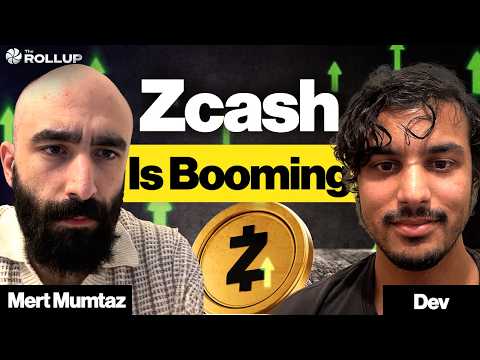
🔐 Zcash's Quantum Leap: Formal Verification, Ironwood Migration & The Road to Tachion
🛡️ Ironwood: A Defining Moment in Zcash Security
The Zcash ecosystem has successfully navigated one of its most critical security events with the completion of the Ironwood upgrade. Following the discovery of a potential vulnerability in the Orchard shielded pool, over 85% of funds have now migrated to the formally verified Ironwood pool — a landmark achievement that demonstrates both the community's trust and the effectiveness of Zcash's multi-layered security approach.
The vulnerability, discovered through ramped-up internal red teaming efforts that leveraged AI-powered auditing tools, could have theoretically allowed for the counterfeiting of shielded notes within the Orchard pool specifically. However, Zcash's turnstile mechanism — a safeguard that tracks funds entering and exiting shielded pools — meant that only that isolated pool would have been affected, not the entire supply.
"What formal verification did or has done is we have a mathematical proof that our implementation perfectly matches the spec. If there's a payment and the proof passes, that means someone owned some notes and the total input of the transaction is equal to all the outputs." — Dev, Valor Group
The successful migration through the turnstile without triggering alerts provides statistical confidence approaching 95% — and logical confidence near certainty — that the vulnerability was never exploited. More importantly, formal verification now provides a mathematical guarantee that the implementation matches the specification, reducing the risk of similar bugs by an order of magnitude.
🔬 What Is Formal Verification? Breaking Down the Math
Formal verification might sound intimidating, but the concept is straightforward: it's essentially compositional logic applied at massive scale. Think of it as proving mathematical statements like "all brown dogs are nice; Sally is a brown dog; therefore Sally is nice" — but with millions of conditions.
In Zcash's case, formal verification proves a simple but critical claim: if you spend five ZEC, there cannot be more than five ZEC output. This guarantee holds as long as the underlying cryptographic assumptions remain sound. The tedious work of validating millions of logical conditions is now complete, providing assurance that no undetectable counterfeiting bugs can exist in the Ironwood implementation.
Previously, trust in Zcash required faith that smart engineers had properly implemented a well-audited specification. Now, there's a mathematical proof that the circuit used to validate every transaction does exactly what it's supposed to do — no more, no less.
⚛️ Quantum Security: A Four-Phase Journey
While Cameron Winklevoss generated controversy by claiming Zcash is "the one and only quantum-resistant network," the reality is more nuanced — and more impressive. Zcash is systematically addressing quantum threats through a four-phase approach, with two phases already complete:
Phase 1: Commitment to a Plan ✅
Unlike Bitcoin, where quantum preparedness remains ambiguous, Zcash has a clear, concrete timeline for quantum resistance. This alone is a massive differentiation for a store-of-value asset.
Phase 2: Quantum Recoverability ✅
Ironwood introduced quantum recoverability, meaning users can hold funds securely for decades — even if quantum computers arrive. The funds remain safe and can be migrated to quantum-proof pools when needed. This capability shipped with Ironwood.
Phase 3: Quantum-Proof Privacy 🚧 (Coming with Tachion)
While Orchard provided substantial privacy protections, certain edge cases could still leak metadata if a user's address was compromised. Tachion will provide full post-quantum privacy with zero conditional leakage — no information about transactions will be recoverable by quantum computers.
Phase 4: Final Quantum Hardening 🔜
One additional upgrade will follow Tachion, though this final step is lower priority. By the time quantum computers pose a realistic threat, users will be able to safely migrate to fully quantum-proof pools.
"One thing Zcash uniquely offers is that you can hold this right now and you don't have to do an update to be safe for quantum computers. That's the result of having a plan and coordination." — Dev, Valor Group
🚀 Tachion: The Next Major Upgrade
Tachion represents a comprehensive overhaul across four critical dimensions:
1. Full Post-Quantum Privacy
Tachion eliminates all remaining metadata leakage, even in edge cases like multi-signature transactions or interrupted signing sessions. Privacy becomes truly unconditional.
2. Massive Scalability Improvements
By introducing recursive zero-knowledge proofs — specifically the accumulation/folding technique pioneered by Zcash co-founder Sean Bowe — Tachion will reduce transaction sizes by over 5x. More importantly:
- Node processing time is effectively eliminated as a bottleneck
- State size is no longer a concern
- The only remaining scaling constraint becomes consensus bandwidth
3. Wallet Experience Revolution
Today, Zcash wallets require frustrating sync processes where users scan potentially millions of transactions to check balances. With Tachion, wallet scanning becomes O(1) — constant time, regardless of transaction volume. Balances appear instantly with zero scanning required.
4. Privacy Metadata Upgrades
Tachion closes remaining edge-case privacy leaks, ensuring that even unusual transaction patterns reveal nothing about user activity.
🏗️ Decentralized Coordination: How Zcash Gets Things Done
Zcash's ability to execute complex upgrades while Bitcoin struggles with quantum preparedness raises a fundamental question about decentralization and coordination. The Zcash model demonstrates that decentralization doesn't require disorganization.
Multiple independent core teams are actively contributing:
- Valor Group (led by Dev) — focused on scaling and performance
- Tachion Team (led by Sean Bowe) — quantum proofing and recursion
- Shielded Labs — core protocol development
- Zotal — infrastructure and tooling
- Zcash Labs — recently launched core team
This level of parallel, coordinated development is underrated and rare across crypto ecosystems. The community has rallied around unifying principles: privacy matters, security is critical, and the protocol must remain usable for peer-to-peer payments.
"Zcash launched pioneering zero-knowledge proofs. It was obvious that the first thing we deployed wasn't the end state. We're constantly updating the cryptography because we pioneered ZK, and now we have to deploy post-quantum ZK. The culture of stagnation isn't there." — Dev, Valor Group
⚡ Mining, Distribution & Tokenomics
Zcash follows a Bitcoin-like supply model with a fixed cap of 21 million ZEC and a halving schedule. The protocol launched via proof-of-work in 2016 — before the era of high-FDV, low-float token games — resulting in an exceptionally clean distribution.
Recent developments strengthen network decentralization:
Cypher Punk Technologies, Zcash's primary digital asset treasury company, announced it now controls approximately 16% of the network's hash rate. Rather than centralizing the network, this increases decentralization by adding another large, transparent mining entity with publicly disclosed governance positions.
The reality is that proof-of-work networks — despite marketing around "thousands of miners" — typically concentrate hash power among a small number of major operators. Adding a well-capitalized, governance-engaged miner like Cypher Punk improves both distribution and long-term network security.
Protocol Funding:
Zcash allocates 20% of block rewards to a community treasury controlled by token holders through private voting. This mechanism funds development grants and retroactive rewards for contributors. The current funding model continues through 2028, after which the community can vote to extend, modify, or sunset it.
💡 Why Zcash is "PVE" in a PVP World
One of the most compelling strategic arguments for Zcash is that privacy is non-competitive with other crypto ecosystems. It's "player-versus-environment" rather than zero-sum competition.
Solana needs fast transactions. Ethereum needs smart contract composability. Bitcoin needs settlement assurances. But everyone needs privacy. A Solana developer can run their business on Solana while personally holding Zcash for private savings. Privacy doesn't interfere with other chains' objectives — except potentially Bitcoin as a pure store of value.
And here's the asymmetry: Zcash remains a tiny asset relative to its potential. Even Dogecoin sits above it in market cap rankings. A mere 5% allocation from Bitcoin holders or major ecosystem participants would represent massive inflows relative to Zcash's current size.
The anonymity set network effect creates a growing moat: as more users adopt shielded transactions, competing privacy solutions face an impossible task of bootstrapping equivalent privacy guarantees. Liquidity and privacy compound together.
🎯 The Store of Value Thesis: Low Entropy in a High Entropy World
The philosophical case for Zcash as a store of value rests on a simple principle: money must be a low-entropy asset in a high-entropy channel.
Think about how this call happened: low-entropy carriers (fiber cables, antennas) transmitted high-entropy information (voices, data). You get signal from the difference. Similarly, if a country's currency is extremely volatile, commercial activity becomes chaotic — you can't price goods, save, or invest with confidence.
For a store-of-value asset, the critical requirement is no surprises. Not price stability necessarily, but no tail risks. You must have confidence that if you store wealth for five years, it will still be there — no protocol-level catastrophes, no unrecoverable bugs.
This is why quantum preparedness matters so much. It's not about predicting exactly when quantum computers arrive. It's about eliminating surprise risk. The worst possible trade is: best case, quantum is delayed but you're unprepared; worst case, everything is hacked. One path leads to ruin, one to "meh." Choosing the ruin path is indefensible for a trillion-dollar asset.
"The most important thing in the Ironwood migration and Tachion quantum proofing is that it's fundamentally designed around hardening Zcash as money — as a store of value, a low-entropy asset that people can trust in." — Mert, Zcash Community
🔮 Looking Ahead: The Vision for Scalable Private Money
The long-term goal is ambitious but concrete: credit card-scale throughput under pure proof-of-work. Within two to three years, Zcash aims to handle 50,000+ transactions per second — Mastercard and Visa levels — with sub-second finality.
Achieving this requires work across the entire stack:
- Node software optimization
- Wallet architecture overhaul (currently the biggest bottleneck)
- Consensus bandwidth improvements
- Zero-knowledge proof efficiency through recursion
Interestingly, the wallet layer — not node capacity — currently limits scale. But with Tachion's instant-sync architecture and the elimination of scanning requirements, this bottleneck disappears.
The vision: post-quantum, formally verified, instantly-syncing, credit-card-fast private money — operated as a decentralized proof-of-work network with zero protocol-level tail risks.
🏁 Final Thoughts: Execution Over Narrative
Crypto markets often reward narrative over execution. But Zcash is playing a different game — one focused on uncompromising technical execution around a simple, powerful idea: private, secure, scalable money.
The Ironwood migration wasn't just a security patch. It was a demonstration that:
- The community can coordinate complex, high-stakes upgrades
- Formal verification can mathematically eliminate entire classes of bugs
- Transparent communication maintains trust even during security events
- Zcash prioritizes long-term soundness over short-term narrative
As AI accelerates both attack surfaces and defensive capabilities, Zcash's commitment to proactive security, formal guarantees, and quantum preparedness positions it as the serious contender for anyone seeking genuinely private, genuinely secure digital money.
The migration is over 85% complete. Tachion ships in months. The quantum roadmap is clear. The decentralized coordination is working. And the simplest idea in crypto — private, sound money — may turn out to be the most enduring.
More from TheRollupCo

Liquidity Is Back: Treasury's Bond Buyback Program Ignites Historic Crypto Rally
💰 The Bottom Is In: Markets Explode on Treasury Liquidity SupportWednesday, August 19th delivered one of the most decis...

Bitcoin's Market Cycles Are Compressing: What Institutional Adoption Means for V
📊 The Four-Year Cycle Isn't What It Used To BeThe traditional Bitcoin four-year cycle — three up years, one down — is s...

Traditional Finance Is Building On-Chain: What It Means for Your Crypto Portfoli
📈 Market Snapshot: Bitcoin Pushing Higher, Stocks WobblingBitcoin is testing the upper end of its range, with a move ab...
The Strategic Case for Token Buybacks: A Framework for Capital Allocation in Cry
📊 The Core TensionA heated debate is unfolding in crypto markets around a seemingly simple question: should token proje...
How Base Plans to Become the Universal On-Chain Exchange for Every Asset Class
📊 The Vision: Base as the Internet's Financial ExchangeBase is positioning itself to become the "internet exchange" — a...

Do Buybacks Work? Ethereum's Big Week, Fake World Assets, and the Future of Valu
📊 Market Check: Patience in Apathetic ConditionsMarkets remain in a low-volatility holding pattern. Bitcoin and Ethereu...