🤖 The Agentic Finance Revolution: How AI Is Reshaping Investment Infrastructure
🔮 Welcome to the Agentic Finance Era
The financial markets are experiencing a fundamental platform shift—one that rivals the transitions from phone-based trading to online brokerages, and from desktop to mobile investing. This time, the shift is moving from mobile apps to AI-first interfaces, where large language models don't just assist with research but actively manage portfolios, execute complex strategies, and automate trading workflows.
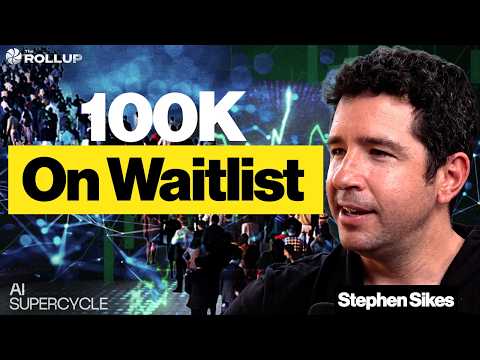
In a wide-ranging conversation, Steven Sykes, COO of Public.com and former US Army cavalry officer turned McKinsey engagement manager, laid out how his firm is positioning itself at the intersection of traditional finance and agentic AI. Public.com has rolled out a comprehensive suite of AI-powered tools—from research assistants to fully agentic brokerage accounts—while also opening direct API access for users who want to build their own trading agents.
"We see ourselves as the platform for serious investors and serious traders. That's led us to build out the best platform for asset class exposure—equities, fixed income, corporate bonds, treasuries, crypto, options—and we're going to keep going into futures, prediction markets, and beyond."
📊 The Evolution: From Research Assistance to Full Automation
Public.com's AI journey began in summer 2022—even before ChatGPT's public launch—when the team started experimenting with GPT-3 via API for customer support. By 2023, they had released Alpha, an AI research assistant designed to filter the overwhelming universe of market data and content available to retail investors.
The product evolution followed a clear trajectory:
- 2023: Alpha research assistant launched to help investors navigate information overload
- 2024: "Why is it moving?" feature deployed to explain unusual price movements
- 2025: Generated Assets introduced—allowing users to build custom thematic portfolios and direct indexes
- 2026: Full agentic brokerage capability rolled out following Claude Opus 4.5's breakthrough in logical reasoning and software development
The agentic brokerage represents the culmination of this evolution. Currently available to between 10,000 and 20,000 users off the waitlist, with tens of thousands more waiting for access, the platform enables complete automation across Public.com's entire product suite—including money movements, trades, alerts, and multi-asset strategies.
⚡ Three Pathways to Agentic Trading
Recognizing that user behavior during platform shifts remains uncertain, Public.com has built three distinct access methods for its agentic trading infrastructure:
1. Native In-App Experience
The Public.com UI offers a controlled, trusted environment where users interact with the firm's proprietary agent within a familiar interface. This approach prioritizes safety, security, and ease of use for investors who prefer a managed experience.
2. Direct API Access
Users can obtain API keys in three to five minutes after signing up, then connect those keys to any third-party agent framework—including OpenAI, Claude, or custom-built solutions. This "first-party API" provides complete control over the account with full documentation.
3. Model Context Protocol (MCP) Integration
For users comfortable with Claude's interface or other LLM environments, Public.com has built MCP connectors that allow agents to execute trades across all asset classes—equities, options, crypto, bonds—directly from the user's preferred AI interface.
"The truth is we see the platform shift, but we don't really know where user behaviors are going to go. Are more people going to want direct API key access? Or use their own Claude UI with an MCP behind it? Or use the Public UI we've built? It's probably going to be a bit of all three."
🎯 Real-World Use Cases: From Covered Calls to Custom Triggers
The most compelling applications of agentic trading fall into two broad categories:
Automated Trading Strategies
Sophisticated retail investors often understand strategies conceptually but struggle with optimal execution. A classic example: covered call strategies on concentrated positions in stocks like Nvidia or Micron.
An investor might know they want to generate income and hedge risk through covered calls, but determining the optimal strike price, days to expiration, and rollover timing requires expertise. Public.com's agent can guide users through these decisions, filter the options chain for optimal entry points, and then automate the entire strategy—including weekly rollovers—without requiring the investor to be glued to their phone at specific times.
Infinite Customization of Standard Features
The second major use case involves personalizing common features in ways that would previously have required dedicated product development:
- Custom stop-loss and take-profit rules based on any combination of triggers
- Dividend reinvestment strategies (e.g., reinvesting Apple dividends into Google stock)
- "Walk the bid" orders that incrementally adjust limit prices until execution
- RSI-based triggers and indicator-driven trading rules
"It used to require multiple software developers to build any of these features. Now it's just a thin layer of orchestration on top of all the features we already have—a new way to bring the power of our infrastructure to our members without building a big blue button."
🏗️ The Technology Stack: Why Vibe Coding Won't Cut It
Despite the capabilities of modern LLMs, Sykes draws a sharp distinction between using AI for internal tools and productivity versus mission-critical trading infrastructure.
While competitors in the crypto space have laid off large portions of their engineering teams and embraced "vibe coding," Public.com maintains a more cautious approach:
- Current AI coding capability: Good for internal tools, QA, and bug bashing
- Not suitable for: Production trading systems and sensitive financial infrastructure
- Core principle: Users trust Public.com with their life savings—reliability cannot be compromised
The firm's engineering philosophy emphasizes high talent density and atomic team structure—small, independent units that can ship major features rapidly. Despite having an engineering team that is 1/120th the size of some competitors, Public.com consistently "out-ships" larger rivals.
"We've always run a lean shop because we want to deliver the best possible outcome to our customers. Hiring people is never the first answer when we're trying to solve a problem. We don't throw people at problems."
Rather than using AI to reduce headcount, Public.com views productivity gains as enabling additional investment in growth. The firm has "literally 10 years of work ahead" to build across the capital markets and investing space, making every efficiency gain an opportunity to accelerate development rather than cut costs.
🔐 The Security and Compliance Advantage
Public.com's approach to agentic trading emphasizes deterministic workflows over dynamic AI decision-making. When a user authorizes a strategy, the system commits it to a step-by-step transaction stream—a series of "if this, then that" rules executed without further AI interpretation.
This design choice provides several advantages:
- Predictability: Users know exactly what will happen once they hit "authorize"
- Auditability: Every action can be traced to explicit user intent
- Regulatory clarity: Deterministic workflows align better with existing compliance frameworks
- Risk management: No downstream AI decisions that could deviate from user instructions
This architecture contrasts with purely agentic systems where AI makes real-time decisions based on market conditions—an approach that raises questions about accountability and regulatory compliance.
🪙 Crypto as an Asset Class, Not a Payment Rail
Public.com's perspective on cryptocurrency is pragmatic and investor-focused. The platform treats crypto as an asset class first and foremost—not as a payment method or currency.
Key crypto offerings include:
- Spot trading across 70+ tokens
- Crypto IRA accounts for tax-advantaged long-term holdings
- Integration with AI tools for research and trading
- Full order type support matching traditional asset classes
While Public.com experimented with NFTs and securitized interests in digital collectibles in prior years, the current focus remains on established crypto assets. The firm monitors developments in tokenized securities—both public companies tokenizing equity and third-party tokenization of private company shares—but maintains a "dim view" of certain approaches in the latter category.
"We see crypto as an asset class. We've invested in making it really easy, really secure, with all the order types you might want, integrated with all our AI tools. We're one of the few platforms where you can own spot crypto in your IRA."
🌐 The Competitive Landscape: Robinhood and Beyond
Public.com's multi-pronged approach to agentic trading contrasts with recent announcements from competitors. Robinhood recently launched an MCP-based solution, while crypto-native platforms like Liquid have introduced LLM front-ends for decentralized trading.
According to Sykes, early implementations from competitors show limitations:
- Equities-only functionality (no options or crypto)
- Separate account requirements (can't interact with existing positions)
- Limited transaction types
In contrast, Public.com's MCP implementation offers:
- Full asset class coverage (equities, options, crypto, bonds)
- Integration with existing accounts
- Complete transaction capability
- Comprehensive documentation for LLM interpretation
💡 The Economics of Intelligence: Will AI Get Cheaper?
An interesting debate emerged around the future pricing of AI capabilities. While conventional wisdom suggests that current levels of intelligence will become cheaper over time, Sykes argues that state-of-the-art intelligence may actually become more expensive.
The reasoning:
- Finite compute resources face growing demand
- Early adopter phase hasn't yet crossed into mass adoption
- Agentic workflows will dramatically increase token consumption
- High-value use cases justify premium pricing for cutting-edge models
"We haven't really crossed that chasm to mass adoption yet. When we do, the volume of demand for intelligence is going to grow beyond what our compute can handle. The state-of-the-art is actually going to get more expensive, even if the current level of intelligence gets cheaper."
This perspective challenges the assumption that AI will follow the typical technology cost curve, suggesting instead a two-tiered market: affordable commodity AI for standard tasks, and premium pricing for frontier capabilities.
🏭 AI Displacement and the Growth Mindset
Addressing broader economic concerns about AI-driven job displacement, Sykes frames the issue through the lens of business philosophy. He identifies two types of firms:
Profitability-Focused Firms
These businesses view AI efficiency gains as an opportunity to reduce costs and return profits to shareholders. They may lay off workers and push productivity improvements to the bottom line.
Growth-Oriented Firms
These companies reinvest every efficiency gain into expansion—new products, new markets, new capabilities. They hire more people as AI unlocks higher ROI per employee.
"The experience of the American economy is that the growth-oriented firms always win. They always take more share, always build bigger businesses, and always consume more of that labor resource to continue growing the economy over time."
Public.com firmly places itself in the second category, viewing AI as an accelerant for expansion rather than a tool for headcount reduction. With a roadmap spanning years of potential products across capital markets, every productivity gain enables faster execution rather than workforce contraction.
🔮 Platform Shifts Never Fully Replace What Came Before
Sykes draws historical parallels to previous platform transitions in brokerage:
- Branch offices → Phone trading
- Phone trading → Online platforms
- Desktop web → Mobile apps
- Mobile apps → AI-first interfaces
Critically, each transition didn't eliminate its predecessor. People still call in trades to brokers today. Similarly, traditional mobile apps won't disappear—but the marginal adoption and innovation will shift to AI-native interfaces.
This perspective informs Public.com's strategy of building multiple access pathways rather than betting exclusively on one interaction model. The firm recognizes that user preferences will segment across the spectrum from fully managed experiences to direct API access.
🎬 The Bottom Line
Public.com's approach to agentic finance represents a sophisticated bet on multiple futures simultaneously. By building native in-app experiences, direct API access, and MCP integrations—all with full multi-asset support and deterministic workflow architecture—the platform positions itself to capture adoption regardless of which interaction model ultimately dominates.
The firm's philosophy combines aggressive product development with conservative infrastructure engineering, high talent density with lean operations, and growth orientation with disciplined capital allocation.
As the agentic finance platform shift accelerates, Public.com's multi-pathway strategy, comprehensive asset class coverage, and commitment to reliability over shortcuts may prove differentiating—particularly if competitors stumble in their rush to adopt "vibe coding" approaches to mission-critical systems.
The market is watching this platform shift unfold in real time. With tens of thousands already using agentic trading features and many more waiting for access, the data on user preferences and behavior patterns will clarify rapidly in the coming quarters.
For investors interested in exploring agentic trading, Public.com's waitlist continues to roll out access in waves of 5,000-10,000 users weekly. The platform's subreddit (r/publicapp) provides a community forum for users sharing strategies and experiences with AI-powered investing.
More from TheRollupCo
Private AI, Data Monetization, and the Evolution of Crypto Fundamentals
🧠 The Privacy-First AI Thesis Is AcceleratingThe conversation around decentralized AI infrastructure has shifted from s...

From Threat to Infrastructure: How Traditional Finance Discovered Its Weird Litt
📡 The Rail Above Rails The narrative around stablecoins has fundamentally shifted from existential threat to strategic...
Inside the Mind of a Crypto Fund Manager: Privacy Tokens, Infrastructure Plays,
The institutional landscape for digital assets continues to evolve rapidly, and a recent conversation with a European fu...
Inside RobinHood's Crypto Empire: From $1B+ Revenue to Tokenized Stocks and Pred
🚀 RobinHood Crypto: From Experiment to Billion-Dollar Business LineWhat began as a modest experiment in 2018 — during c...
Fraction AI Launches Index: Conversational Trading Agents That Turn Ideas Into E
🎯 The Democratization of Algorithmic Trading Has ArrivedA new platform is bringing institutional-grade trading intellig...
How Visa Is Building a $6 Trillion Stablecoin Payments Infrastructure
🏦 The Payments Giant's On-Chain PivotVisa is no longer watching the stablecoin revolution from the sidelines. The compa...