⚠️ DeFi Yields vs. Risk, RWA’s Next Leg, Agentic Messaging, and DPRK’s Playbook
TheRollupCo
April 8, 2026

⚠️ DeFi Yields vs. Risk, RWA’s Next Leg, Agentic Messaging, and DPRK’s Playbook

Top line

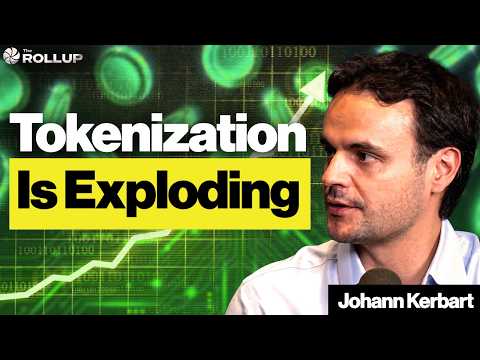
DeFi is wrestling with a core truth: deposit rates are largely a function of borrowing demand, not protocol risk. That mismatch is colliding with fresh calls for standardized risk frameworks, the rapid buildout of tokenization rails and curated vaults, an oncoming wave of agent-driven messaging and commerce, and a stark security reminder as DPRK-linked operators step up social engineering and laundering sophistication.

1) DeFi rates are demand-driven — not risk-priced ⚖️

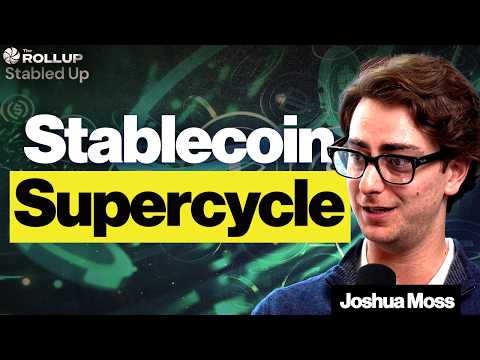
  • Multiple voices argued that on-chain lending rates do not reflect protocol risk or the risk-free rate; they are “solely measurements of the demand for borrowing.” In bull markets, borrow demand lifts rates; in bear markets, rates can sink below off-chain risk-free levels.
  • Recent analyses (referenced from Luca and others) applied derivatives-style methods to price depositor risk. Pushback highlighted a data gap: “bad data in, bad data out.” The path forward: shared, standardized risk data and frameworks.
  • There’s no consensus: one camp sees clear underpayment for risk; another (via a repo-style lens with realistic loss-given-default) argues current rates can be fair. Healthy debate is pushing toward sharper standards.
“There is no rate anyone will take if there could be a zero on their principal.”
“These markets are solely supply and demand, not based on the risk‑free rate or protocol risk.”

2) Vaults: the ‘box’ is empty — the strategy inside is what matters 🧰

  • Vaults” is an overloaded term; performance and risk swing widely based on what’s inside the box. One guest called it “the worst word in crypto” for its ambiguity.
  • Post‑FTX (2023), DeFi yields materially compressed despite persistent risks — a classic inefficiency with idle capital accepting too little for on-chain risk. Over time, markets typically self-correct.
  • Operational complexity (looping, rebalancing, diligence) still drives many to outsource via curated vaults. Brand trust remains sticky — even at low yields.
“Vaults are basically an empty box — what really matters is what you put inside the box.”

3) Tokenization rails, controls, and curation: building institutional-grade pipes 🏗️

  • Platforms are tightening vault controls: allowlists of permissible assets, allocation constraints, and published guardrails. One stack described a back-end ‘studio’ to codify what managers can do and expose diligence and risk for allocators.
  • Compliance and licensing work unlocks new asset types for on-chain use. Practical frictions persist: KYC, minimums, subscription/redemption windows.
  • Key vision: as more RWA come on-chain, uncorrelated yield sources will compete with DeFi-native deposits, compressing spreads. Over time, there’s “just assets” — crypto-native and real-world — flowing through the same programmable rails.
“First we tokenize, then they end up in DeFi, and then we manage these actively with vaults.”
“That’s exactly what’s happening.”

4) The RWA reality check: liquidity, duration, and expectations

  • Trilemma: investors want high APY, low risk, and high liquidity. “Those things don’t exist.” Structures can improve the trade-offs, but expectations must reset.
  • Onboarding timelines are still long: generally 6–9 months to bring new assets on-chain, then another 6–12 months for market education and adoption.
  • Liquidity mechanics matter: some tokenized products are built around quarterly redemptions with caps — e.g., “only 5% can get redeemed a quarter.” That’s a poor fit for agents or strategies expecting daily liquidity.
  • Beware “risk-free leverage” narratives: churning a mid-single-digit APY into “20% APY” is a red flag. As one put it, “20% APY… it’s just not real.”

5) Is on-chain yield institution-ready? Two divergent answers

  • Not yet: tools exist, but pipelines aren’t fully integrated; only “a dozen” on-chain assets are broadly trusted. It’s still brick-by-brick.
  • Yes, via intermediaries: institutions are already allocating to off-chain funds that then deploy capital on-chain. Some DAOs have also publicly committed to on-chain allocations.

6) Agentic messaging is coming fast: identity, consent, and programmable commerce 🤖

  • Messaging is half the internet: one founder noted “50% of the internet usage in the world is messaging.” As AI agents surge, identity becomes the foundation: the same key that signs a wallet signs the message, reducing scams.
  • Network-level consent and proof‑of‑human guard access to inboxes across apps. If a user hasn’t approved a sender (human or agent), it can’t land in the primary inbox.
  • Decentralized, quantum‑resistant messaging is designed so no state can shut the network down: no country runs over one-third of nodes.
  • Spam/agent wave: a prominent builder claimed that in 90 days email/SMS would collapse under agent spam; the view here is “too soon,” but the pressure is real. Expect a reshuffle of where coordination, trust, and agentic commerce live.
“Communication drives commerce, not the other way around.”

7) Security watch: DPRK’s playbook, from social engineering to synchronized laundering 🛡️

  • Infiltration is real: teams across years have unknowingly hired DPRK-linked IT workers. The salaries do not stay with the workers; funds are remitted up the chain and “fund… the regime.”
  • Recent exploit analysis cited “transactions every 30 seconds like clockwork for six hours straight” — unlikely for a lone insider. Indicators before and after the event (including funding via Tornado Cash) pointed to known DPRK-linked clusters, including an alias surfaced in prior investigations.
  • Division of labor: separate teams handle (1) social engineering and infiltration, (2) the exploit, and (3) laundering. Exploiters typically pass funds to laundering teams once the initial flows finish.
  • Work cadence reported by investigators: 16-hour days (Mon–Fri), 12 hours on Saturday, and four hours on Sunday.
  • Asset choices: proceeds are consolidated to native assets (ETH, BTC, Tron), rarely left on Solana for long-term custody. Laundering backlogs can delay off-ramps by months.
  • On-chain rollbacks aren’t a remedy: The DAO incident was unique; funds sat behind a 30‑day cooldown in a single address, enabling a targeted remediation. Today’s composability and activity breadth make broad rollbacks untenable.
“They don’t get to keep their salaries… it gets laundered and… funds their nuclear program.”

8) Freezing flows: who moved, who didn’t

  • One perspective: issuers should act immediately and publicly in the first hops post-exploit, before funds co‑mingle. “They had like seven hours.
  • Trade-off: overbroad freezes risk catching innocent users. Early, direct post-exploit freezes reduce that risk relative to later, downstream actions.
  • Others did move: mentions included USDT and Wormhole capturing portions; not perfect, but it “takes the edge off.”

9) Actionable takeaways ✅

  • Risk frameworks now: Adopt standardized, shared data inputs to price depositor risk — don’t rely on borrow-demand curves as a proxy for safety.
  • Vault diligence over APY-chasing: Analyze what’s inside the vault, the guardrails, and the manager’s authority. Published constraints and auditability matter.
  • RWA trilemma discipline: High yield, low risk, high liquidity rarely coexist. Read the docs on redemption windows and caps (e.g., 5% per quarter).
  • Timeline planning: New tokenized products still face long lead times — 6–9 months to launch and 6–12 months for adoption and education.
  • Operational security: Harden hiring, code access, and vendor processes against social engineering. Expect multi-team adversaries with practiced laundering sequences.
  • Issuer relationships: Clarify freeze protocols and SLAs for emergencies; early, targeted freezes can limit downstream harm.
  • Messaging rails: Prepare for agent-driven coordination on private, consented, proof‑of‑human networks. Identity and consent controls will be core to protecting attention and preventing scams.

Memorable quotes

“Curation is a market of perfect competition.”
“There’s no real‑world asset vs. crypto‑native asset — there are just assets.”
“Push one button and spray stables all over the world into the best opportunities… then pull it all back.”
“It’s the safest place in the world to use AI — private chat built for the AI era.”

Contextual figures cited in the conversation include:

  • “Transactions every 30 seconds for six hours” during a DPRK‑linked laundering sequence
  • DPRK-linked work cadence: 16 hours (Mon–Fri), 12 hours (Sat), 4 hours (Sun)
  • DAO remediation hinged on a 30‑day cooldown
  • RWA onboarding: 6–9 months to launch; 6–12 months for market education
  • Redemption gates example: “only 5% can get redeemed a quarter
  • Messaging share: “50% of internet usage is messaging”
  • XMTP decentralization: no country runs over one‑third of nodes

More from TheRollupCo