⛽ Wartime Allocation, Oil Backwardation, and the Inflation Corridor
ForwardGuidanceBW
April 3, 2026

⛽ Wartime Allocation, Oil Backwardation, and the Inflation Corridor

Top Line

“This is wartime allocation of capital… it favors scarce resources you can’t print.”
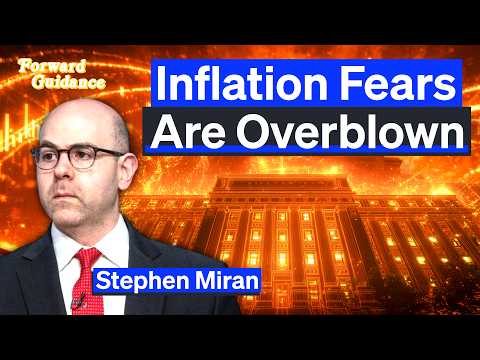
“Oil prices aren’t high enough for demand destruction, but they’re high enough for inflation.”
“Inflation is really bad for risk assets because it sends bond yields higher and equity multiples lower.”

Markets remain trapped in a volatile corridor defined by geopolitics, elevated oil, and dense hedging. Index-level moves mask violent factor and single-stock dispersion while flows, collars, and 0DTE continue to dominate short-term price action. The message across assets: scarce, real-economy inputs are ascendant; the policy path channels inflation risk; and positioning is already heavy on protection.

1) Regime Shift: Scarcity, Security, and the Inflation Corridor 🔥

  • Wartime allocation is redirecting capital toward scarce resources—energy, metals, and real-economy capacity—rather than long-duration, high-multiple growth exposures.
  • Oil is doing just enough damage: not high enough to crush demand, but high enough to sustain inflation. That’s the punishing middle ground for risk assets.
  • Policy makers face an ugly bind: suppressing front-end energy prices can delay a natural supply response and entrench inflationary pressures.
“You can make the argument it’s actually almost better for [oil] to go higher… then you get the demand destruction, like the central banks can actually do something.”

2) Market Structure: Hedged to the Gills, Flows in Charge

  • Systematic degrossing: CTAs and asset managers have significantly reduced exposure; index realized vol has lagged the surge in implied vol, fueling sharp squeezes as expensive protection decays.
  • VIX curve inversion signaled over-hedged downside; subsequent re-steepening helped catalyze a relief rally.
  • 0DTE and retail flow rhythm: a recurring pattern of Monday strength and late-week bleed has been visible, driven by option decay dynamics.
  • JPM collar gravity: expiry acted like a magnet; once rolled, indices popped—classic market-structure-over-news outcome.

Under the hood, dispersion remains extreme. Multi-platform pod shops were reportedly down ~4% over the last month, while a prominent energy trader was said to be up ~30% month over month (after being down ~50% last year). Factor volatility, not index drift, is dictating P&L.

3) Energy: The Backwardation Bite

  • Spot vs. curve: mentions of oil near $100 and as high as $110 on the front end, while a cited observation put December around $70—a steep backwardation that underscores acute near-term tightness.
  • Supply response missing: no visible uptick in U.S. rig counts; policy and hedging dynamics may be blunting investment signals.
  • Pass-through begins: Amazon introducing a 3.5% fuel surcharge on fulfillment—an explicit inflation channel from energy to goods.
  • Airlines exposure: many carriers have stopped hedging jet fuel; route economics shift rapidly as oil stays elevated.
“Front months at like 110 but then December is only at 70 bucks… [basis trades and suppression] keep prices higher for longer.”

Geopolitics and policy attempts to cap front-month prices risk prolonging the inflation impulse while delaying new supply.

4) Rates and the Curve: From Bear Flattening to Event Risk

  • Curve dynamics: short-dated yields have risen more than the long end—bear flattening consistent with expectations for restrictive policy to persist and growth to slow.
  • June risk: discussion centered on the potential for cuts and fiscal measures into the election cycle. If accommodation meets sticky inflation, a bear steepener risk emerges.
  • Policy tail-risks: one high-profile bond investor floated a hypothetical where Treasury coupons could be cut by “50%” in a radical debt-management scenario—paired with notions of yield-curve control. Not a base case, but indicative of the policy imagination now in play.

5) Rotation: From Bubble to “Anti-Bubble” Economy

  • Hard assets are making higher lows: a referenced industrial metals index “is not a bearish chart,” and Dow Transports have shown improving relative trends versus mega-cap tech.
  • Transports vs. QQQ: ratio at levels reminiscent of early-2000s turning points; a potential mean-reversion toward real-economy winners.
  • Magnificent 7 shorts no longer “easy” as hedging saturates; a tactical safety bid into mega-caps is plausible even if the medium-term case for real assets strengthens.

6) Gold, Bitcoin, and the Store-of-Value Debate

  • Gold: secular supports remain; commentary noted producer cash flows/margins are strong, yet gold equities still underperform bullion—an anomaly if policy turns radical.
  • Bitcoin: holding up “okay” amid turbulence; not rocketing, not breaking—stability that keeps it in the portfolio conversation when sovereign-debt haircuts are even hypothetically discussed.

7) Credit and the Consumer: The Slow Grind

  • Stress building: a bank default monitor shows the combined high-yield/loan distressed universe at its highest since June 2023.
  • Two-sided hit to households: inflation lifts essentials (energy, food), while weaker asset prices and falling savings sap the wealth effect—conditions that slow discretionary demand.
  • Real-world tells: an anecdote from the UK noted lines at gas stations with 4 of 5 reportedly out of gasoline—signs of strain can appear quickly at the last mile.

8) AI and Compute: Secular Demand vs. Cyclical Frictions 🤖

  • Compute demand rising: GPU rental demand is reportedly surging; since the “agent” wave, cloud usage constraints and throttling hint at pent-up need for capacity.
  • Capital and inputs: a claim of $100 billion raised by a major AI lab was discussed, underscoring how capital may flood the stack. But financing, energy, and exotic materials (e.g., helium) form practical bottlenecks.
  • Macro sensitivity: if credit or FX volatility bites, AI infrastructure buildouts could be delayed—even amid undeniable secular growth.

9) FX and Policy: Quiet Saves and Flash Points

  • USD/JPY watch: references to the yen near 160 underscored fragility; the Bank of Japan lowering QE helped trigger a yen squeeze, relieving acute stress.
  • FX-vol matters: in a world of heavy systematic positioning, policy preemption can avert breaks. But if the dollar surges alongside oil, cross-asset stress can escalate quickly.

What to Watch

  • Oil term structure: front vs. back spreads (mentions of ~$110 front and ~$70 December) for signs of easing tightness—or worsening scarcity.
  • FX levels and vol: especially USD/JPY; policy tweaks have been timely, but pressure points persist.
  • Vol term structure: sustained inversions can mark over-hedged markets and preface sharp rallies.
  • Credit breadth: watch high-yield/loan distress measures and spread momentum for signal on cyclical damage.
  • Positioning: CTAs, dealer gamma, and large collar rolls; market structure still drives outsized moves.

Playbook Context (Not Advice)

  • Scarcity premium remains a core macro theme: energy, select metals, logistics-sensitive real assets.
  • Higher-for-longer commodities coexisting with policy inducements raises the odds of unfavorable stock-bond correlation and multiple pressure.
  • Cash is a position into binary policy and geopolitical catalysts; timing trumps bravado in a flow-dominated tape.

Memorable Quotes

  • “Oil prices aren’t high enough for demand destruction, but they’re high enough for inflation.”
  • “We’re stuck in the corridor… everybody’s frozen.”
  • “The incentives here point to inflation.”
  • “Inflation is really bad for risk assets because it sends bond yields higher and equity multiples lower.”
  • “The market has delevered and degrossed a fair bit… shorting here is a tough place to make money.”
  • “Front months at like 110 but then December is only at 70 bucks.”
  • “Amazon is putting on a 3.5% fuel surcharge.”
  • “The combined high-yield/loan distressed universe is at its highest since June 2023.”
  • “What if they cut coupons… by 50%?”

Bottom line: positioning is heavy, flows are boss, and the macro map still routes through energy. Until the corridor breaks—via genuine demand destruction or a credible supply response—policy will be forced to choose between inflation optics and growth risk, with consequences for every asset class.

More from ForwardGuidanceBW