Summary
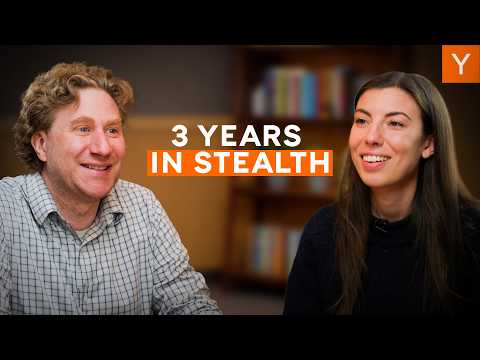
Variance has come out of stealth with a $21 million Series A, unveiling a platform of purpose-built AI agents that automate risk, compliance, and trust & safety workflows at enterprise scale. After building quietly for 3 years, the company is already powering Fortune 500 marketplaces and high-volume platforms, with named customers including GoFundMe and IAC brands (Ask Media Group; care.com within the IAC umbrella), alongside others such as Medium and Redbubble. The system automates content review, fraud and identity checks, KYC/KYB, and complex UBO verifications — replacing brittle rules engines, specialized classifiers, and large human analyst teams with self-healing, agentic workflows.
Why the Shadows? The Cat-and-Mouse of Modern Risk 🚨
Variance operates in high-stakes environments where adversaries adapt quickly and disclosure can amplify abuse. The go-to-market remains intentionally quiet:
“We’re building the systems that are often used by the bad guys, but we’re building them for the good guys.”
Much of the work involves sensitive data and active fraud suppression. Clients prefer their “secret weapon” stays hidden — and for good reason.
What the Platform Actually Does
- Agentic automation across content moderation, fraud reviews, identity/KYC, KYB, and UBO verification.
- Decisioning at the edge of compliance: verifying sanctioned-party risk, crisis-driven fraud attempts, and identity assertions for marketplaces and gig platforms.
- Consistency at scale: formerly human-only decisions are now fully automated, with human review reserved for the hardest 1% of cases.
On GoFundMe, for example, Variance’s agents validate the legitimacy of fundraisers — applying Terms of Service, checking identity and behavioral history, and analyzing fundraiser images and bios before campaigns go live.
“Every person who signs up to do a GoFundMe fundraiser… their request is being validated by Variance’s software before it’s allowed to go live.”
One crisis-style pattern: a sudden surge of campaigns after a high-profile event. As described, there was a spike of fundraisers around “the murder of Charlie Kirk,” raising questions about who is actually related and who is exploiting the moment. The platform uses identity, account history, and content-level signals to determine what should be allowed.
The Agent Stack: From Deterministic Patches to Self-Healing Systems
Legacy risk stacks mix rules engines (if X then Y), narrow classifiers (single abuse types), and human analysts. Variance’s model replaces that patchwork with agents that:
- Read and execute against a customer’s standard operating procedures (SOPs), rather than relying on fixed rules or one-off models.
- Reason over unstructured data (text, images, documents) and materialize features on the fly.
- Close the loop — continuously improving without handoffs between brittle subsystems.
“You don’t need a classifier anymore… and you don’t need human reasoning anymore. So, you have this fully self-healing system.”
Data Is the Hardest Problem — And the Moat
Variance’s agents operate on both internal customer data and external sources (including over hundreds business registries across the world and the open web). The team emphasized that the web — long relied on by human analysts — was a “final node” needed to fully automate the graph of abuse.
In practice, enterprise data is scattered across 5–10 different systems, sometimes “hidden behind a UI.” Variance integrates via reverse ETL, APIs, and now a third path: browser-based agents that can open legacy dashboards and extract the necessary facts for reasoning.
“We’ll pull in pabytes of data… from vastly different sources and all of that data is unstructured.”
Election Stress Test: Detecting Coordinated Rings and Real-World Threats
Variance highlighted a Fortune 500 customer with large communities and political exposure during elections. Because agents query entity relationships and reason step-by-step, they surfaced state-sponsored coordination patterns that single-content classifiers would miss.
“We were able to detect much more sophisticated fraud rings than you would have been able to do before.”
Some investigations also uncovered threats with physical safety implications. Once detected and investigated, these cases move to law enforcement.
Enterprise Proof Points and Go-To-Market
- First enterprise: IAC (as referenced as IA/IC), including Ask Media Group, where the problem was marketing compliance at scale — historically solved via a large human BPO. Variance automated compliance checks that are too nuanced for traditional classifiers (e.g., “You can’t give advice for legal defense”).
- Sales motion: going enterprise from day one. It took eight months to land the first customer, with strong emphasis on founder credibility.
- Timing: Variance started pre-ChatGPT. During an early pilot, new models shipped midstream: “changing our cost structure by a 10x factor” and materially improving performance.
- Subsequent traction: customers in trust & safety including Medium, GoFundMe, and Redbubble. In July 2024, revenue was doubling within the month and then doubling the month after.
Team, Culture, and the Front-End Surprise
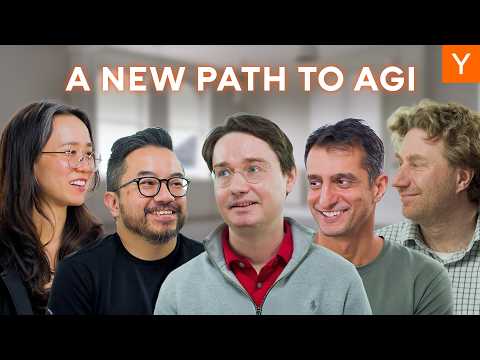
- Team size: 12 total, including five software engineers — shipping at outsized velocity while processing pabytes of data.
- Agent-native development: effectively “AI coding maximalists,” with each engineer operating like a manager of a small agent team: “three monitors with their coding agents running.”
- Operational leverage: a non-technical CSM can route straightforward requests to a Cursor agent and “ship features in a fully autonomous manner” within hours.
- The 99%/1% split: Agents triage 99% of workflow volume; the remaining 1% are the most complex cases requiring human review. Result: the investigative dashboard (front-end) is mission-critical.
Resilience Under Pressure
In a pivotal moment shortly after a major trust & safety conference, the CEO survived a serious biking accident:
- Injuries: “broke my spine, broke my leg”; hospitalized for about 10 days and “couldn’t walk for about 10 days.”
- Business continuity risk: founder-led sales and a 10-person team at the time created real existential questions. The response: double down on scaling go-to-market capacity and institutionalizing resilience.
“Well, this is going to make a really good scene in our IPO movie.”
The founding partnership traces back to Apple’s fraud engineering team — one focused on ML decisions, the other on streaming those decisions across Apple’s surface area. The company’s mission is anchored in a sense of duty to modernize a space they know deeply:
“We really wanted to solve this problem… in a much more self-healing and resilient way.”
Industry Implications: What to Watch 👀
- Agentic AI replaces patchwork stacks: Moving from rules + classifiers + humans to SOP-driven agents that reason across unstructured data — with a self-healing loop.
- Data integration is the moat: Winning requires unifying scattered enterprise data (often behind legacy UIs), tapping registries, and traversing the open web.
- Regulatory tailwinds: KYC/KYB/UBO verification, sanctions screening, and marketplace identity checks are deepening and globalizing.
- Trust & safety as critical infrastructure: Election cycles, coordinated networks, and real-world safety risks elevate the strategic value of decision automation.
- Human-in-the-loop redefined: With 99% triaged automatically, investments shift toward high-signal investigative tooling for the 1%.
Hiring
Variance is hiring across the board, including backend and frontend. The latter has become central as complex cases concentrate on human-led investigations.
Notable Quotes
“We automate content review, fraud reviews, identity reviews at scale.”
“We do have access to over hundreds business registries across the world… and our agents also have access to the open web.”
“You can’t give advice for legal defense… it’s really hard to map to [a traditional classifier].”
“GPT‑4 came out during the batch… changing our cost structure by a 10x factor.”
“We’re five, but… in terms of software output, we’re probably closer to a 25 people team.”
Disclosure: All figures, customers, and examples cited are drawn directly from the conversation, including the $21 million Series A, operational timelines, customer names, and performance characterizations.